Feeling bloated, low on energy, or stuck in unhealthy routines? A 21 day challenge can be a powerful way to reset your habits without extreme dieting or pressure. The goal isn’t perfection — it’s consistency. Small, repeatable actions done daily can lead to noticeable changes in how you feel, move, and think.
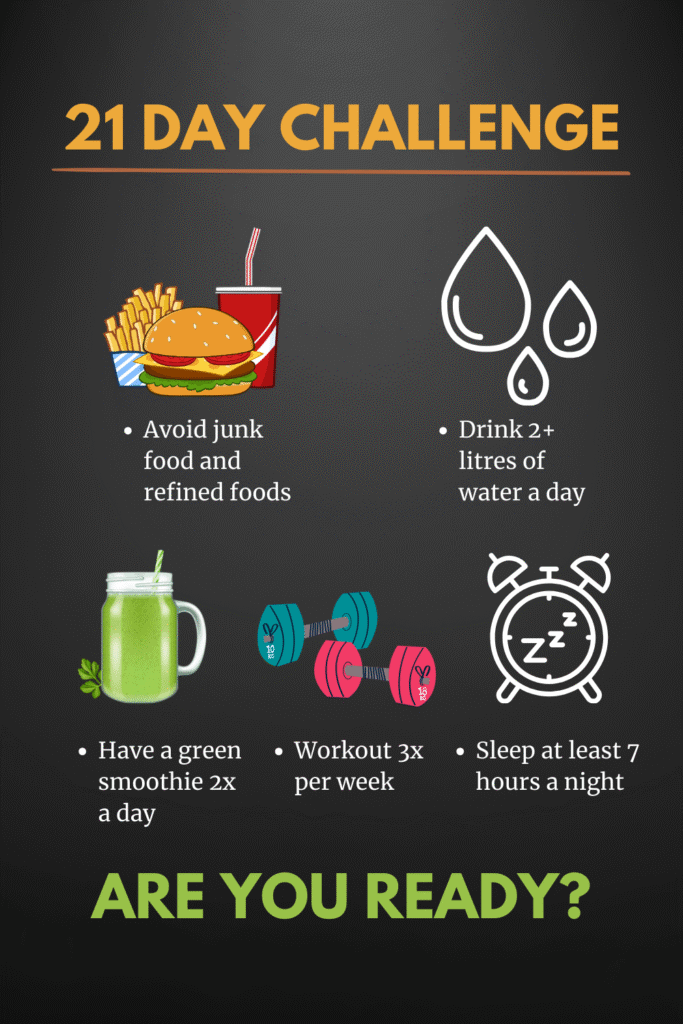
This challenge focuses on hydration, cleaner food choices, movement, and rest — the basics that often get overlooked. Let’s break down the habits shown in the challenge and how to make them realistic for everyday life.
Why a 21 Day Challenge Works
Many people find 21 days long enough to build momentum, but short enough to feel achievable. It’s not about “detoxing” or punishing your body — it’s about giving it what it actually needs.
Benefits of a 21 day challenge include:
-
Improved routine consistency
-
Better awareness of food and movement habits
-
Reduced reliance on junk food
-
Increased energy and sleep quality
Think of it as a reset button, not a finish line.
1. Avoid Junk Food and Refined Foods
Highly processed foods are often loaded with sugars, unhealthy fats, and refined carbs that provide little nutrition. Avoiding them doesn’t mean eating perfectly — it just means choosing more whole foods when you can.
Focus on:
-
Home-cooked meals
-
Fruits and vegetables
-
Whole grains and protein sources
Even reducing junk food gradually makes a difference.
2. Drink 2+ Litres of Water a Day
Hydration is one of the simplest habits with the biggest impact. Drinking enough water supports digestion, energy levels, and appetite control.
Tips to stay hydrated:
-
Carry a reusable water bottle
-
Drink a glass before meals
-
Spread intake throughout the day
Your body functions better when it’s properly hydrated.
3. Have a Green Smoothie Twice a Day
Green smoothies are an easy way to add fiber and nutrients without overthinking meals. They’re especially helpful if you struggle to eat enough vegetables.
A simple smoothie may include:
-
Leafy greens
-
Fruit for natural sweetness
-
A protein or healthy fat
They’re convenient, filling, and customizable.
4. Work Out 3 Times Per Week
You don’t need daily intense workouts for results. Working out 3 times per week is sustainable and effective.
This can include:
-
Strength training
-
Cardio
-
Home workouts
-
Gym sessions
Consistency beats intensity every time.
5. Sleep at Least 7 Hours a Night
Sleep is often ignored in health challenges, but it plays a huge role in recovery, appetite regulation, and mental clarity.
Better sleep helps:
-
Reduce cravings
-
Improve workout recovery
-
Support overall wellbeing
Aim for quality sleep, not just hours.
How to Stick With the 21 Day Challenge
To make this challenge doable:
-
Don’t try to be perfect
-
Track habits, not weight
-
Prepare meals and water ahead
-
Focus on how you feel
Miss a day? Just continue the next.
Realistic Expectations
This 21 day challenge isn’t guaranteed to cause dramatic weight loss — and that’s okay. What it does help with is creating structure, reducing unhealthy habits, and improving daily energy.
Long-term change starts with habits that feel manageable.
Final Thoughts
The 21 day challenge is about giving yourself a fresh start through simple, proven habits: cleaner eating, hydration, movement, and rest. When done consistently, these small actions can create meaningful change without stress or extremes.
Save this challenge for later and start when you’re ready.
Which habit do you think will be the hardest — and which will be the easiest to stick to?
Are you ready? ✅