Knee pain can sneak up gradually or hit suddenly, making even simple movements a challenge. But not all knee pain feels the same — it develops in stages. Understanding these stages can help you take better care of your knees and know when it’s time to seek professional advice.
Let’s break down the 5 stages of knee pain so you can recognize the symptoms early and protect your mobility.
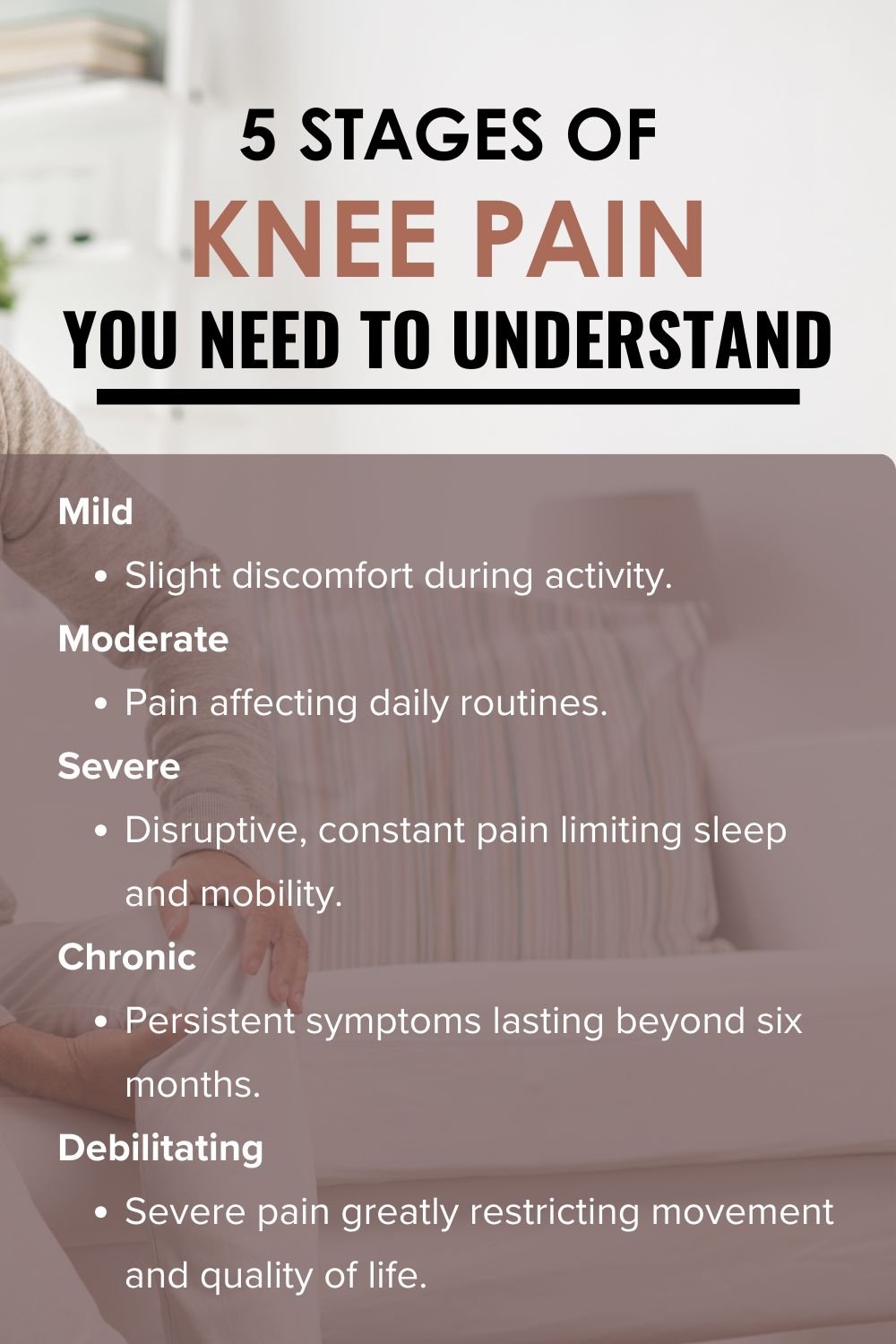
1. Mild: Early Discomfort
In the earliest stage, pain may feel like a slight twinge during activity — climbing stairs, bending, or walking long distances. At this point, it’s more of an annoyance than a serious issue.
Tip: Pay attention to these early signals. Gentle stretches, proper footwear, and short rest breaks can make a big difference before pain worsens.
2. Moderate: Daily Life Affected
At this stage, knee pain starts interfering with routines. Tasks like squatting, walking for errands, or even standing too long may feel uncomfortable.
Smart Approach: Incorporate low-impact exercises such as swimming or cycling to stay active without overloading your joints. Adding supportive gear like knee braces may also help.
3. Severe: Constant Pain
Severe knee pain isn’t just noticeable — it’s disruptive. Pain becomes constant, limiting your ability to sleep, focus, or move freely. Stiffness and swelling often accompany this stage.
What You Can Do: Apply hot or cold compresses, practice gentle mobility exercises, and consult a healthcare provider for a tailored plan.
4. Chronic: Long-Term Symptoms
If knee pain persists for more than six months, it’s considered chronic. This stage often signals deeper issues like arthritis, cartilage wear, or old injuries resurfacing.
Lifestyle Support: Maintain a healthy weight, stay hydrated, and explore physical therapy to build joint stability and ease symptoms.
5. Debilitating: Severe Restrictions
At this stage, knee pain greatly limits quality of life. Everyday actions — walking, bending, or standing — may feel impossible without support. It often requires medical treatments or interventions.
Next Steps: If you reach this stage, professional care is essential. Doctors may suggest medications, injections, or in some cases, surgery.
Final Thoughts
Knee pain doesn’t appear overnight — it progresses through stages, each with its own signs and challenges. By learning these 5 stages of knee pain, you can take action earlier, protect your joints, and preserve your mobility.
👉 Which stage do you relate to most right now? Save this post to your Knee Health Tips board so you’ll have it handy when you need it.