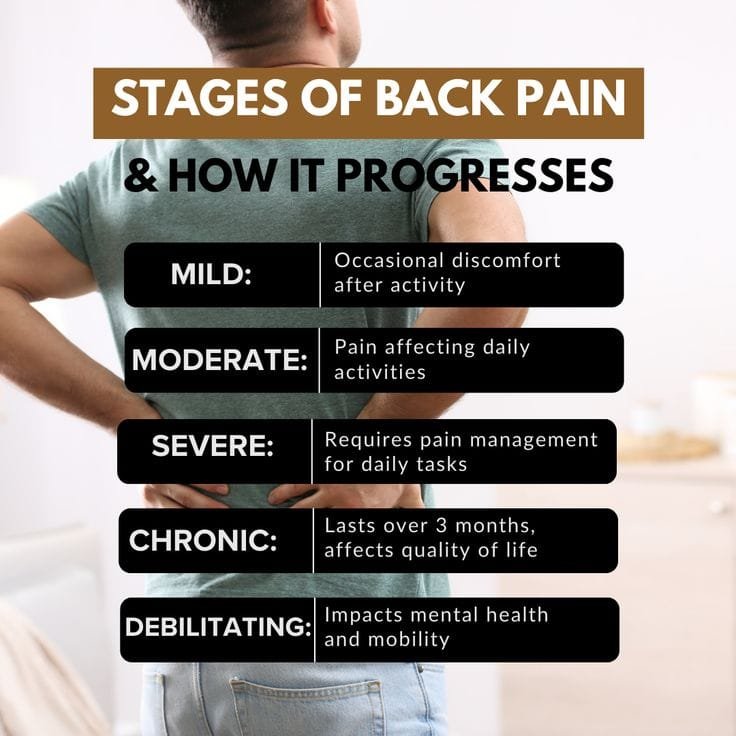
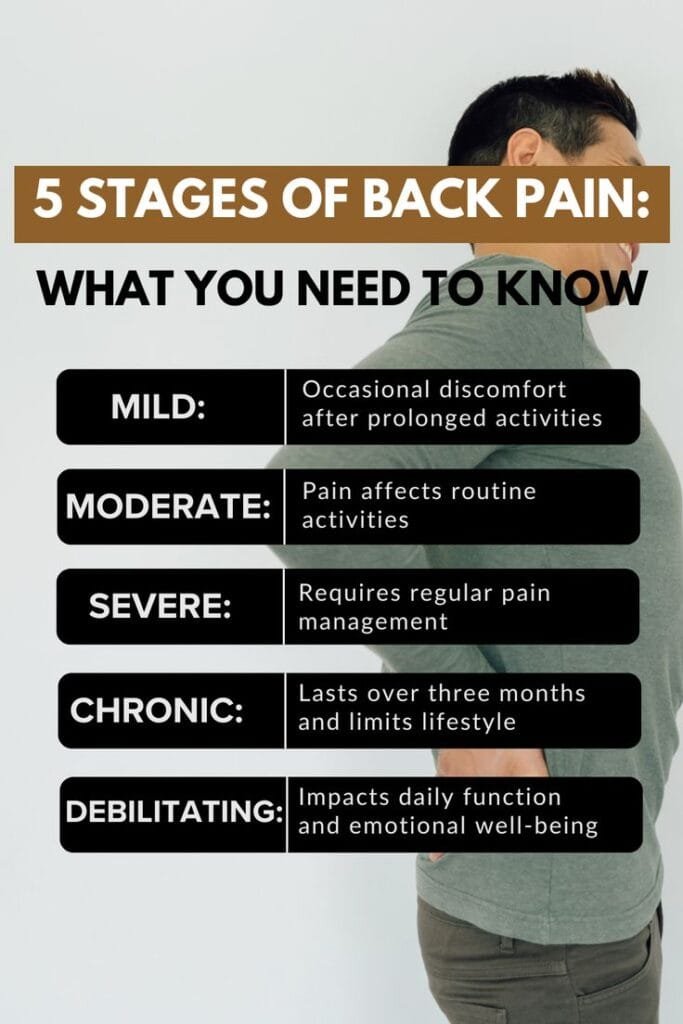
Back pain doesn’t happen overnight. It usually begins as mild discomfort, and if left unchecked, can evolve into something far more limiting. Understanding the 5 stages of back pain can help you recognize what your body is trying to tell you — and take action before the pain controls your life. Let’s explore each stage, what it means, and how you can respond wisely at every step.
1. Mild: The Early Warning Sign
At the mild stage, you may feel occasional stiffness or discomfort after sitting too long, lifting something heavy, or standing for hours. It’s easy to dismiss — but that’s when awareness matters most.
What to do:
-
Adjust your posture during work or sitting.
-
Incorporate light stretches throughout the day.
-
Start using lumbar support cushions for better alignment.
Early attention can prevent progression to more painful stages.
2. Moderate: Pain Affects Routine Activities
If your back pain begins interfering with daily tasks — bending, walking, or doing chores — you’re likely in the moderate stage. Muscles and joints are signaling strain or imbalance.
Helpful tips:
-
Do gentle yoga or low-impact exercises to strengthen your core.
-
Alternate between sitting and standing throughout the day.
-
Avoid lifting heavy items without bending your knees.
This is the best time to evaluate your habits before pain becomes a daily challenge.
3. Severe: The Pain Demands Attention
At this stage, pain is more consistent and may require medication or pain management routines. You might experience sharp or radiating sensations down your leg — a sign nerves could be involved.
Action plan:
-
Visit a physiotherapist or doctor for diagnosis.
-
Consider heat therapy or prescribed stretches.
-
Prioritize rest and ergonomic adjustments in your workspace.
Ignoring this level of pain can lead to chronic issues that are harder to reverse.
4. Chronic: Long-Term and Lifestyle-Limiting
Chronic back pain typically lasts for over three months and starts to affect your lifestyle — from your mood to your mobility. Even small movements can feel taxing.
Ways to cope:
-
Combine physical therapy with relaxation techniques.
-
Improve sleep posture with a supportive mattress.
-
Track your pain patterns to identify triggers.
Chronic pain often requires a multi-approach plan that includes both physical and mental support.
5. Debilitating: When Pain Takes Over Daily Life
At the final stage, back pain can severely impact your ability to work, sleep, and enjoy life. Emotional distress like frustration or anxiety often accompanies this level of discomfort.
What helps:
-
Seek guidance from pain specialists or rehabilitation experts.
-
Explore gentle movement therapies such as water exercises.
-
Focus on emotional well-being through mindfulness or counseling.
Even at this stage, recovery is possible with consistent, guided care.
Understanding the Progression
Think of back pain like a signal system — each stage is your body’s way of asking for attention. Ignoring the earlier stages can make recovery longer and harder. The goal isn’t just to relieve pain but to strengthen your body for lasting stability.
Final Thoughts
Your back is the foundation of your daily movement — treat it with care and attention. Understanding the 5 stages of back pain helps you act early, choose the right treatments, and prevent future discomfort. 🌿
Save this post for later and share it with someone who might be ignoring their back pain — they’ll thank you later!