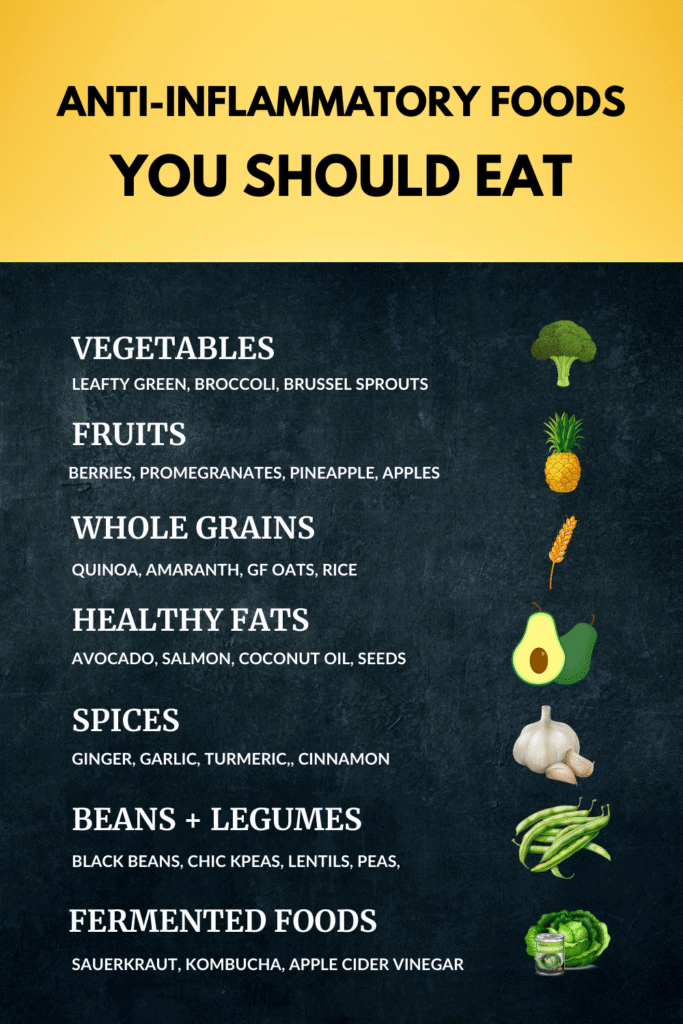
Inflammation is a natural response — your body uses it to protect and heal. But when inflammation becomes chronic, it can affect energy, digestion, joint comfort, and long-term health. The good news is that food makes a big difference. The Pin highlights groups of anti-inflammatory foods that support the body gently and naturally. No complicated diet charts — just everyday ingredients that calm inflammation instead of fueling it.
This post expands on the list from the pin, helping you understand why each category matters and how you can add them into your meals with ease.
1. Vegetables
Leafy greens, broccoli, brussel sprouts
Green vegetables are some of the most powerful anti-inflammatory foods available. Leafy greens like spinach, kale, and Swiss chard deliver vitamins, minerals, and antioxidants that protect cells from stress. Broccoli and Brussels sprouts contain compounds that may support detoxification and immune balance.
Easy ways to add them:
-
Toss greens into smoothies
-
Roast broccoli or Brussels sprouts with olive oil
-
Build meals around vegetables instead of meat
Vegetables don’t need to be boring — spices and olive oil make them delicious.
2. Fruits
Berries, pomegranates, pineapple, apples
Fruits bring color, fibre, hydration, and natural sweetness without processed sugar. Berries are rich in antioxidants, pomegranate supports cell recovery, pineapple contains digestive enzymes, and apples give fibre for gut health.
Ways to enjoy them daily:
-
A fruit bowl with breakfast
-
Fresh pineapple after meals
-
Berries stirred into yogurt or oatmeal
-
Apple slices with nut butter for a snack
Think of fruit as vibrant energy in edible form.
3. Whole Grains
Quinoa, amaranth, gluten-free oats, rice
Whole grains digest slower than refined grains, providing steady energy instead of spikes and crashes. They also contain fibre, which supports gut balance — and since gut health plays a role in inflammation, this matters more than most people realize.
You can rotate grains to keep meals interesting:
-
Warm oats for breakfast
-
Quinoa salad bowls
-
Amaranth porridge
-
Simple rice with vegetables and herbs
Whole grains make meals satisfying and grounding.
4. Healthy Fats
Avocado, salmon, coconut oil, seeds
Healthy fats nourish the brain, support hormones, and provide long-lasting fullness. Avocado offers creamy heart-supportive fats, salmon contains omega-3s, coconut oil is great for cooking, and seeds add crunch plus micronutrients.
Ways to add them naturally:
-
Avocado toast or guacamole
-
Salmon once or twice a week
-
Coconut oil for sautéing
-
Chia or flax seeds sprinkled on breakfast bowls
Healthy fats make food more enjoyable — flavour matters too.
5. Spices
Ginger, garlic, turmeric, cinnamon
Spices are small but powerful. Turmeric and ginger are well-known for soothing inflammation, garlic supports immune health, and cinnamon helps balance sweetness and warmth in recipes.
Use them daily in small amounts:
-
Add turmeric to soups or smoothies
-
Freshly grate ginger into tea
-
Cook meals with garlic
-
Stir cinnamon into coffee or oatmeal
Spices are flavour medicine — simple, affordable, and effective.
6. Beans + Legumes
Black beans, chickpeas, lentils, peas
Beans and legumes are fibre-rich, protein-supportive, and incredibly versatile. They help stabilize blood sugar, which can reduce inflammatory stress on the body. Lentils cook quickly, chickpeas roast beautifully, and black beans pair well with rice and vegetables.
Ways to include them:
-
Lentil soups or stews
-
Hummus or chickpea salads
-
Bean bowls with vegetables and spices
They keep you full while supporting wellness gently.
7. Fermented Foods
Sauerkraut, kombucha, apple cider vinegar
Fermented foods bring probiotics — beneficial bacteria that help support gut health and digestion. When the gut is balanced, inflammation may naturally decrease over time. Even small servings make a difference.
You can add them lightly:
-
A spoonful of sauerkraut with meals
-
Sip kombucha as a drink upgrade
-
A splash of apple cider vinegar in warm water or salad dressings
Fermented foods are strong, so start small and build up.
Final Thoughts
Anti-inflammatory eating doesn’t require restriction — just awareness. The foods in the pin are colourful, varied, and easy to add to everyday meals. A handful of berries here, garlic in tonight’s dinner, oats in the morning, sauerkraut on the side — little habits add up.
Start with one or two categories this week. Notice how your body feels with more colour, fibre, and fresh food. Small changes, repeated consistently, can shift your energy in meaningful ways.
If you had to choose just one group to begin with — vegetables, fruits, or spices — which would you start with?