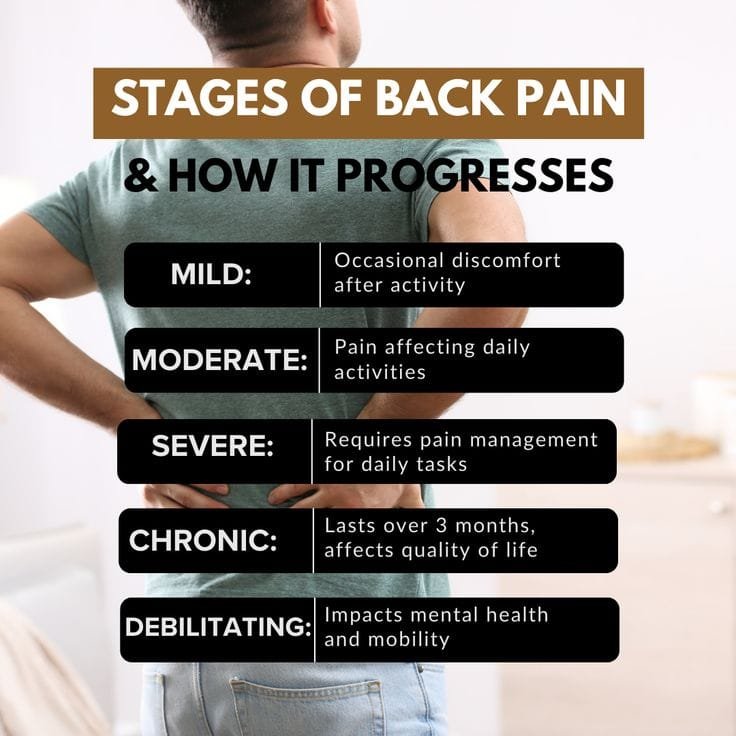
Back pain often starts subtly — a small ache after lifting something heavy, a twinge after sitting too long, or stiffness when you wake up. It’s easy to ignore at first, but early attention to back pain can make the difference between quick relief and long-term damage.
The sooner you take action, the faster you can restore mobility, reduce inflammation, and protect your spine from chronic pain. Let’s explore why early care truly matters and what you can do starting today.
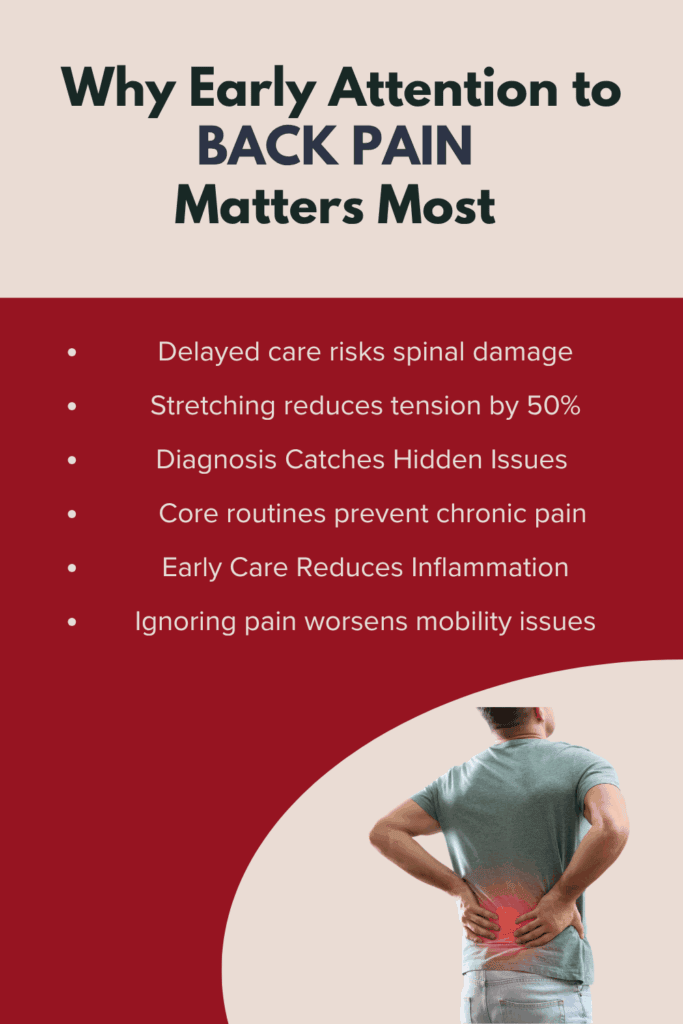
1. Delayed Care Risks Spinal Damage
When back pain lingers untreated, it can lead to structural issues like herniated discs, joint strain, or even nerve compression. Ignoring pain forces your body to adapt to poor movement patterns, which over time may cause spinal misalignment or long-term nerve irritation.
Early intervention allows you to correct posture, strengthen weak muscles, and protect your spine before damage occurs.
2. Stretching Reduces Tension by Up to 50%
Tight muscles are one of the biggest triggers of back pain. Gentle stretching promotes blood flow and flexibility while easing stiffness. Research shows regular stretching can reduce muscle tension by nearly half — especially in the lower back and hamstrings.
Try daily stretches like knee-to-chest, cat-cow, or pelvic tilts to loosen your spine and keep your back muscles relaxed.
3. Diagnosis Catches Hidden Issues Early
Not all back pain stems from poor posture or muscle strain. Sometimes it’s a sign of deeper issues like arthritis, bulging discs, or sciatica. A professional diagnosis can detect these conditions early and prevent them from worsening.
Getting a physical exam, X-ray, or MRI when pain persists for more than two weeks can save you from months (or years) of discomfort.
4. Core Routines Prevent Chronic Pain
Your core muscles support your entire spine. Weak abs or glutes can cause instability, putting extra stress on your lower back. Building a strong core acts like a natural brace that stabilizes movement and prevents recurring injuries.
Simple exercises like planks, bird dogs, and glute bridges can make a noticeable difference in just a few weeks.
5. Early Care Reduces Inflammation
When your back is inflamed, every small movement can hurt. Early care — through stretching, heat therapy, or gentle exercise — helps reduce inflammation before it turns chronic.
Adding anti-inflammatory foods like turmeric, ginger, and leafy greens to your diet can also speed up healing naturally.
6. Ignoring Pain Worsens Mobility Issues
Back pain doesn’t just affect your comfort — it impacts how you move, bend, and even breathe. Ignoring it often leads to muscle stiffness, limited range of motion, and fatigue.
By addressing symptoms early, you’ll maintain flexibility and prevent small aches from turning into daily limitations.
How to Start Caring for Your Back Today
Here are a few simple ways to give your back the care it deserves:
-
Stay Active: Gentle walking or yoga helps maintain mobility.
-
Hydrate Often: Water keeps spinal discs lubricated.
-
Improve Posture: Adjust your chair and monitor height if you work at a desk.
-
Listen to Your Body: Pain is a signal, not a nuisance — treat it as an early warning.
Final Thoughts
Caring for your back early is one of the smartest investments in your long-term health. You don’t need to wait for severe pain to take action — small, consistent steps today can prevent chronic issues tomorrow.
So the next time you feel that familiar ache, don’t ignore it. Stretch, hydrate, and give your back the attention it deserves. 💧🧘♂️
Pin this post for later — your future self (and spine) will thank you!