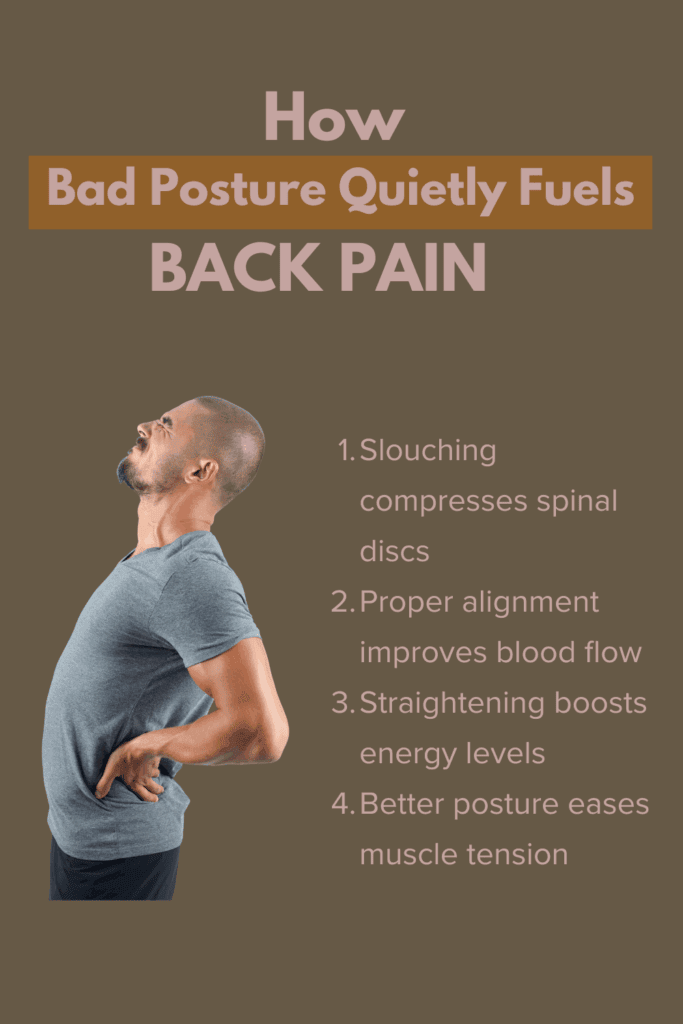
If you’ve ever found yourself slumping over your phone, computer, or even while relaxing on the couch, you’re not alone. But here’s the thing — those slouching habits could be a hidden cause of your back pain. Poor posture doesn’t just look bad; it puts extra pressure on your spine, weakens your muscles, and can lead to chronic discomfort over time.
In this post, you’ll learn how slouching affects your back, why correcting your posture matters, and a few easy ways to sit and stand straighter starting today.

💢 How Slouching Affects Your Spine and Muscles
When you slouch, your body falls out of its natural alignment. Your spine curves unnaturally, your shoulders roll forward, and your core muscles switch off. Over time, this causes strain on your spinal discs and tightens your neck, shoulder, and lower back muscles.
Here’s what happens inside your body when you maintain poor posture:
-
Slouching compresses the spinal discs, causing stiffness and pain.
-
Leaning forward pinches nerves in the lower back, leading to tingling or discomfort.
-
Over time, weak postural muscles make it harder to stand or sit straight.
The result? Persistent back tightness, fatigue, and even headaches — all from a simple slouch.
🧠 Why Posture Correction Helps Back Pain
Good posture isn’t about standing like a soldier; it’s about balance and support. When your body is aligned correctly, your spine carries weight efficiently, your muscles share the load, and pressure on your lower back decreases.
Correcting posture can:
-
Reduce chronic lower back pain.
-
Improve blood flow and energy levels.
-
Strengthen your core and support long-term spine health.
-
Prevent future nerve compression and muscle fatigue.
It’s not about perfection — small, consistent changes make a big difference.
💺 5 Common Posture Mistakes to Avoid
We all fall into bad habits without realizing it. Here are a few to watch for:
- Hunching over devices – Your head weighs about 10 pounds; leaning forward multiplies that strain.
- Crossing legs too often – This misaligns your pelvis and can create hip imbalance.
- Leaning on one side while standing – It causes uneven pressure on your lower spine.
- Rounded shoulders while sitting – Often caused by long hours at a desk or driving.
- Improper screen height – A monitor that’s too low encourages slouching forward.
Simply being aware of these habits is the first step toward better posture and less pain.
🧍♀️ 6 Easy Ways to Improve Posture Daily
You don’t need fancy equipment to fix your posture — just awareness and small lifestyle tweaks.
1. Sit with Support
Keep your feet flat on the floor, shoulders relaxed, and lower back supported with a small cushion or rolled towel.
2. Strengthen Your Core
Incorporate light core exercises like planks or bridges to help your body naturally maintain upright posture.
3. Stretch Regularly
Take short breaks every hour to stand, stretch your shoulders, and gently arch your back.
4. Adjust Your Workspace
Raise your screen to eye level and use an ergonomic chair to reduce strain on your neck and spine.
5. Practice Standing Tall
Imagine a string gently pulling your head toward the ceiling — it helps align your spine instantly.
6. Be Mindful of Your Phone
Hold your phone at eye level instead of bending your neck downward for long periods.
🌿 The Long-Term Benefits of Good Posture
When you prioritize good posture, the rewards go beyond a pain-free back. You’ll notice improved breathing, better focus, and a confident presence. Over time, maintaining alignment becomes second nature — your muscles strengthen, your energy increases, and those nagging aches fade away.
Think of posture as a daily investment in your comfort and longevity.
✅ Final Thoughts
Slouching might feel comfortable in the moment, but it silently adds pressure to your spine and muscles. The good news? With awareness and small changes, you can reverse the effects and enjoy better mobility, strength, and comfort.
Start today: sit tall, roll your shoulders back, and take a deep breath. Your back will thank you later.