When we think about posture, most of us picture our spine or shoulders. But did you know that your posture can also affect your knees? 🦵 Whether you’re standing, walking, or sitting, the way you align your body directly influences how your knee joints bear weight and function.
In fact, poor posture is one of the hidden causes of chronic knee pain — and improving it can make a bigger difference than most people realize.
Let’s look at how posture affects your knees and what you can do to keep them strong and pain-free.
1. How Posture Affects Knee Alignment
Your body works as a connected system. When one part is out of balance, others compensate — often in harmful ways.
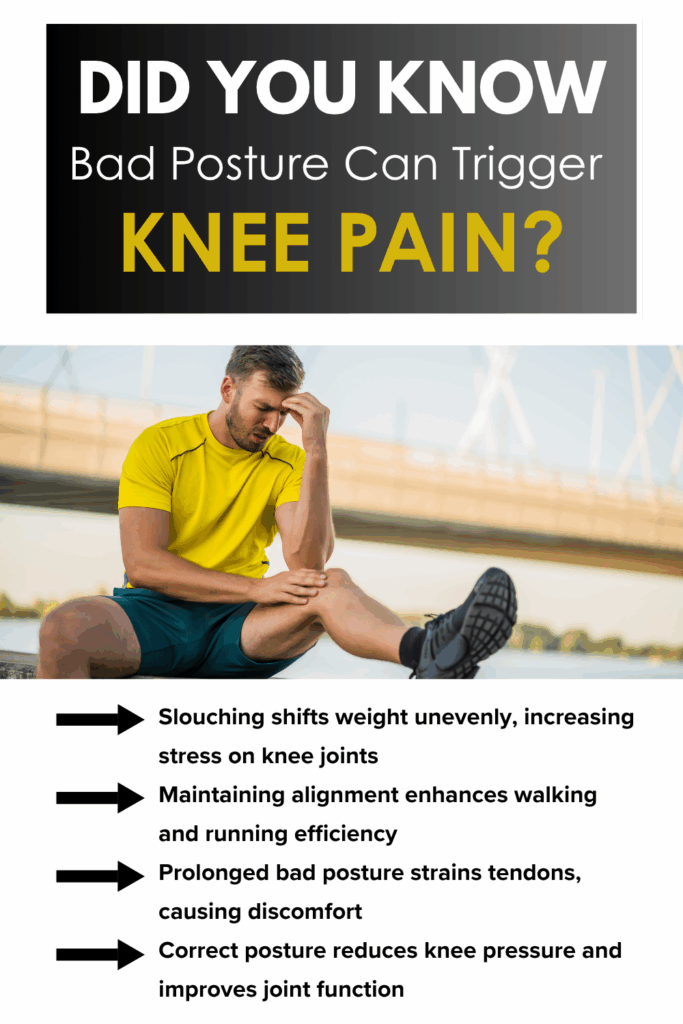
Slouching or leaning too far forward shifts your weight unevenly across your legs. This misalignment increases pressure on one side of the knee, leading to inflammation, cartilage wear, and long-term pain.
💡 Quick Tip: Stand tall with your ears over your shoulders and your hips over your knees. This keeps your body aligned and reduces stress on your lower joints.
2. Slouching Increases Stress on Knee Joints
When you slouch or lean forward while walking or sitting, your upper body’s weight pushes down unevenly on your knees. Over time, this imbalance forces the joints to handle extra load, especially on the front and inner sides.
That’s why people who sit hunched over for long hours or have weak core muscles often experience knee discomfort when standing up or climbing stairs.
💡 Fix: Strengthen your core and glutes — they help stabilize your spine and take pressure off your knees.
3. Poor Posture Leads to Muscle Imbalance
Bad posture doesn’t just affect bones — it changes how muscles work. When your hips tilt forward or backward unnaturally, your thigh muscles (quadriceps and hamstrings) can become tight or weak.
These imbalances alter how your knee tracks when bending or straightening, which can lead to pain, clicking, or stiffness.
💡 Try This: Incorporate hip stretches, hamstring curls, and posture correction exercises into your routine. Even 10 minutes daily can make a big difference.
4. Alignment Improves Walking and Running Efficiency
If you’re active, posture matters even more. Proper alignment allows your knees to move in their natural path, distributing impact evenly.
On the other hand, poor posture — such as leaning forward while running — causes repetitive stress on certain parts of the knee joint, increasing the risk of pain and injuries like patellar tendinitis.
💡 Tip: During exercise, focus on your form. Keep your shoulders back, engage your core, and land softly on your feet to protect your knees.
5. Correct Posture Reduces Knee Pressure
Good posture helps your body use energy efficiently. When you stand or sit upright, your weight is evenly distributed from head to toe, reducing unnecessary pressure on your knees.
By improving your posture, you not only ease knee discomfort but also enhance joint mobility and overall balance.
💡 Reminder: Imagine a string gently pulling you upward from the top of your head — this simple visualization can instantly improve your posture.
6. Simple Habits for Better Posture and Knee Health
You don’t need to overhaul your lifestyle overnight. Start small with these everyday habits:
-
Sit upright with both feet flat on the floor.
-
Take posture breaks every 30 minutes.
-
Strengthen your back and leg muscles regularly.
-
Wear supportive shoes to promote proper alignment.
-
Sleep on your side or back — not your stomach.
These small changes can go a long way toward keeping your knees healthy and pain-free.
7. When to Seek Professional Help
If you experience chronic knee pain despite improving posture, consult a physiotherapist or orthopedic specialist. Persistent pain may be due to joint degeneration, meniscus injury, or muscle imbalance that requires targeted therapy.
A professional can assess your movement patterns and recommend specific exercises or treatments tailored to your condition.
Final Thoughts: Straighten Up, Protect Your Knees
Good posture isn’t just about looking confident — it’s about moving without pain. By keeping your spine, hips, and knees aligned, you’re ensuring every step you take is balanced and supported.
So next time you catch yourself slouching, remember — standing tall could be the first step toward a pain-free life. 🌿