Choosing the best foods for breakfast can set the tone for your entire day. A well-balanced morning meal doesn’t just curb hunger—it supports steady energy, focus, and better food choices later on. If you’ve ever eaten breakfast and still felt hungry an hour later, the issue usually isn’t when you eat—it’s what you eat.
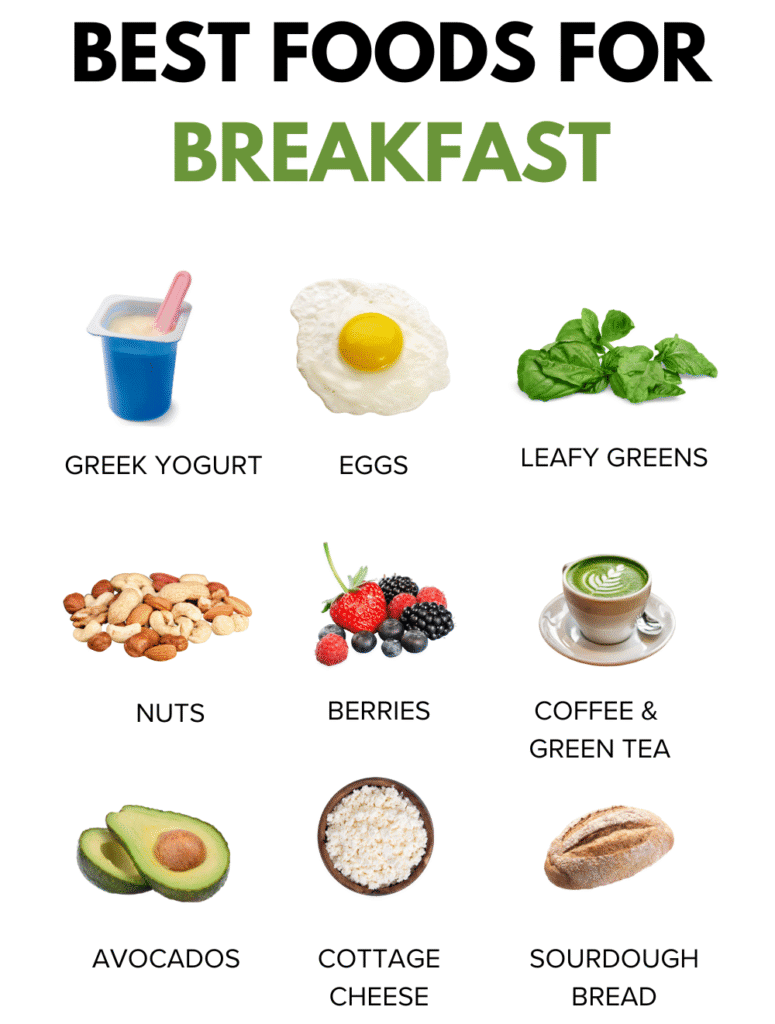
The foods highlighted in the image focus on protein, healthy fats, fiber, and gentle energy boosters. In this post, we’ll break down why these breakfast foods work so well and how you can mix and match them into simple, satisfying meals.
Why Breakfast Food Choices Matter
Breakfast is your first opportunity to fuel your body after an overnight fast. The right foods help:
-
Reduce mid-morning cravings
-
Support stable blood sugar
-
Improve concentration and mood
-
Keep energy levels consistent
Rather than relying on sugary cereals or pastries, the best breakfast foods focus on nutrient density, not quick calories.
Best Foods for Breakfast (From the Image)
1. Greek Yogurt
Greek yogurt is rich in protein and probiotics, which support digestion and fullness. It’s thicker and more satisfying than regular yogurt, making it a great base for breakfast bowls.
How to use it:
Pair with berries and a small handful of nuts for balance.
2. Eggs
Eggs are one of the most reliable breakfast staples. They provide high-quality protein and healthy fats that help keep you full longer.
How to use them:
Scrambled, boiled, or fried with leafy greens for a savory start.
3. Leafy Greens
Leafy greens like spinach or kale add fiber, vitamins, and volume without heaviness. They support digestion and add nutrients without extra calories.
How to use them:
Add to omelets, smoothies, or breakfast bowls.
4. Nuts
Nuts provide healthy fats and a bit of protein, helping slow digestion and prevent energy crashes.
How to use them:
Sprinkle over yogurt or eat a small handful alongside fruit.
5. Berries
Berries are naturally sweet, high in antioxidants, and lower in sugar than many fruits. They’re a smart way to add flavor without blood sugar spikes.
How to use them:
Mix into yogurt or cottage cheese for a refreshing balance.
6. Coffee & Green Tea
Both coffee and green tea can enhance alertness and metabolism when consumed without excess sugar or creamers.
How to use them:
Enjoy plain or lightly enhanced—think milk, not syrup.
7. Avocados
Avocados offer healthy fats and fiber, making them incredibly filling. They help slow digestion and support long-lasting energy.
How to use them:
Spread on sourdough toast or serve with eggs.
8. Cottage Cheese
Cottage cheese is high in protein and mild in flavor, making it versatile for both sweet and savory breakfasts.
How to use it:
Pair with berries or drizzle with olive oil and greens.
9. Sourdough Bread
Sourdough bread is easier to digest than many refined breads and has a lower glycemic impact when eaten in moderation.
How to use it:
Top with avocado, eggs, or cottage cheese.
How to Build a Balanced Breakfast Plate
Here’s a simple formula:
-
Protein: Eggs, Greek yogurt, or cottage cheese
-
Healthy fats: Nuts or avocado
-
Fiber: Leafy greens, berries, or sourdough
-
Drink: Coffee or green tea
Think of breakfast like building blocks—combine 2–3 of these foods for satisfaction without heaviness.
Final Thoughts
The best foods for breakfast don’t need to be complicated. When you focus on protein, fiber, and healthy fats, you give your body what it needs to stay full, energized, and focused throughout the morning.
Instead of asking “What’s quick?”, try asking “What will support me for the next few hours?”