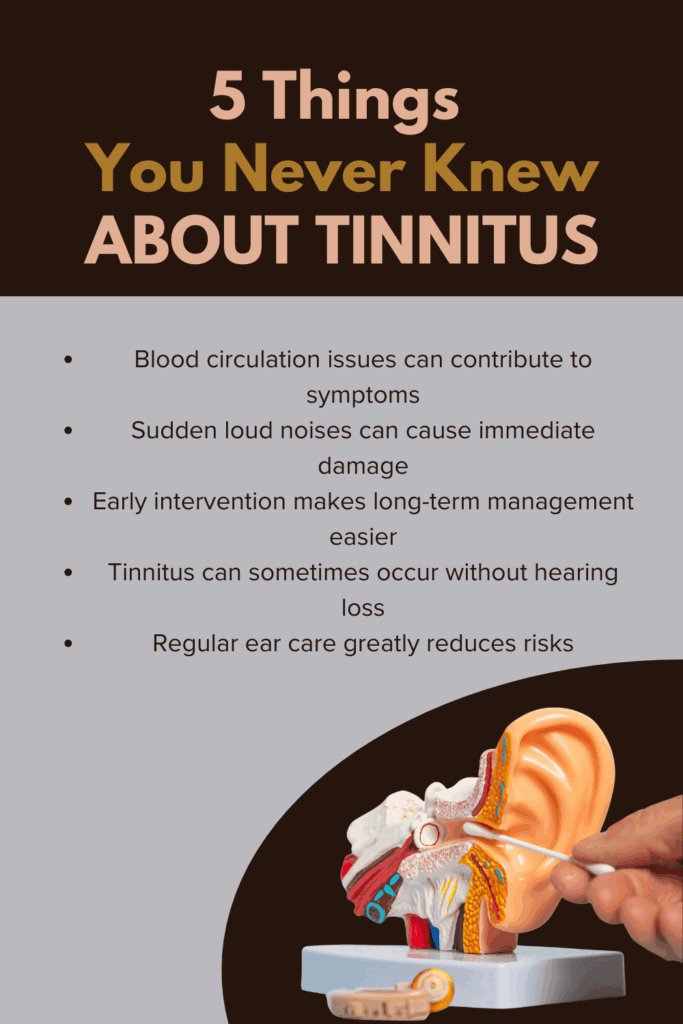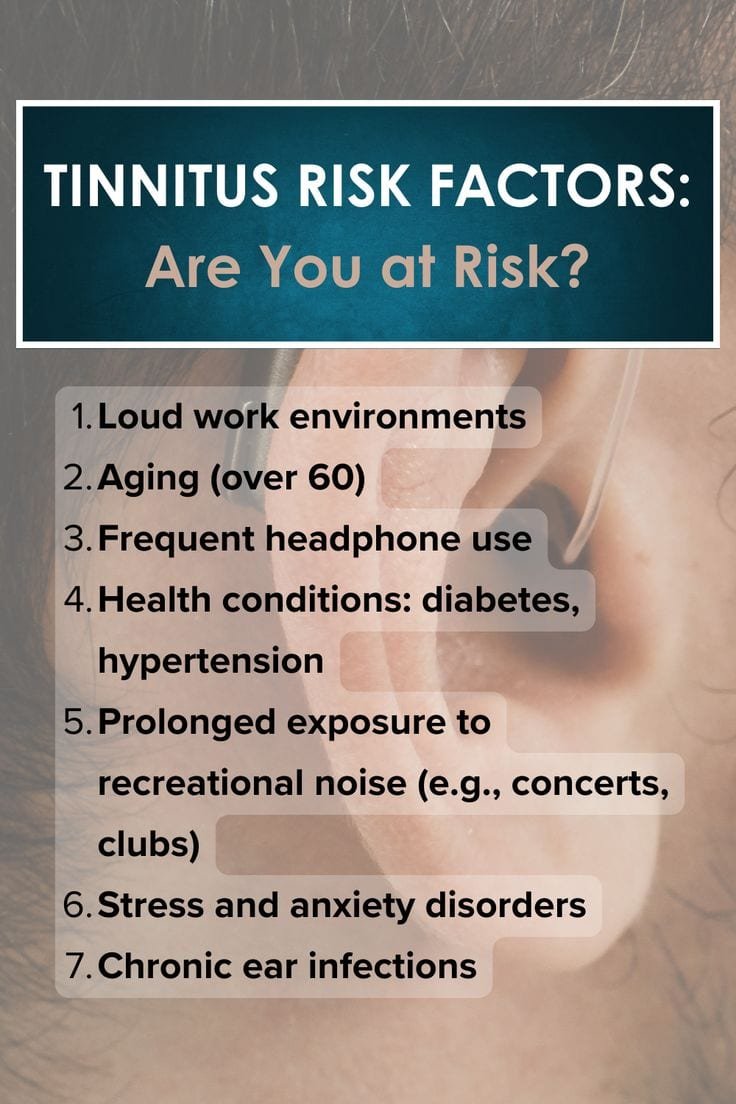
If you’ve ever experienced a ringing, buzzing, or humming in your ears when no external sound is present, you’re not alone. This condition, known as tinnitus, affects millions of people worldwide. While it can be temporary for some, recurring or persistent tinnitus can signal underlying health issues.
Here are 8 causes of tinnitus you shouldn’t ignore — along with why they matter and what you can do about them.
1. Loud Noise Exposure
Prolonged exposure to concerts, construction sites, or even loud headphones can damage the delicate hair cells in your inner ear. Once harmed, these cells don’t regenerate, making hearing issues and tinnitus more likely.
2. Age-Related Hearing Loss
As we grow older, natural changes in our hearing may lead to tinnitus. This is one of the most common causes in adults over 60, often linked to gradual inner ear wear.
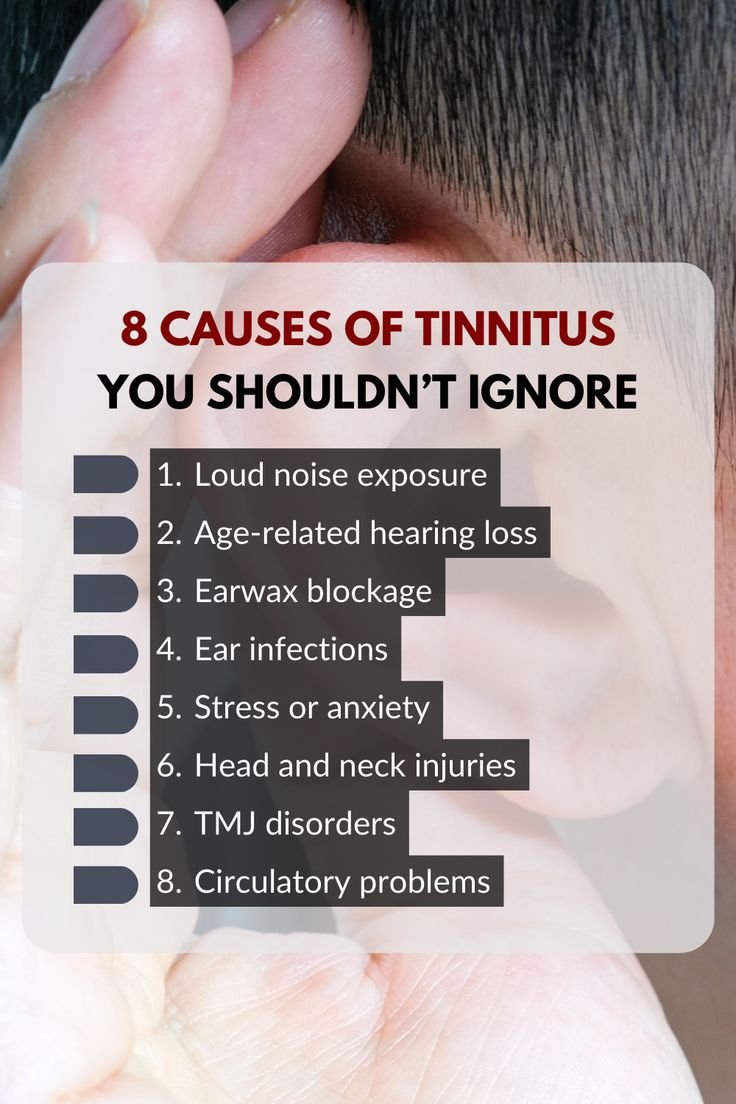
3. Earwax Blockage
A buildup of earwax may seem harmless, but it can block the ear canal and create pressure that causes tinnitus. Safe ear cleaning or professional removal can bring quick relief.
4. Ear Infections
Middle and inner ear infections can trigger inflammation and fluid buildup. This often leads to temporary tinnitus that clears up once the infection is treated.
5. Stress or Anxiety
Emotional stress can make tinnitus worse. When your body is tense, the brain tends to amplify internal noises, making that ringing or buzzing harder to ignore.
6. Head and Neck Injuries
Trauma from accidents, sports, or falls can affect nerves, blood flow, or inner ear structures. Even mild injuries can leave lingering tinnitus symptoms.
7. TMJ Disorders
The temporomandibular joint (TMJ), located near your ears, can sometimes cause tinnitus when misaligned or strained. Jaw pain, clicking, or teeth grinding are often clues.
8. Circulatory Problems
Poor circulation, high blood pressure, or vascular disorders can create pulsing sounds in the ear. This type of tinnitus, called pulsatile tinnitus, should always be evaluated by a doctor.
Final Thoughts
Tinnitus may feel frustrating, but it’s often a signal your body is trying to tell you something. By understanding these 8 possible causes, you can take steps toward relief — whether it’s adjusting lifestyle habits, managing stress, or seeking medical help.
✨ Save this post for later, and if ringing in your ears persists, don’t ignore it — check in with a healthcare professional for peace of mind.