If you’ve ever heard a constant ringing or buzzing in your ears, you know how frustrating tinnitus can be. What makes it even harder is the misinformation surrounding it. From outdated advice to myths that cause worry, tinnitus is often misunderstood.
Let’s set the record straight and uncover the truth behind five common misconceptions about tinnitus — so you can better understand what’s happening and how to manage it.
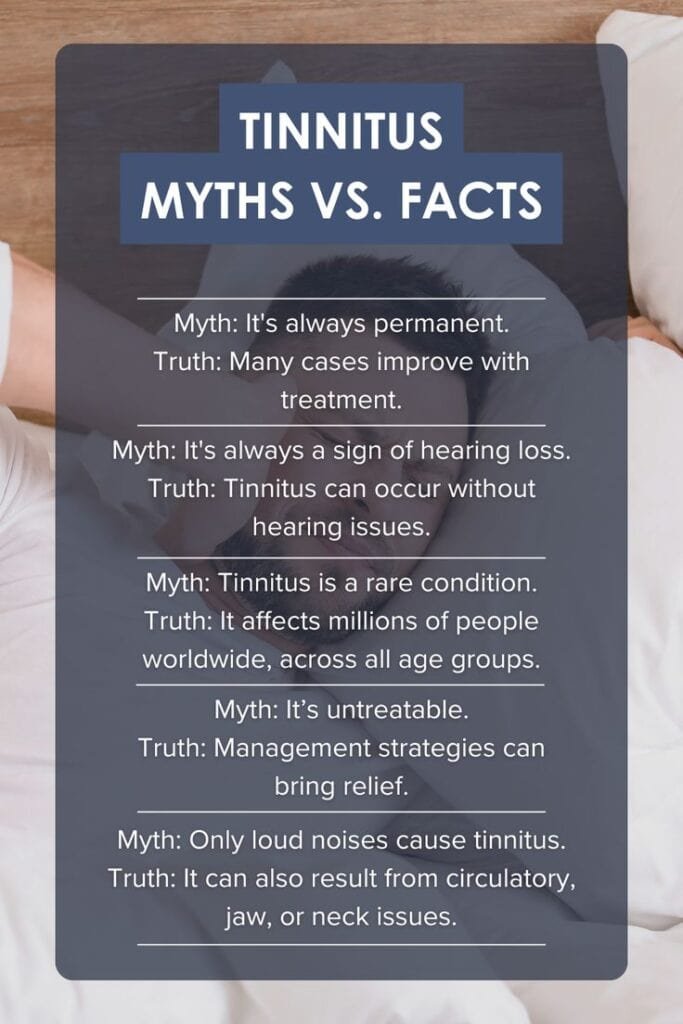
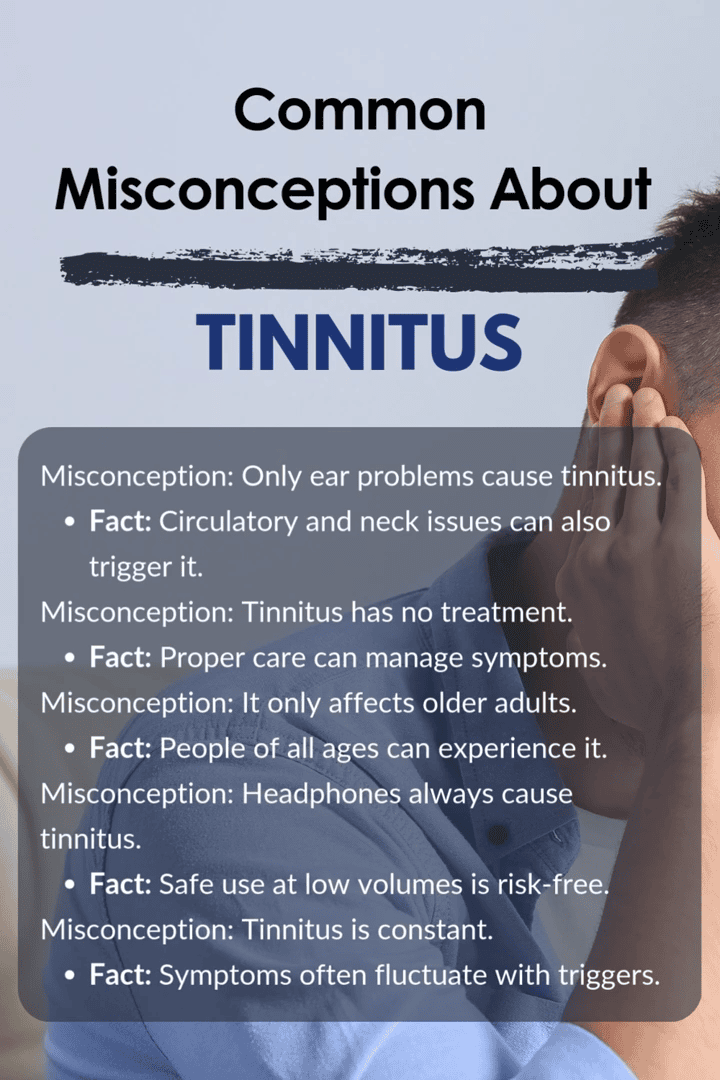
1. Misconception: Only Ear Problems Cause Tinnitus
It’s easy to assume tinnitus comes solely from ear damage, but that’s not always true.
Fact: Circulatory problems, jaw tension, or even neck strain can also trigger tinnitus symptoms. Sometimes, the issue starts with how your body processes sound signals rather than the ears themselves.
👉 If your tinnitus started after an injury or tension-related pain, it may be connected to muscles or blood flow, not just hearing loss.
2. Misconception: Tinnitus Has No Treatment
While there’s no universal cure, saying tinnitus is “untreatable” isn’t accurate.
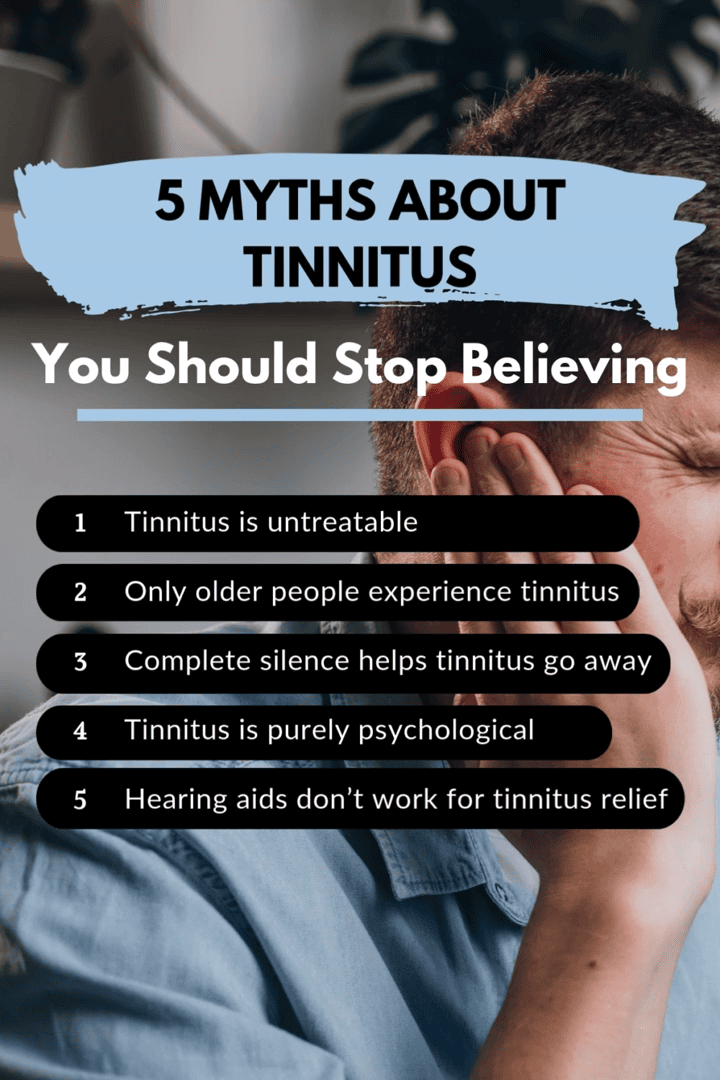
Fact: Many people successfully manage tinnitus with sound therapy, stress reduction, or medical support. Techniques like mindfulness, white noise machines, and dietary adjustments can greatly reduce its impact.
👉 With consistent care and professional guidance, tinnitus can become far less disruptive.
3. Misconception: It Only Affects Older Adults
This is one of the most common myths — and one of the most misleading.
Fact: Tinnitus can affect anyone, including teens and young adults. Exposure to loud concerts, gaming headphones, or even chronic stress can lead to ringing ears.
👉 Protecting your hearing early can help prevent long-term symptoms later in life.
4. Misconception: Headphones Always Cause Tinnitus
You might’ve heard people say headphones are “bad for your ears,” but that’s not entirely true.
Fact: Safe use at low volumes is generally risk-free. The real danger comes from prolonged exposure to high volumes. Listening at 60% volume or lower and taking regular breaks keeps your ears safe.
👉 So yes, you can still enjoy your music — just use it mindfully.
5. Misconception: Tinnitus Is Constant and Never Changes
Some believe tinnitus is a permanent, unchanging noise — but that’s rarely the case.
Fact: Tinnitus often fluctuates based on stress, caffeine, sleep, or noise exposure. Identifying your personal triggers can help you predict and reduce flare-ups.
👉 Keep a simple journal to track when symptoms worsen — patterns often reveal helpful insights.
Final Thoughts
Tinnitus may feel isolating, but you’re not powerless. Understanding what truly causes it — and letting go of the myths — is the first step toward managing it with confidence. With lifestyle balance, hearing protection, and the right guidance, life can sound calm again.
👉 Save this post for later or share it with someone who’s trying to understand tinnitus better — it might give them hope and clarity.