Knee pain can sneak up on you slowly, starting as a small discomfort before turning into a bigger problem. The good news? Your body often gives you warning signs before things get serious. By recognizing them early, you can take steps to prevent long-term damage and keep your knees strong and healthy.
Here are the key early warning signs of knee pain you should never ignore.
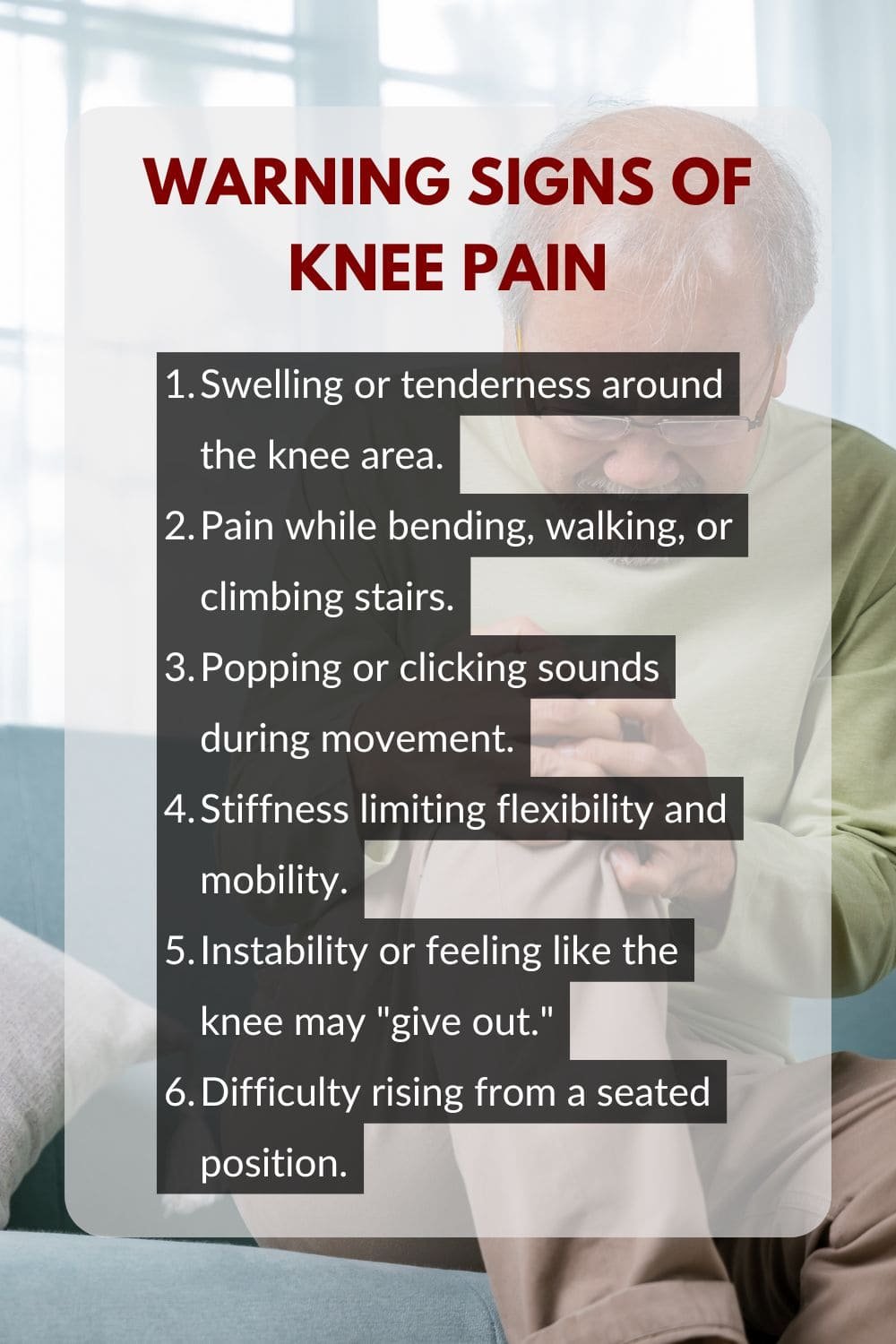
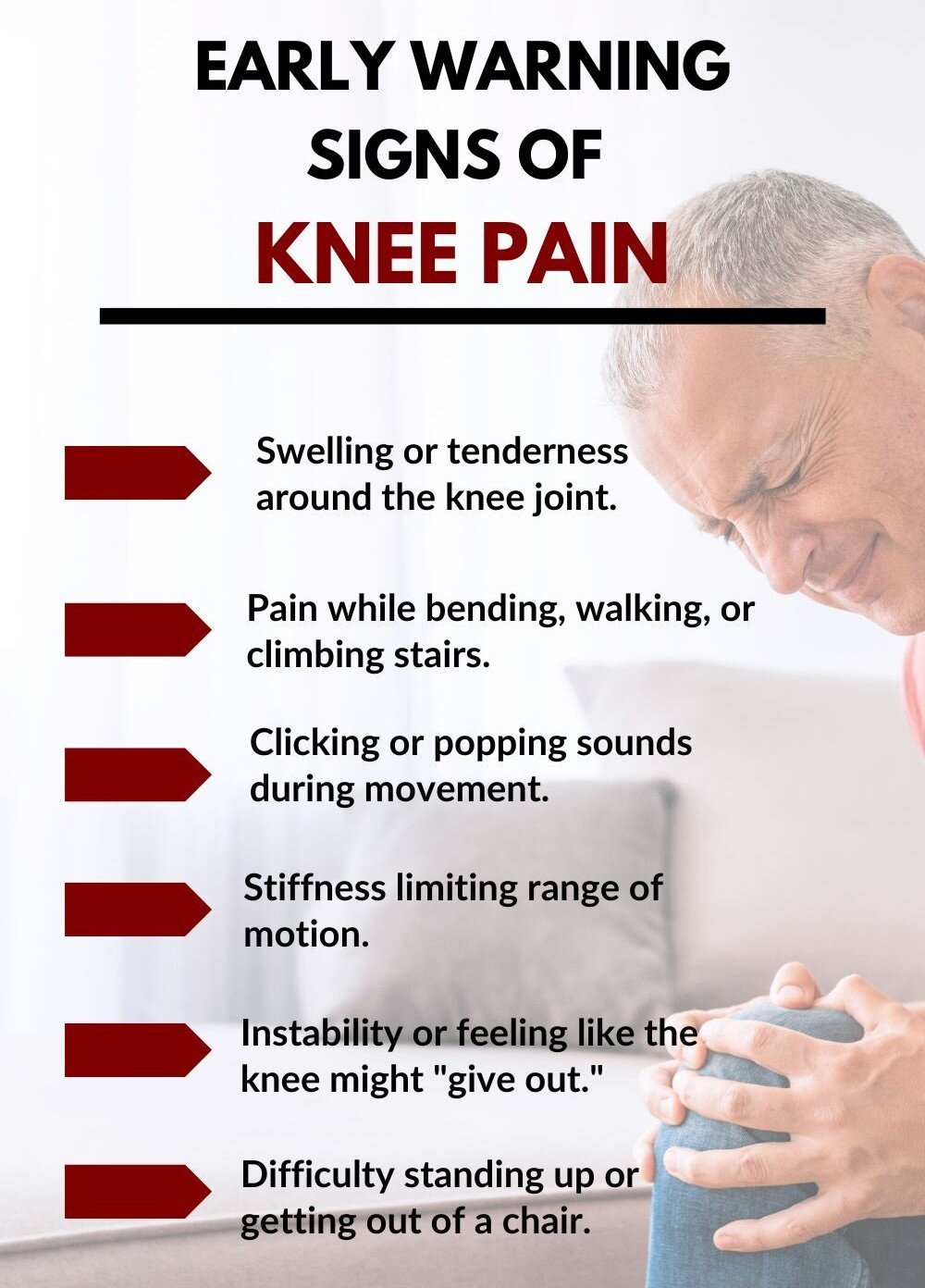
1. Swelling or Tenderness Around the Knee
If your knee feels warm, swollen, or tender, it’s your body’s way of saying something is wrong. This could be inflammation from overuse, an injury, or even arthritis. Applying ice, resting, and gentle compression are good first steps — but if swelling is frequent, it’s worth checking with a professional.
2. Pain During Everyday Movement
Do you feel sharp or aching pain when bending, walking, or climbing stairs? That’s not just “getting older” — it’s a sign your knee joint may be under stress. Catching it early allows you to adjust activities, strengthen supporting muscles, and prevent further strain.
3. Clicking or Popping Sounds
A little popping when you stand up isn’t always serious, but if it’s paired with pain or stiffness, it could point to cartilage wear or ligament issues. Think of it as a red flag that your knee isn’t gliding as smoothly as it should.
4. Stiffness and Limited Motion
If your knee feels tight and you can’t fully bend or straighten it, stiffness may be setting in. This often shows up first thing in the morning or after sitting too long. Gentle stretching, regular movement, and staying active can help keep joints flexible.
5. Instability or “Giving Out” Sensation
That feeling like your knee might buckle beneath you? It’s often linked to weakened ligaments or muscle imbalance. It’s not something to ignore — building stability through balance and strength exercises can make a huge difference.
6. Difficulty Standing Up or Sitting Down
If getting up from a chair feels harder than it used to, your knees are asking for help. This can be an early signal of arthritis or general weakness in the joint. Small changes, like strengthening your thighs and maintaining good posture, can reduce strain.
Final Thoughts
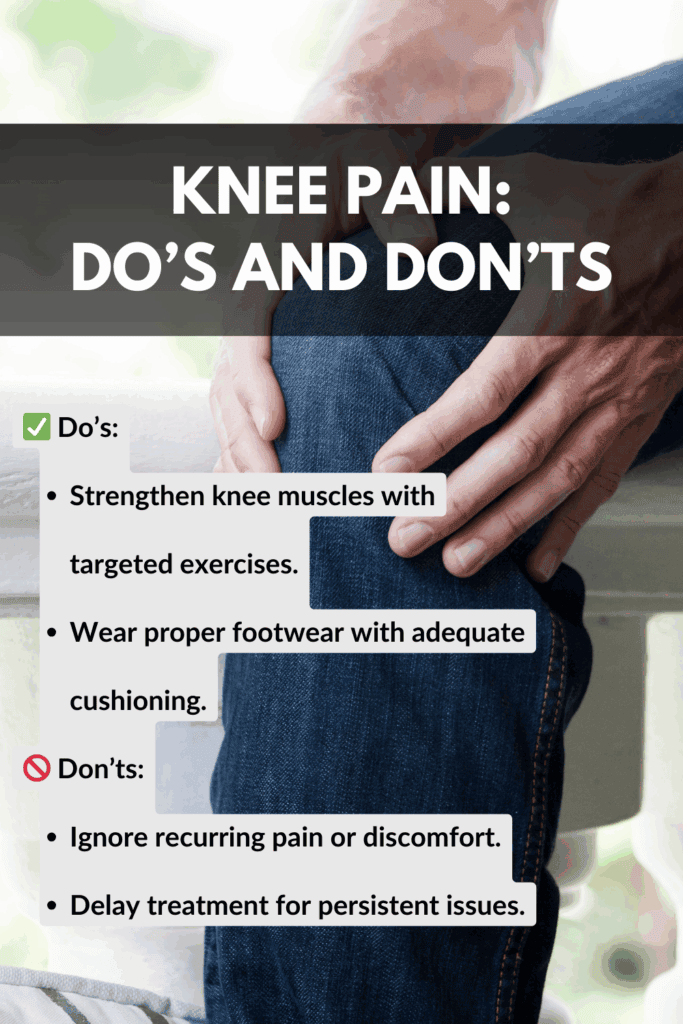
Your knees are essential for movement and independence, and the earlier you catch problems, the better your chances of protecting them. By paying attention to swelling, stiffness, clicking sounds, or difficulty with daily tasks, you can take steps to improve your joint health today.
✨ Save this guide for later — and share it with someone who could benefit from spotting these early warning signs of knee pain.