
Did you know that something as simple as eggs can play an important role in supporting your brain every single day? Eggs are often talked about for their protein, but what many people don’t realize is how powerful they are for brain health and mental function. Just a serving of eggs can provide nutrients your brain relies on to work properly.
Inspired directly by the pin image, this post explains why eggs matter for brain function, what nutrients they contain, and how you can include them in your meals without overthinking your diet. No hype—just helpful, everyday nutrition knowledge you can actually use.
Why Eggs Are Linked to Brain Function
The brain needs specific nutrients to stay sharp, focused, and healthy. One of the most important—and often overlooked—is choline. Choline plays a key role in memory, learning, and nervous system function, and eggs are one of the best natural sources available.
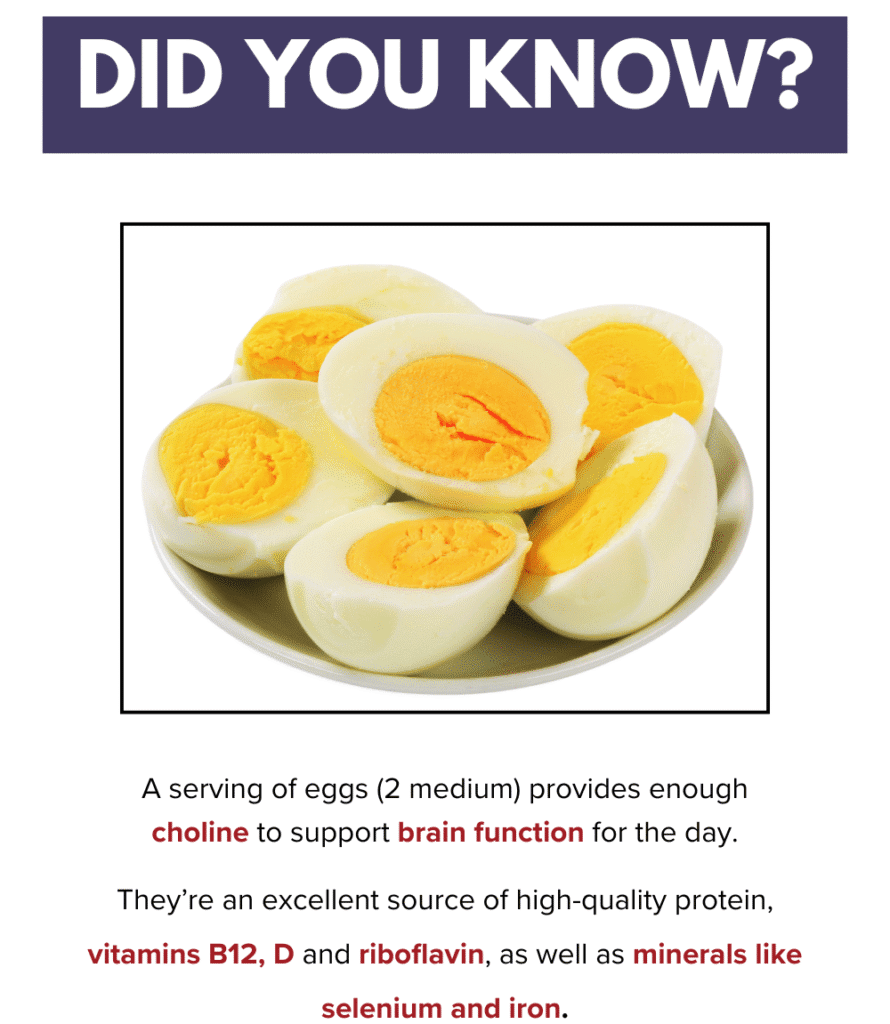
A serving of eggs (about two medium eggs) can provide a significant amount of choline for the day. This makes eggs especially valuable for people who want to support brain health through food rather than supplements.
Think of eggs as basic brain fuel—simple, accessible, and effective.
The Role of Choline in Eggs
Choline helps your body produce acetylcholine, a neurotransmitter involved in memory and muscle control. Without enough choline, brain communication can become less efficient.
Egg yolks are particularly rich in choline, which is why whole eggs—not just egg whites—are often recommended for cognitive support. This doesn’t mean eggs are a cure for memory problems, but they are a strong nutritional foundation for long-term brain health.
Many people don’t get enough choline from their regular diet, which makes eggs an easy and practical addition.
More Brain-Supporting Nutrients in Eggs
Choline isn’t the only reason eggs are good for you. Eggs also contain several other nutrients that support overall brain and body function.
-
High-quality protein – Helps maintain brain cells and overall structure
-
Vitamin B12 – Supports nerve function and cognitive health
-
Vitamin D – Linked to brain health and mood balance
-
Riboflavin (Vitamin B2) – Supports energy production in brain cells
-
Selenium – Acts as an antioxidant, protecting brain tissue
-
Iron – Helps deliver oxygen to the brain
Together, these nutrients make eggs one of the most nutrient-dense everyday foods you can eat.
How Eggs Fit Into a Balanced Diet
Eggs are versatile, affordable, and easy to prepare, which makes them realistic for daily meals. They work well for breakfast, lunch, or even light dinners.
Some easy ways to include eggs:
-
Boiled eggs with whole-grain toast
-
Scrambled eggs with vegetables
-
Eggs added to salads or grain bowls
-
Omelets with leafy greens
Pairing eggs with fiber-rich foods like vegetables or whole grains helps create meals that are both satisfying and balanced.
Are Eggs Good for Everyone?
For most people, eggs can be enjoyed regularly as part of a healthy diet. They’re filling, nutrient-rich, and easy to digest. However, individual needs vary, especially for those with specific health conditions or dietary restrictions.
If you’ve been advised to limit eggs due to medical reasons, it’s always best to follow professional guidance. Otherwise, eggs can be a simple way to support nutrition without complication.
Eggs and Brain Health Across Life Stages
Eggs can be helpful at many stages of life:
-
Children and teens: Support brain development
-
Adults: Help maintain focus and mental performance
-
Older adults: Contribute to cognitive support and nutrient intake
This wide benefit range is one reason eggs remain a staple food across cultures and generations.
Common Myths About Eggs
Eggs have been misunderstood in the past, especially around cholesterol. Current research suggests that for most people, dietary cholesterol from eggs has less impact on blood cholesterol than once believed.
What matters more is the overall quality of the diet, not one single food. Eggs, when eaten as part of balanced meals, can fit comfortably into healthy eating patterns.
Final Thoughts
So, did you know eggs support brain function in such a meaningful way? With choline, high-quality protein, and essential vitamins and minerals, eggs offer more than just convenience—they provide real nutritional value for your brain and body.
If you’re looking for a simple, affordable way to support daily nutrition, eggs are a great place to start. Save this post for later, and next time you’re planning a meal, remember that something as simple as eggs can make a difference. How do you usually enjoy your eggs? 🥚