When it comes to fat loss, the foods you choose matter just as much as how much you eat. The idea behind the best foods for fat loss isn’t restriction or extreme dieting — it’s choosing foods that keep you full, energized, and consistent over time.
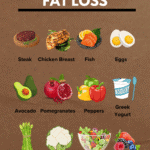
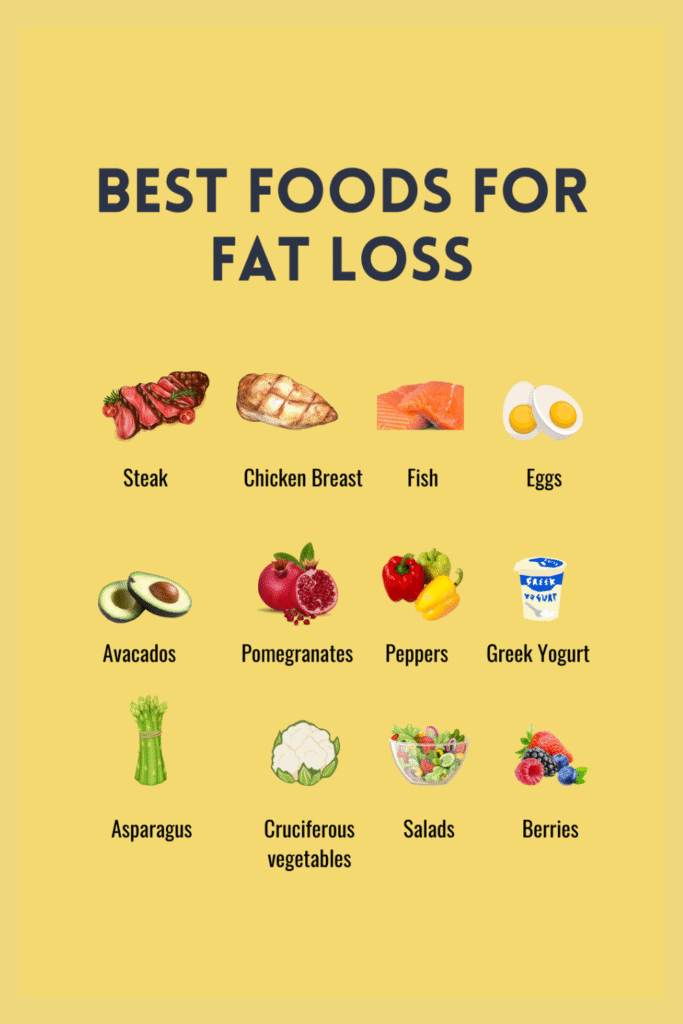
The image highlights a mix of protein, healthy fats, and fiber-rich foods, which is exactly what most sustainable fat-loss approaches focus on. Let’s break these down in a practical, human way and explain why each group earns a place on your plate.
High-Protein Foods That Support Fat Loss
Protein is one of the most important nutrients for fat loss because it helps preserve muscle and keeps hunger under control.
Steak
Lean cuts of steak are rich in protein and iron. When portioned properly, steak can be very satisfying and help reduce cravings later in the day.
Chicken Breast
Chicken breast is a classic fat-loss staple. It’s high in protein, low in fat, and easy to pair with vegetables or salads.
Fish
Fish, especially fatty fish like salmon, provides protein along with healthy fats. This combination helps you feel full while supporting overall health.
Eggs
Eggs are versatile, affordable, and very filling. Many people find that eggs at breakfast help reduce snacking later.
Healthy Fats That Keep You Full Longer
Fat loss doesn’t mean avoiding fats — it means choosing the right ones.
Avocados
Avocados provide healthy fats and fiber, which slow digestion and support satiety. A little goes a long way.
Greek Yogurt
Greek yogurt offers protein and fat together, making it more filling than many sweetened yogurts. It works well for breakfast or snacks.
Fruits That Fit Into Fat Loss
Fruit often gets misunderstood in weight loss conversations. The key is portion and balance.
Pomegranates
Pomegranates are rich in antioxidants and add natural sweetness without being overly calorie-dense when eaten mindfully.
Berries
Berries are one of the best fruits for fat loss because they’re high in fiber and lower in sugar compared to many fruits.
Vegetables That Add Volume Without Calories
Vegetables help you eat larger portions while keeping calories in check.
Peppers
Peppers are low in calories, high in crunch, and easy to add to meals. They bring flavor without heaviness.
Asparagus
Asparagus is naturally low in calories and works well roasted, grilled, or added to salads.
Cruciferous Vegetables
Vegetables like broccoli, cauliflower, and cabbage are filling and fiber-rich. They support digestion and help meals feel more complete.
Salads
Salads aren’t just “diet food” — when built with protein, healthy fats, and vegetables, they can be very satisfying.
How These Foods Actually Help With Fat Loss
The foods shown in the image work together because they:
-
Increase fullness and reduce overeating
-
Help stabilize blood sugar
-
Support muscle while losing fat
-
Make meals more satisfying
Fat loss becomes easier when you’re not constantly hungry.
How to Use These Foods in Daily Life
You don’t need to eat all of these every day. Instead:
-
Build meals around protein first
-
Add vegetables for volume
-
Include healthy fats in moderation
-
Use fruit strategically for sweetness
This approach is flexible and realistic.
A Realistic Note About Fat Loss
No single food causes fat loss on its own. These foods work best when:
-
Portions are reasonable
-
Meals are balanced
-
Eating habits are consistent
Fat loss is about patterns, not perfection.
Final Thoughts: Are These the Best Foods for Fat Loss?
The best foods for fat loss are the ones you can enjoy regularly without feeling deprived. The foods shown here — proteins, healthy fats, fruits, and vegetables — support fullness, energy, and long-term success.
If your goal is sustainable fat loss, focusing on these foods is a smart place to start.