Knee pain can make everyday life feel challenging — from climbing stairs to taking a simple walk. But what if your kitchen could help ease that discomfort naturally? The foods you eat play a big role in fighting inflammation, supporting cartilage, and keeping your joints flexible.
Here’s a list of 8 powerful foods that can help relieve knee pain naturally — all backed by nutrition science and easy to include in your meals.
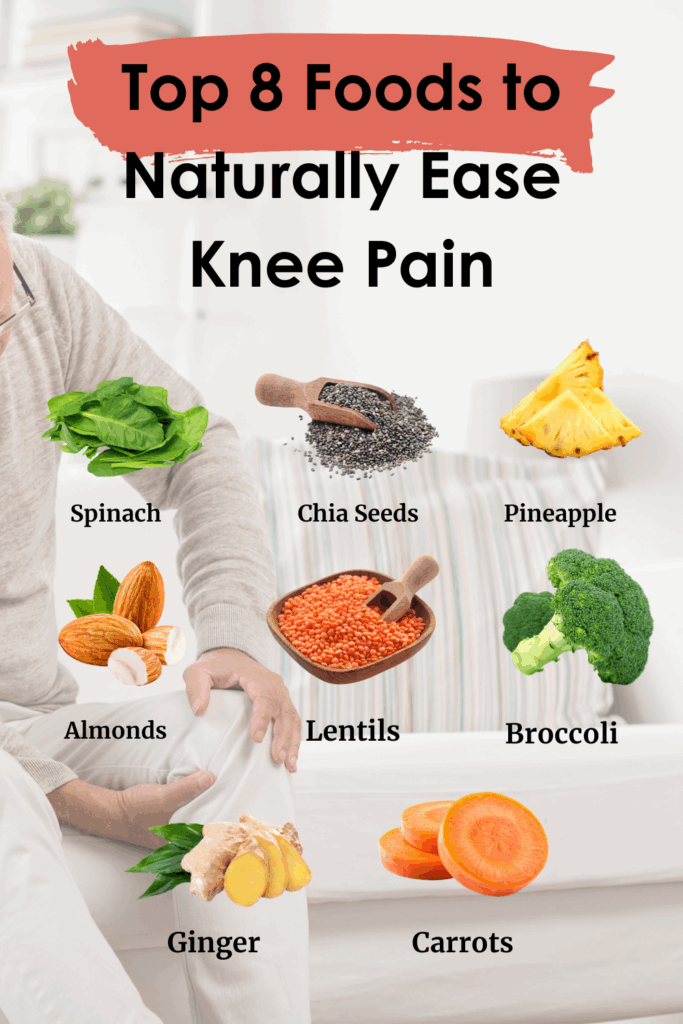
🥬 1. Spinach – The Anti-Inflammatory Green
Spinach is packed with vitamin K, magnesium, and antioxidants that protect joint tissues. Its high levels of lutein and beta-carotene help fight inflammation that causes stiffness and pain.
💡 Tip: Add fresh spinach to smoothies, omelets, or salads for a nutrient boost that supports knee and joint health.
🌱 2. Chia Seeds – Omega-3 Power for Joints
Tiny but mighty, chia seeds are a great source of plant-based omega-3 fatty acids, which reduce joint swelling and pain. They also deliver calcium and phosphorus — essential for strong bones and connective tissue.
💡 Tip: Soak chia seeds overnight and add them to yogurt, oatmeal, or smoothies for a satisfying and joint-friendly breakfast.
🍍 3. Pineapple – Nature’s Inflammation Fighter
Pineapple contains bromelain, a natural enzyme shown to reduce inflammation and joint pain, especially after injuries or surgery. It also supports healthy digestion and overall recovery.
💡 Tip: Enjoy fresh pineapple chunks or blend them into an anti-inflammatory smoothie with ginger and turmeric.
🥜 4. Almonds – Healthy Fats for Lubricated Joints
Almonds are rich in vitamin E, which helps protect your joints from oxidative stress and supports healthy cartilage. The healthy monounsaturated fats in almonds also keep your joints lubricated and flexible.
💡 Tip: Snack on a handful of almonds daily or add chopped almonds to your morning oatmeal for lasting energy.
🍲 5. Lentils – Protein and Iron for Muscle Support
Lentils are a plant-based source of protein, iron, and fiber that nourish your muscles and joints. They help maintain muscle strength — which is essential for stabilizing your knees and reducing pressure on your joints.
💡 Tip: Try red lentil soup with turmeric and garlic for a hearty, joint-healing meal.
🥦 6. Broccoli – The Cartilage Protector
Broccoli contains sulforaphane, a compound known to slow down cartilage damage linked to osteoarthritis. It’s also high in vitamin C and calcium, which both promote strong bones and joint tissue.
💡 Tip: Steam broccoli lightly to preserve nutrients and pair it with olive oil and lemon for a simple side dish.
🌿 7. Ginger – Nature’s Pain Reliever
Ginger is a powerful anti-inflammatory root that can reduce stiffness and pain in arthritis. It works by blocking inflammatory pathways in the body, similar to natural painkillers — without the side effects.
💡 Tip: Sip on ginger tea daily or add fresh grated ginger to soups and stir-fries to ease inflammation naturally.
🥕 8. Carrots – Antioxidants for Tissue Repair
Carrots are full of beta-carotene and vitamin A, which help reduce oxidative stress and protect cartilage from wear and tear. Over time, these nutrients help maintain mobility and flexibility in your knees.
💡 Tip: Roast carrots with olive oil and rosemary for a delicious, joint-supporting side dish.
💪 Bonus: Combine These Foods for Maximum Relief
Eating one of these foods helps — but combining them creates a powerful synergy. For example:
-
A smoothie with spinach, pineapple, chia seeds, and ginger makes a perfect anti-inflammatory breakfast.
-
A warm dinner with lentils, broccoli, and carrots nourishes your joints while supporting muscle recovery.
Consistency matters more than perfection. Make these foods a regular part of your diet, and over time, you may notice less stiffness and more ease of movement.
🌸 Final Thoughts
Knee pain relief doesn’t have to come only from medication — sometimes, it begins right on your plate. These 8 foods work naturally to reduce inflammation, protect cartilage, and strengthen your joints from within.
Start with one simple change this week — maybe adding ginger tea to your morning or swapping refined snacks for almonds. Small steps can lead to lasting comfort.