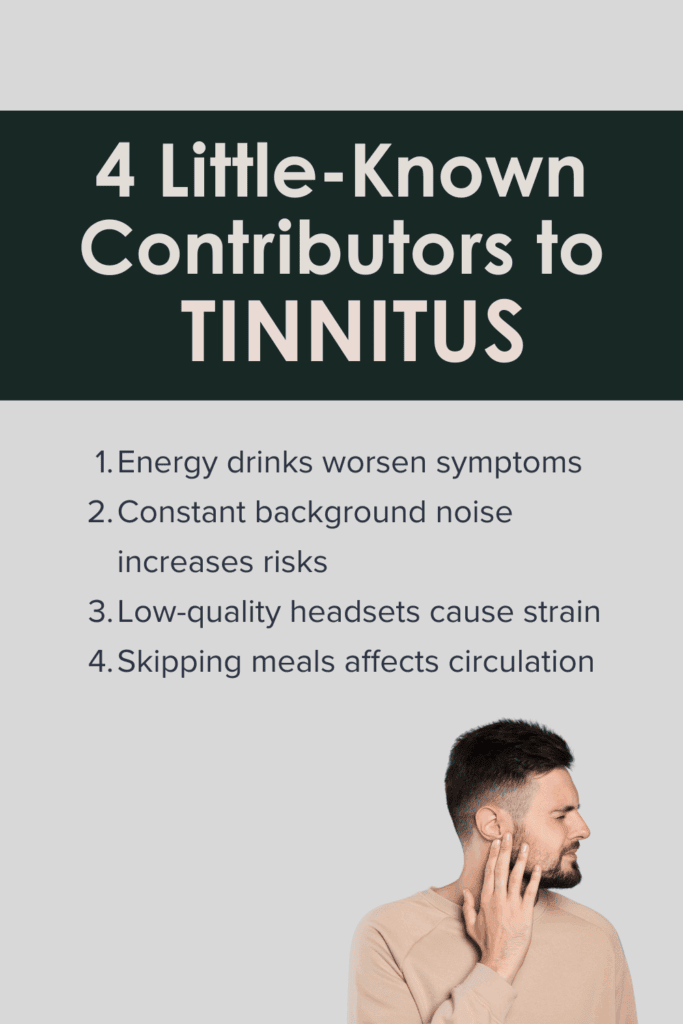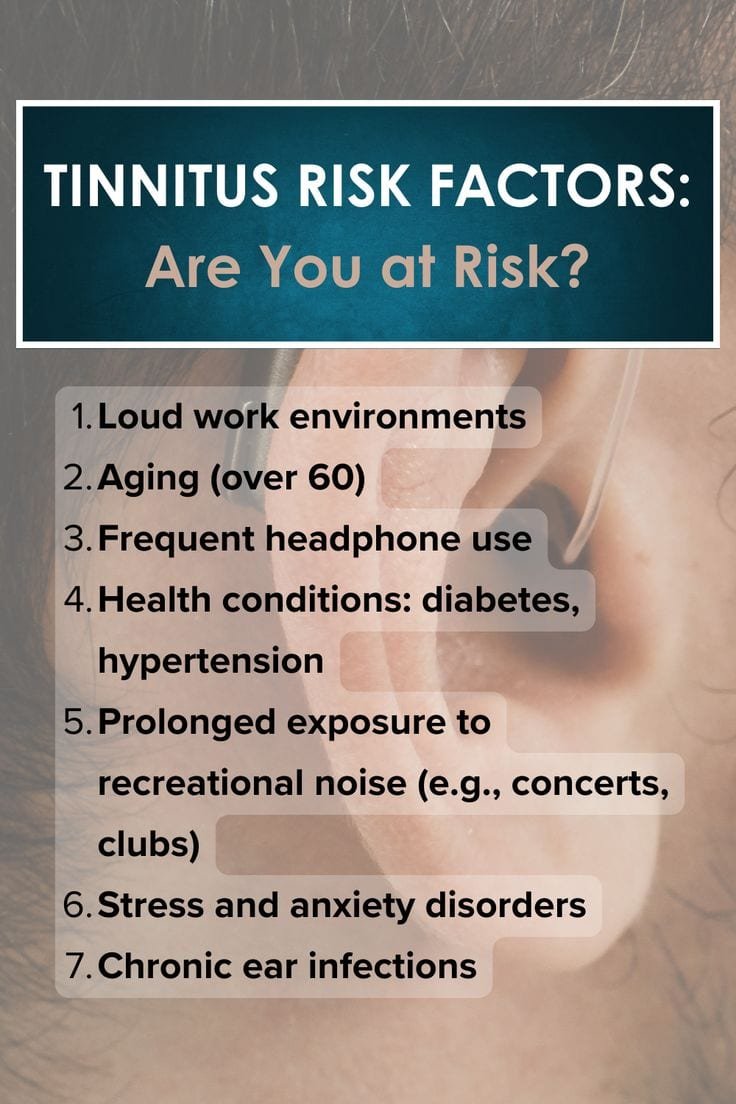
If you’ve ever experienced that constant ringing in your ears, you know how frustrating tinnitus can be. What most people don’t realize is that some everyday habits might be quietly making it worse. The good news? With a few mindful changes, you can protect your hearing and reduce the risk of tinnitus symptoms becoming chronic.
Let’s look at four common habits that affect tinnitus risk — and what you can do about them.

1. Not Drinking Enough Water
Hydration isn’t just for glowing skin — it’s essential for ear fluid balance too. The inner ear relies on proper fluid levels to send clear sound signals to your brain. When you’re dehydrated, your ear fluids can thicken, potentially affecting hearing clarity and increasing tinnitus intensity.
Quick fix:
-
Drink at least 6–8 glasses of water a day.
-
Add electrolyte-rich drinks if you’re physically active.
-
Reduce caffeine and alcohol, as they can dehydrate the inner ear.
2. Eating Too Much Processed Food
Highly processed foods — think chips, deli meats, instant noodles — often contain excess sodium and preservatives that trigger inflammation. High sodium levels can lead to fluid imbalance in the ear, one of the key contributors to tinnitus flare-ups.
Try this instead:
-
Replace processed snacks with fresh fruits, vegetables, and whole grains.
-
Focus on anti-inflammatory foods like berries, nuts, and leafy greens.
-
Cook at home using natural seasonings like turmeric and garlic to support circulation and ear health.
3. Regular Noise Exposure
Noise exposure remains one of the most common causes of chronic tinnitus. Repeated loud sounds — from concerts, headphones, or construction work — can damage delicate hair cells inside your inner ear. Once those cells are harmed, they don’t grow back, leading to long-term ringing sensations.
Protect your ears by:
-
Keeping volume below 60% when using headphones.
-
Wearing noise-reducing earplugs in loud environments.
-
Taking breaks from constant sound exposure to let your ears rest.
Think of your ears like a muscle — they need downtime to recover, too.
4. Sudden Temperature Changes
It might surprise you, but rushing from outdoor heat into cold air-conditioned spaces can also affect tinnitus. Sudden temperature shifts can cause your ear canal and sinus passages to constrict, disrupting blood flow and fluid regulation in the inner ear.
What you can do:
-
Gradually adjust when entering cool environments.
-
Avoid standing directly under air vents.
-
Use gentle ear protection like cotton when moving between extreme temperatures.
Final Thoughts
Your ears are more sensitive than you might think — and small daily habits can make a big difference in their long-term health. By staying hydrated, eating clean, reducing noise exposure, and avoiding abrupt temperature shifts, you’ll be taking real steps toward preventing tinnitus and improving your overall ear wellness.
If this helped, pin it for later or share it with someone who might be dealing with constant ringing. Protect your hearing — it’s one of your most valuable senses.