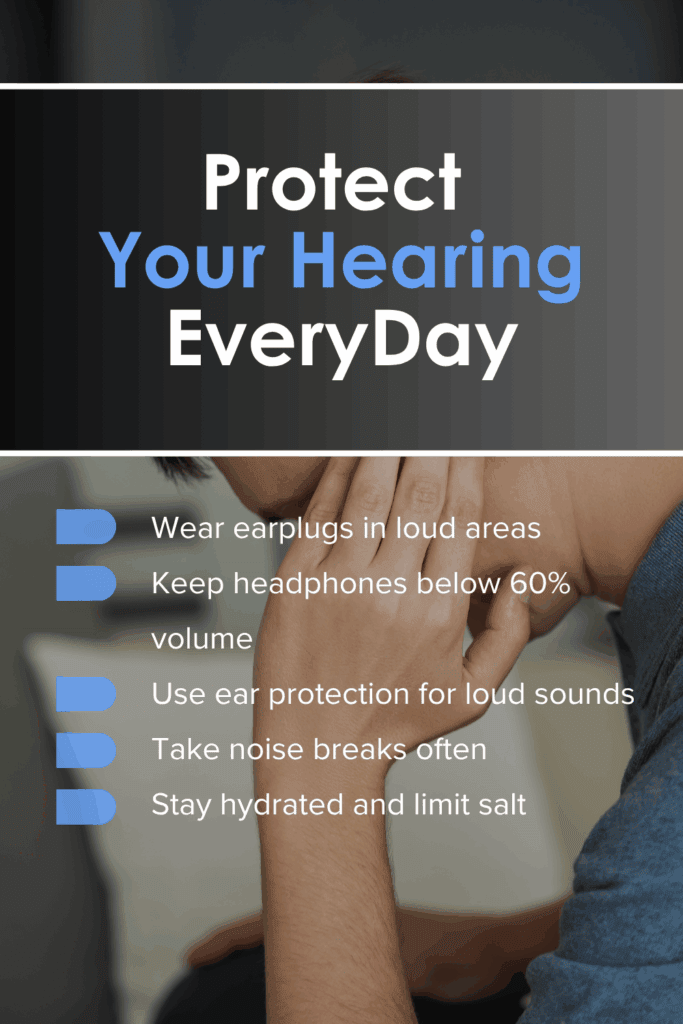
That faint ringing or buzzing in your ears after a concert, a noisy commute, or long headphone sessions might seem harmless — but over time, it can become tinnitus, a persistent sound that isn’t caused by any external source.
Tinnitus affects millions worldwide and is often linked to prolonged exposure to loud sounds, poor hydration, or unhealthy habits. The good news? With a few small lifestyle changes, you can protect your hearing and prevent tinnitus before it starts.
Here are five smart, easy habits to keep your ears healthy for years to come.

🎧 1. Keep Headphone Volumes Below 60%
Listening to music or podcasts too loudly is one of the most common triggers for tinnitus. Sound levels above 85 decibels can damage the delicate hair cells in your inner ear that transmit sound signals to the brain.
💡 Tip: Follow the “60/60 rule” — keep volume below 60% and limit listening to 60 minutes at a time. Choose noise-canceling headphones to reduce the need for higher volumes.
⏸️ 2. Take Regular Breaks in Noisy Environments
Your ears need rest just like your muscles do. Constant exposure to noise — from construction sites, concerts, or even city traffic — can fatigue your hearing system and increase your risk of tinnitus.
💡 Tip: Step away from loud settings every hour. Even 5–10 minutes of quiet can help your ears recover and reduce long-term strain.
🎧 3. Use Ear Protection When Exposed to Loud Sounds
If you frequently attend concerts, work in noisy environments, or use power tools, earplugs or noise-canceling earmuffs are essential. They don’t block sound completely — they reduce the decibel intensity, helping you enjoy sound safely.
💡 Tip: Keep a pair of reusable silicone earplugs in your bag or car. Modern options are comfortable, discreet, and highly effective.
💧 4. Stay Hydrated
Your inner ear depends on proper fluid balance to function correctly. Dehydration can thicken the fluids in the cochlea, affecting sound transmission and sometimes worsening tinnitus symptoms.
💡 Tip: Aim for 6–8 glasses of water daily and reduce dehydrating beverages like alcohol or sugary sodas. Herbal teas and fruit-infused water are great alternatives.
☕ 5. Limit Salt and Caffeine Intake
Excessive salt can increase blood pressure and restrict circulation in the tiny vessels of your inner ear, while too much caffeine can overstimulate the nervous system, potentially worsening tinnitus.
💡 Tip: Choose low-sodium meals and swap one of your daily coffees for green tea or herbal tea. Your ears — and your overall health — will thank you.
🌿 Final Thoughts
Protecting your ears doesn’t require drastic changes — just consistent, mindful habits. By managing volume, avoiding long exposure to noise, and staying hydrated, you can greatly reduce your risk of tinnitus and support long-term hearing health.
✨ Pin this post to remind yourself: your ears are for a lifetime — treat them with care!