
Did you know that most back pain isn’t caused by injuries, but by everyday habits we barely notice? From how long we sit to how much water we drink, small choices can quietly shape our spine’s health.
If your back often feels tense or achy, these 6 surprising insights might just explain why — and more importantly, how to fix it before it gets worse. Let’s dive into the science-backed truths your back wishes you knew.
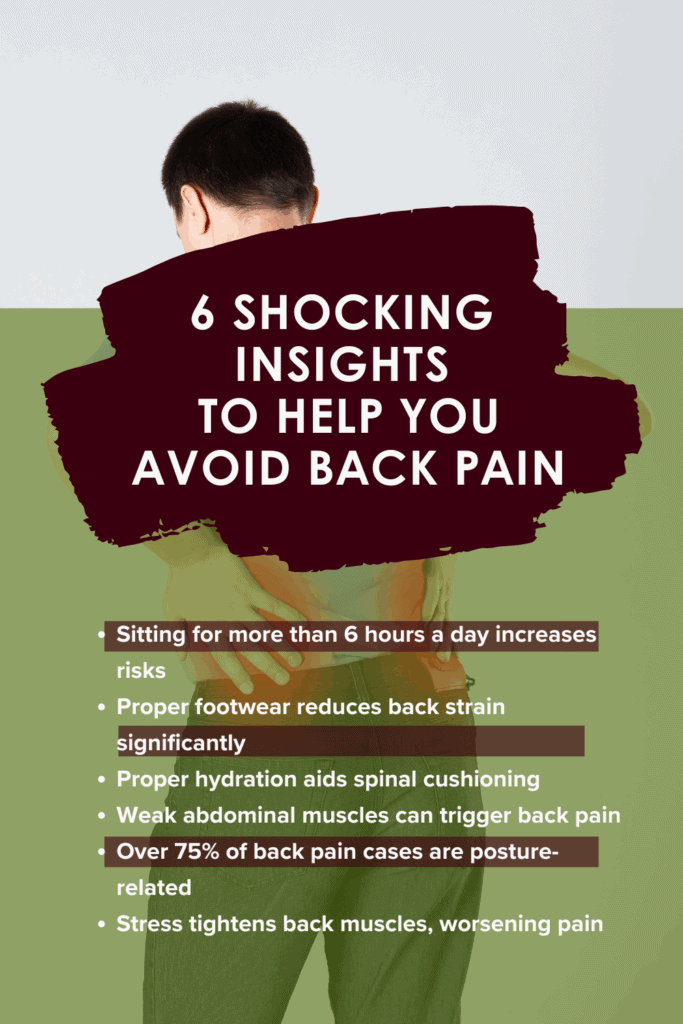
⏱ 1. Sitting for More Than 6 Hours a Day Increases Risk
Our bodies were designed to move — not sit for half the day. Studies show that sitting for over six hours daily puts excess pressure on spinal discs and weakens postural muscles.
What you can do:
-
Take short standing breaks every 30–45 minutes.
-
Use a timer or app to remind yourself to move.
-
Try alternating between a sitting and standing desk setup.
Even small movement breaks can reduce stiffness and improve circulation to your back.
👟 2. Proper Footwear Reduces Back Strain Significantly
Your shoes can make or break your posture. Worn-out soles or high heels force your body to adjust unnaturally, causing your spine to curve and your muscles to tighten.
Solution: Wear shoes with good arch support and cushioning. For workdays, switch between supportive flats or sneakers whenever possible.
Think of your feet as the foundation — when they’re balanced, your back stays aligned.
💧 3. Proper Hydration Aids Spinal Cushioning
Here’s one you probably haven’t heard before: dehydration affects your spine. The discs between your vertebrae are filled with water that acts like a cushion. When you’re dehydrated, those cushions shrink — leading to stiffness and pain.
Tip: Drink 6–8 glasses of water daily. Herbal teas and water-rich foods like cucumbers or oranges can also keep your spine hydrated.
🧘♀️ 4. Weak Abdominal Muscles Can Trigger Back Pain
Your core isn’t just about abs — it’s your body’s natural back brace. Weak abdominal muscles force your spine to work harder for stability, increasing the risk of lower back pain.
Try this:
Add gentle exercises like bridges, planks, or pelvic tilts a few times a week. Strengthening your core improves posture and keeps your lower back protected.
🪑 5. Over 75% of Back Pain Cases Are Posture-Related
That slouch while scrolling? It adds up. Poor posture strains your spine, shoulders, and neck muscles, causing fatigue and long-term misalignment.
Quick Fix:
-
Sit with your shoulders relaxed and your back supported.
-
Keep your screen at eye level.
-
Avoid leaning forward when using your phone or laptop.
Sometimes, correcting your posture can instantly relieve pain that’s been lingering for weeks.
😣 6. Stress Tightens Back Muscles, Worsening Pain
When you’re stressed, your body tenses up — especially around your shoulders and lower back. Chronic tension can reduce flexibility and even compress nerves.
What helps:
Deep breathing, gentle stretching, or meditation can calm both your mind and your muscles. Stress relief isn’t just mental; it’s physical therapy for your back.
🌿 Final Thoughts
Back pain doesn’t always start with big movements — often, it’s the small things we overlook every day. By staying hydrated, moving more, choosing supportive shoes, and easing stress, you can give your back the care it deserves.
Your spine supports you every day — it’s time to return the favor. 💚