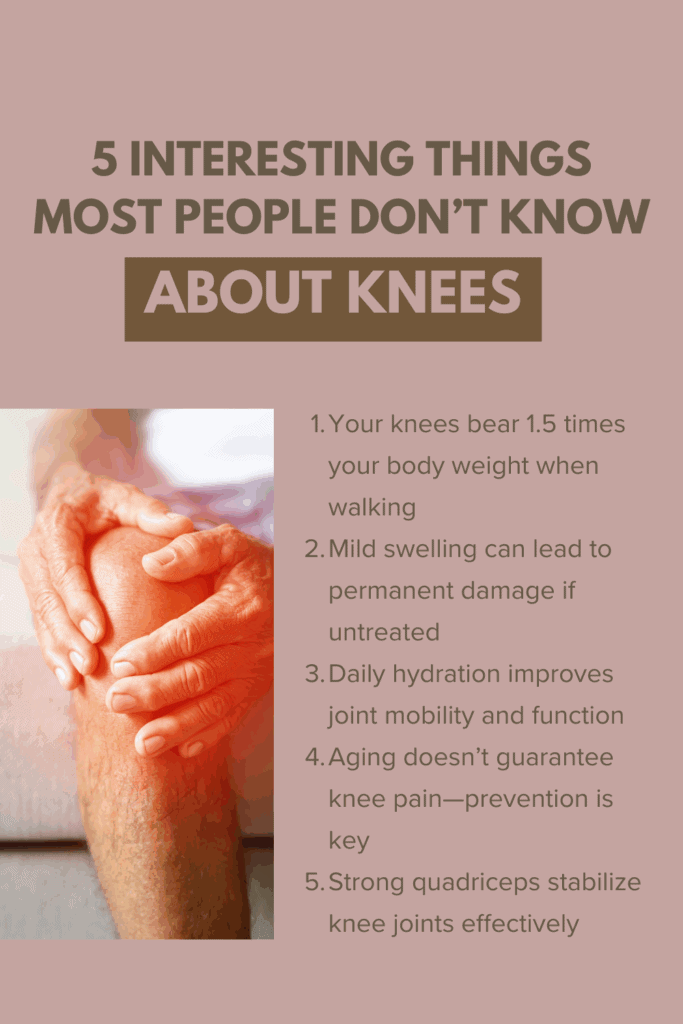
Your knees are remarkable—they bear your body’s weight, support every step, and help you move with ease. Yet, they’re often overlooked until pain strikes. Understanding how your knees function can help you protect them from long-term damage and maintain mobility for years to come.
Let’s uncover six fascinating knee facts most people don’t know.
⚡ 1. Your Knees Absorb Shock Every Time You Move
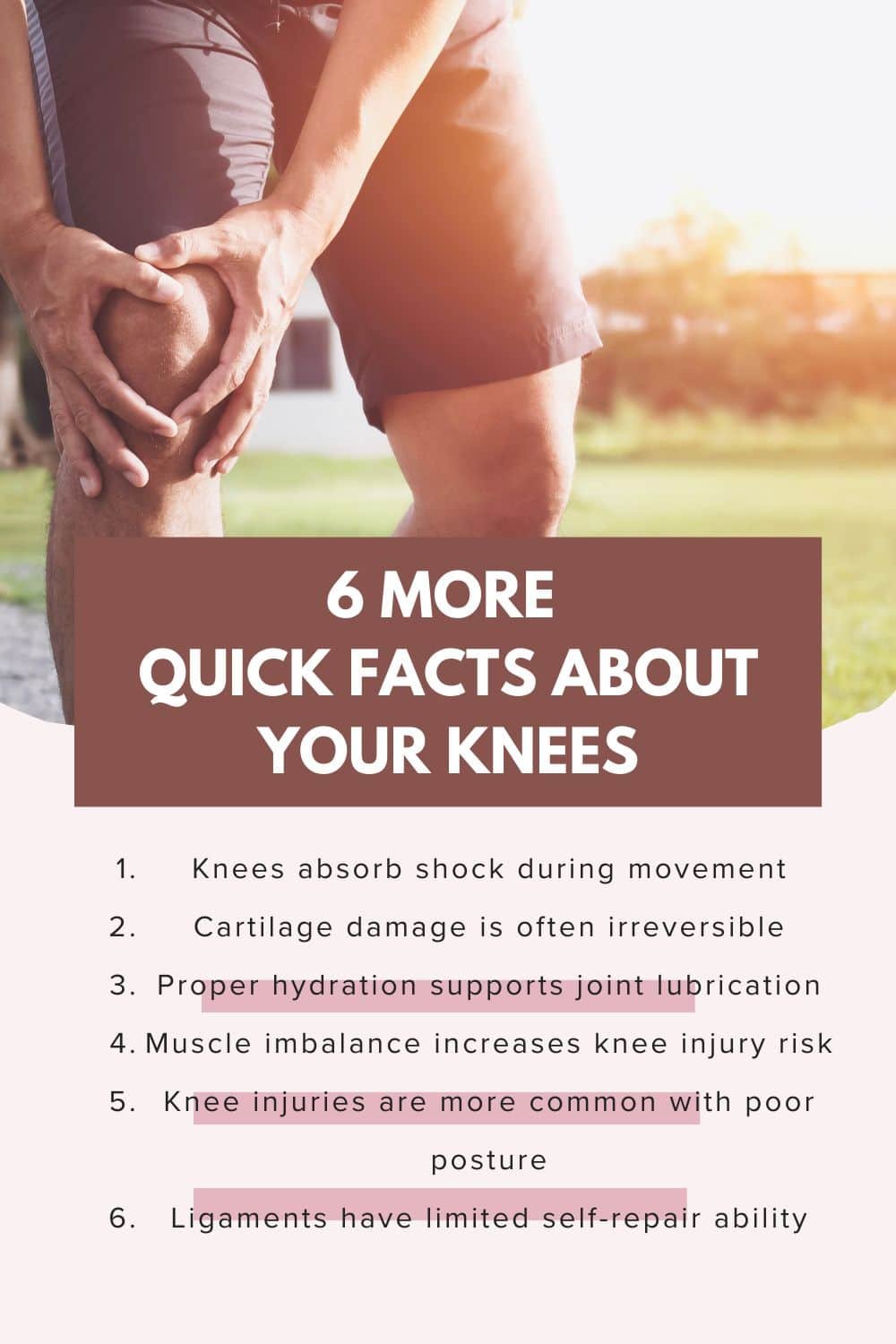
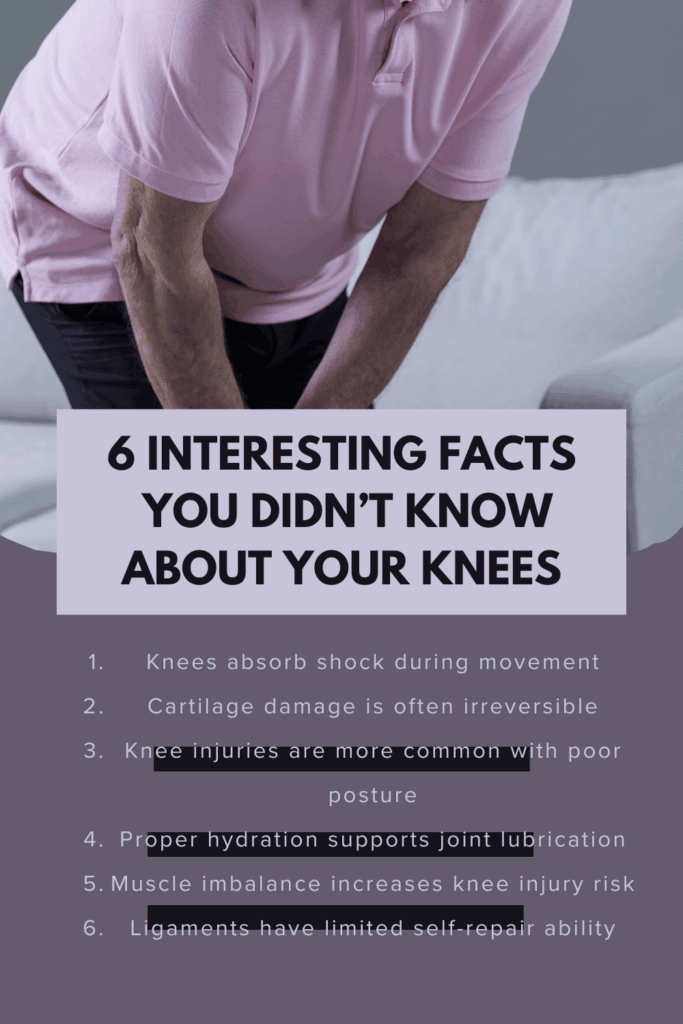
Each step, jump, or squat sends waves of force through your knees. Thankfully, your knee joints are designed to absorb shock through cartilage and surrounding muscles, keeping your bones from grinding together.
👉 Tip: Strengthen your quadriceps and glutes to improve shock absorption and reduce stress on the knees.
🦴 2. Cartilage Damage Is Often Irreversible
Cartilage acts like a cushion inside your joints, but it doesn’t regenerate easily. Once damaged, it can lead to stiffness, pain, and even arthritis. That’s why prevention—through regular movement and joint-friendly nutrition—is key.
👉 Protect it: Eat foods rich in collagen, omega-3s, and vitamin C to support cartilage health.
🚶 3. Poor Posture Increases Knee Injury Risk
When your posture is off—whether you’re standing, sitting, or walking—it changes how your knees bear weight. Over time, this misalignment can cause pain, swelling, and joint strain.
👉 Try this: Practice standing tall with your knees slightly bent and your weight evenly distributed on both feet.
💧 4. Hydration Keeps Your Joints Lubricated
Your knees contain synovial fluid, a natural lubricant that allows smooth, pain-free movement. But dehydration can thicken this fluid, causing friction and stiffness.
👉 Stay hydrated: Drink plenty of water daily and eat hydrating foods like cucumbers, oranges, and watermelon.
🏋️ 5. Muscle Imbalance Can Lead to Injury
When one muscle group—like your quads or hamstrings—is much stronger than the other, it pulls unevenly on your knee joint. This imbalance can increase the risk of ligament strain or tendon pain.
👉 Balance it out: Include both front and back leg exercises in your workouts for even strength.
🧬 6. Ligaments Have Limited Self-Repair Ability
Ligaments stabilize your knee, but they have a low blood supply. This means healing from sprains or tears takes time and care. Supporting your body with proper rest, movement, and nutrition can aid recovery.
👉 Focus on prevention: Warm up before workouts and avoid sudden, jerky movements that stress your knees.
🌿 Final Thoughts
Your knees are strong—but not invincible. By understanding how they function and giving them the care they deserve, you can keep them pain-free and mobile for years.
Remember: hydration, balance, and movement are your knees’ best friends.
💡 Save this post to remind yourself to protect your knees before pain starts!