
Our knees are among the most hardworking joints in the human body. Whether it’s walking up stairs, squatting to lift something, or even standing still, your knees quietly take on more pressure than you realize. Yet, we often overlook how fascinating — and fragile — these joints really are.
In this post, let’s explore five intriguing insights about your knees that can help you understand their importance and protect them for life.
1. Your Knees Carry Up to 1.5 Times Your Body Weight When Walking
Every step you take puts a surprising amount of stress on your knees. When you walk, your knees support up to 1.5 times your body weight. When you run or jump, that number can climb to 3–5 times!
This constant pressure is why maintaining a healthy weight is key. Extra pounds mean extra stress — which can speed up cartilage wear and lead to early knee pain.
Pro tip: Low-impact exercises like swimming, cycling, or walking on soft surfaces help keep your knees strong without overloading them.
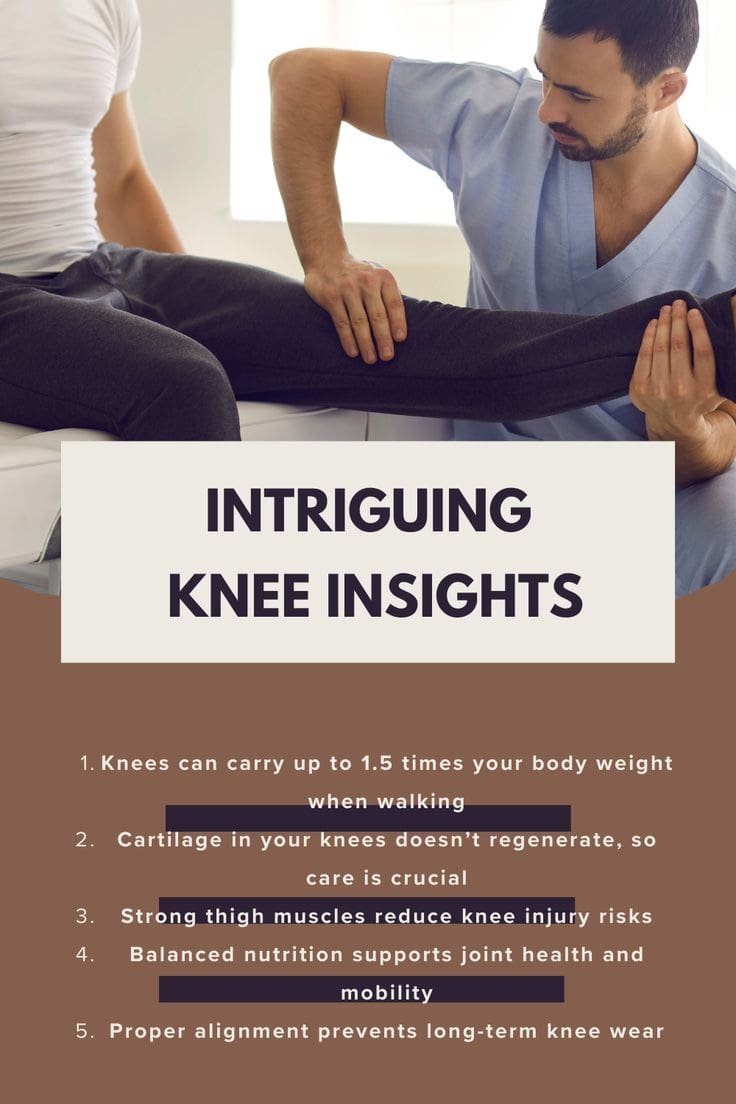
2. Knee Cartilage Doesn’t Regenerate — So Care Is Crucial
Unlike some tissues in your body, cartilage in your knees doesn’t naturally regenerate. Once it wears away, it’s gone for good. This means prevention is everything.
To protect your cartilage:
-
Avoid repetitive high-impact activities on hard surfaces.
-
Strengthen your leg muscles to support your knees.
-
Stay hydrated — cartilage health depends on fluid balance!
A little care now can save you from joint stiffness and arthritis down the road.
3. Strong Thigh Muscles Reduce Knee Injury Risks
Your thighs do more than you think. Strong quadriceps and hamstrings act as shock absorbers, reducing the load on your knees during daily activities.
Adding strength training to your weekly routine helps balance muscle power around the joint — preventing misalignment, sprains, or chronic pain.
Try these moves: wall sits, leg raises, and mini-squats. Start slow and focus on control rather than speed.
4. Balanced Nutrition Supports Joint Health and Mobility
What you eat can directly affect your knee health. Nutrients like vitamin D, calcium, omega-3 fatty acids, and collagen help maintain cartilage, reduce inflammation, and improve flexibility.
Add more:
-
Fatty fish like salmon
-
Leafy greens
-
Bone broth or collagen supplements
-
Nuts and seeds
Small dietary changes can make a big difference in your joint comfort and long-term mobility.
5. Proper Alignment Prevents Long-Term Knee Wear
Misalignment — whether from poor posture, flat feet, or muscle imbalance — can cause uneven wear and tear on your knees. Over time, that leads to pain or even degenerative joint conditions.
Check your walking posture and consider supportive footwear or orthotics if needed. Gentle stretching after workouts also helps maintain correct joint alignment and prevent stiffness.
Final Thoughts
Your knees are powerful, but they deserve care and respect. By understanding these intriguing knee insights, you can make smarter choices — from exercise and nutrition to posture and recovery — that protect your knees for the long run.
💡 Save this post for later or share it with someone who could use a knee-friendly reminder today.