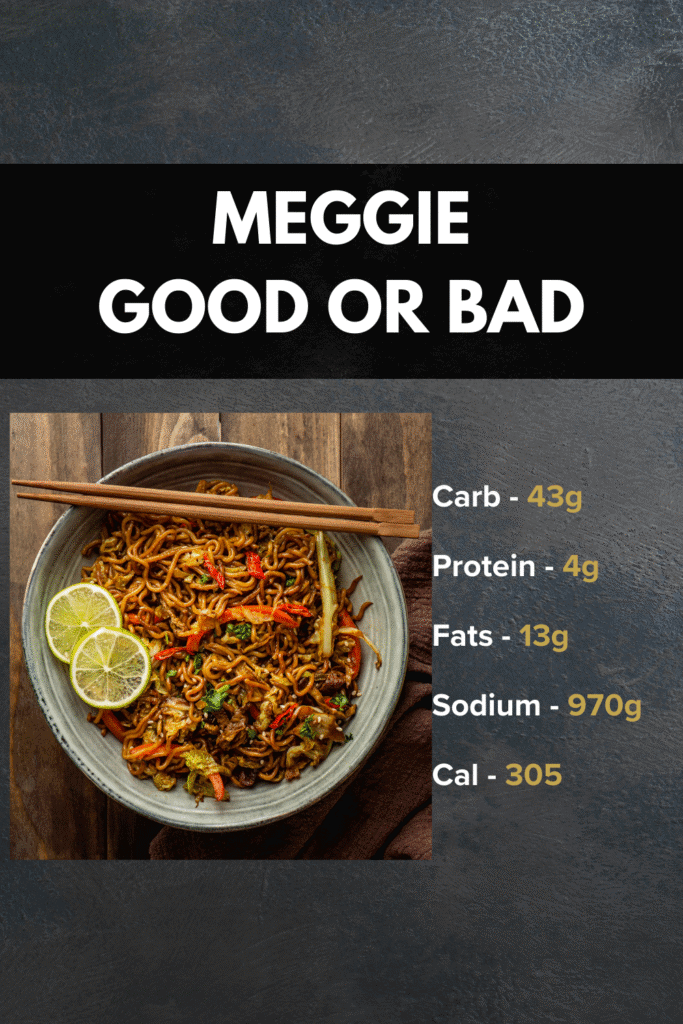
Maggi—or “Meggie” as many lovingly call it—has become one of the most popular comfort foods across the world. It’s quick, tasty, and perfect when you just need something warm and satisfying. But is Maggi actually good for you? The Pinterest pin you shared gives a clear picture of the nutrition facts, and when you look closely, you can see why people have mixed feelings about this instant classic.
In this post, we’ll break down the numbers from the pin and help you understand whether Maggi fits into a daily diet or should be enjoyed only occasionally.
Nutrition Facts From the Pin
The image lists the following for a serving of Maggi-style noodles:
-
Carbs: 43g
-
Protein: 4g
-
Fats: 13g
-
Sodium: 970mg
-
Calories: 305
Let’s explore what each of these means for your health.
1. High Carbs (43g): Quick Energy but Easy to Overeat
Maggi is mostly refined carbs, which means:
-
It digests quickly
-
It can spike your blood sugar
-
You may feel hungry again soon
This doesn’t make it “bad,” but it does mean it isn’t very filling or balanced on its own. If you’re trying to manage weight, energy levels, or cravings, high refined carbs can make it challenging.
2. Low Protein (4g): Not Great for Fullness
One reason Maggi doesn’t keep you full is the very low protein content. You need protein for:
-
Muscle health
-
Appetite control
-
Energy stability
With only 4 grams, you’ll likely feel hungry within an hour or two.
Tip: Add eggs, chicken, tofu, paneer, or lentils to improve this.
3. Moderate Fats (13g): Mostly Saturated Fats From Frying
Instant noodles are usually pre-fried, which increases the fat content. While 13g isn’t extremely high, it’s still more than what you’d get from a fresh, homemade meal.
Over time, high intake of instant-noodle fats may contribute to:
-
Weight gain
-
Higher cholesterol
-
Slower digestion
Adding vegetables can help balance the meal.
4. Very High Sodium (970mg): The Biggest Concern
This is the number that stands out the most. A single serving of Maggi contains:
➡️ Almost half of your recommended daily sodium limit
➡️ Salt-heavy seasoning packets + preservatives
High sodium intake is linked to:
-
Water retention
-
Bloating
-
High blood pressure
-
Increased risk of heart issues
If you’re watching your heart health or trying to reduce bloating, this is the main reason Maggi should be an occasional meal—not an everyday habit.
5. Calories (305): Not too high, but not very nutritious
At 305 calories, Maggi isn’t “high calorie.” In fact, it’s around the same as a sandwich or a bowl of rice. The issue isn’t the calories — it’s the lack of nutrients.
Maggi calories are mostly:
-
Refined carbs
-
Added fats
-
Sodium-heavy seasoning
This means the energy doesn’t last long, and there’s very little fiber, vitamins, or minerals.
So… Is Maggi Good or Bad?
Maggi isn’t “bad” in the sense that it is unsafe or forbidden. But according to the nutrition facts from your pin, it’s not something you should rely on regularly.
Maggi is okay when:
-
You eat it occasionally
-
You add protein like eggs or chicken
-
You include vegetables
-
You use only half the seasoning packet to reduce sodium
Maggi becomes a problem when:
-
You eat it daily
-
You are trying to lose weight
-
You have high blood pressure
-
You rely on it as a full meal
Instant noodles are delicious comfort food — just not a balanced meal by themselves.
How to Make Maggi Healthier
The pin shows a bowl loaded with:
-
Veggies
-
Lime
-
Stir-fried ingredients
Here’s how you can use that idea to upgrade your next Maggi bowl:
1. Add vegetables
Carrots, cabbage, peas, bell peppers — anything works.
2. Add a protein source
Eggs, tofu, chicken, beans, or paneer boost the nutritional value.
3. Reduce the masala packet
Use half to lower the sodium.
4. Add fresh herbs or lemon
This boosts flavor naturally without extra salt.
5. Switch to whole wheat or millet-based noodles if available
A better carb profile and more fiber.
Final Thoughts: Enjoy Maggi, Just Don’t Overdo It
Maggi is comfort, childhood memories, and quick happiness in a bowl — and that’s perfectly fine. But from a nutritional standpoint, it’s best enjoyed in moderation. Use the numbers from your pin as a guide, make small improvements when you can, and keep it balanced with vegetables and protein.
Pin this post for later — and enjoy your Maggi the smarter way next time. 🍜✨