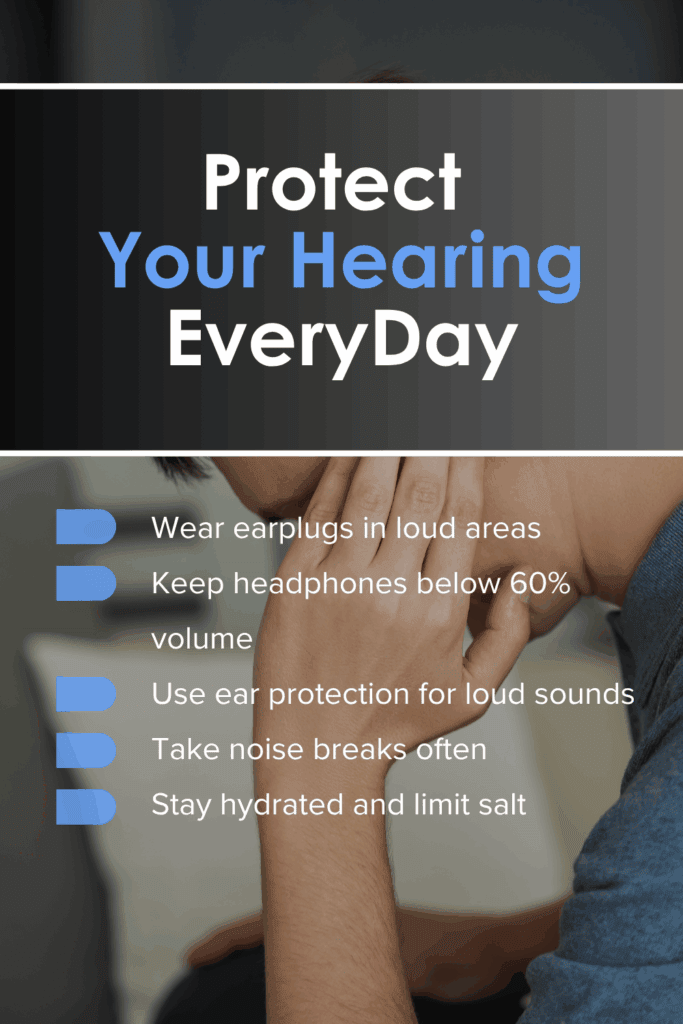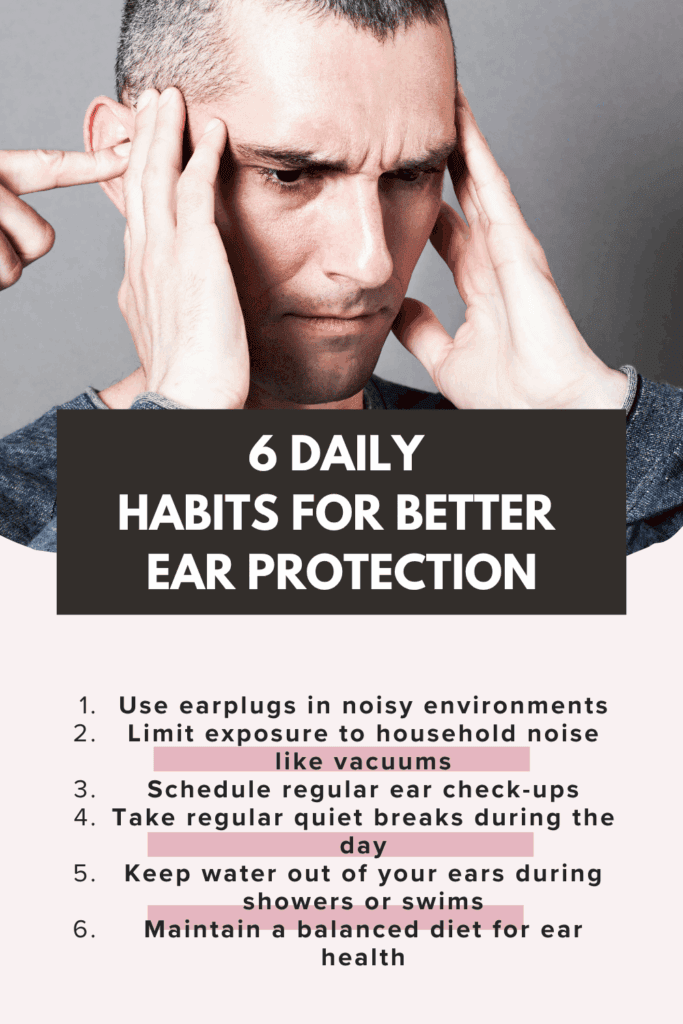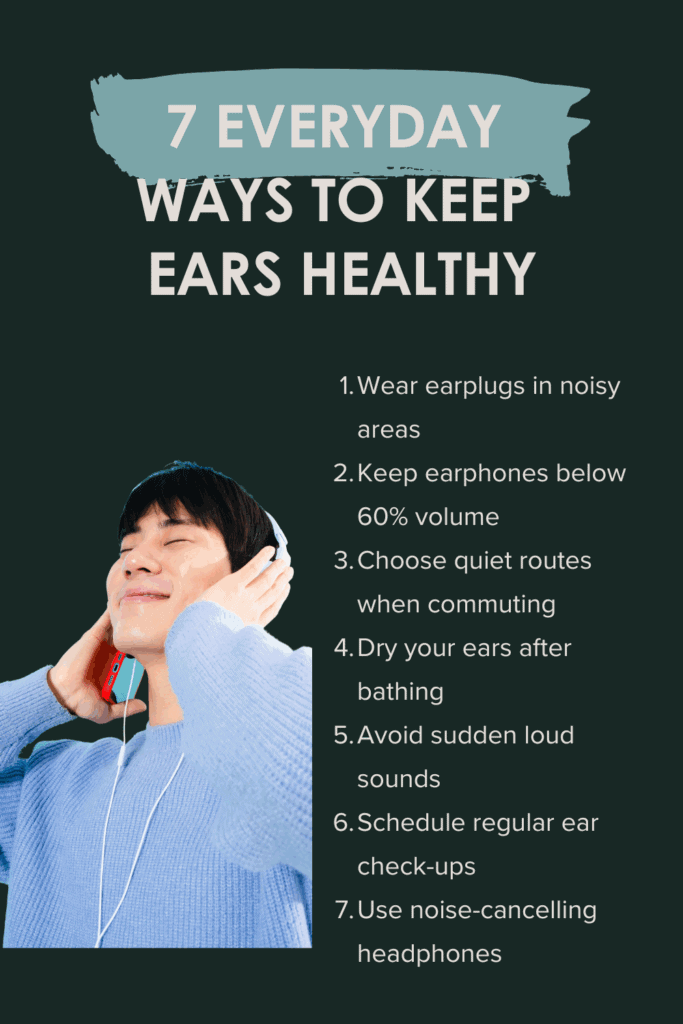
Your ears work hard every day — from helping you enjoy your favorite music to keeping you balanced. Yet, many of us don’t think about ear health until problems arise. Simple habits can go a long way in protecting your hearing and preventing tinnitus, infections, or long-term damage. Here are seven easy, practical steps to maintain healthy ears for life.
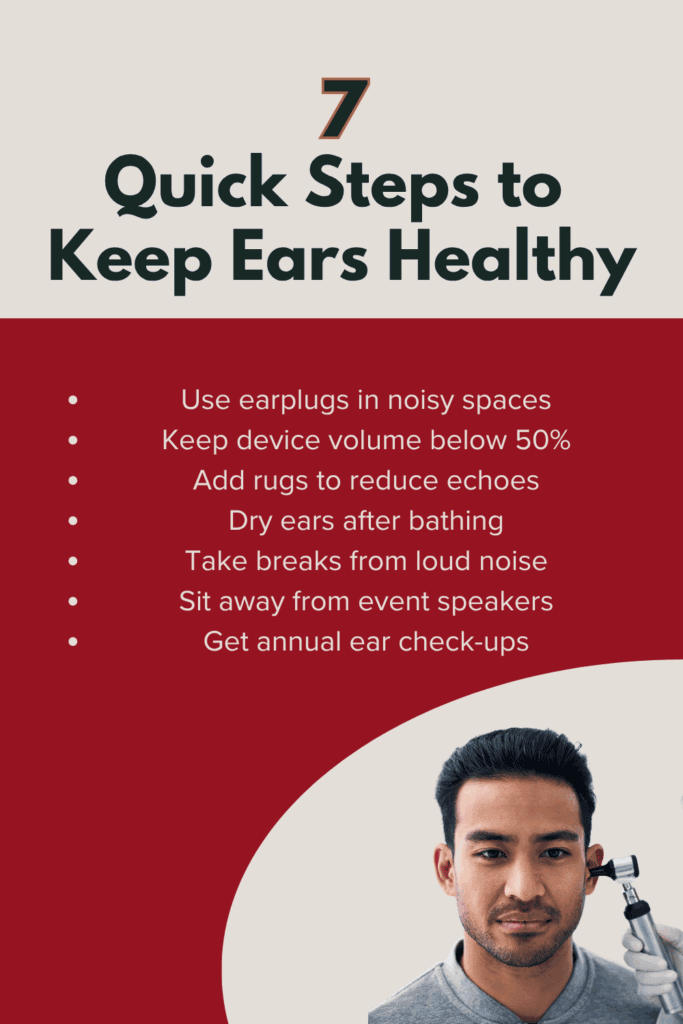
1. Use Earplugs in Noisy Spaces
Whether you’re attending a concert, working at a construction site, or mowing the lawn, high noise levels can damage delicate inner-ear cells. Using earplugs significantly reduces exposure and keeps your hearing sharp. Custom-fit earplugs are best for frequent use, offering comfort and superior protection.
2. Keep Device Volume Below 50%
Listening to music or watching videos at full volume might feel immersive, but it can strain your hearing over time. The safe listening zone is around 50–60% of your device’s maximum volume. If others can hear your headphones, it’s too loud. Try noise-canceling headphones so you don’t have to turn up the volume in noisy surroundings.
3. Add Rugs to Reduce Echoes
Hard surfaces amplify sound and echo, especially in homes with tile or hardwood floors. This constant sound reflection can subtly fatigue your ears. Adding soft materials like rugs, curtains, or wall panels helps absorb sound and create a calmer, ear-friendly environment.
4. Dry Ears After Bathing
Moisture trapped in the ear canal can encourage bacterial growth, leading to infections known as swimmer’s ear. After swimming or bathing, gently towel-dry your outer ear. Tilt your head to drain any remaining water — and avoid inserting cotton swabs, which can push moisture deeper in.
5. Take Breaks from Loud Noise
Your ears need rest just like any other part of your body. After exposure to loud environments, give your ears a few hours of quiet time. This helps auditory cells recover and reduces your risk of developing tinnitus or temporary hearing loss.
6. Sit Away from Event Speakers
Live events and movie theaters can reach volumes above 100 decibels — enough to damage hearing in minutes. Whenever possible, sit away from direct speaker lines or near walls that diffuse sound. Even small changes in position can make a big difference in protecting your ears.
7. Get Annual Ear Check-Ups
Regular hearing tests aren’t just for people with existing problems. Annual check-ups help detect subtle changes before they become permanent. Early intervention can prevent issues like tinnitus or age-related hearing decline.
Final Thoughts: Protect Your Ears, Protect Your Future
Healthy ears don’t just improve hearing — they improve your overall quality of life. By following these seven steps, you’ll protect your hearing, prevent tinnitus, and keep your ears strong for years to come. Consistency is key — small habits truly make the biggest difference! 🎧