
If you spend most of your day sitting—whether at a desk, in the car, or on the couch—you might be unknowingly fueling your back pain. Our bodies are designed to move, stretch, and stay active. When movement stops, stiffness starts. Over time, this lack of mobility weakens muscles and strains your spine, creating that familiar ache in your lower or mid-back.
Let’s look at how a sedentary lifestyle affects your back—and what simple changes you can make to feel better every day.
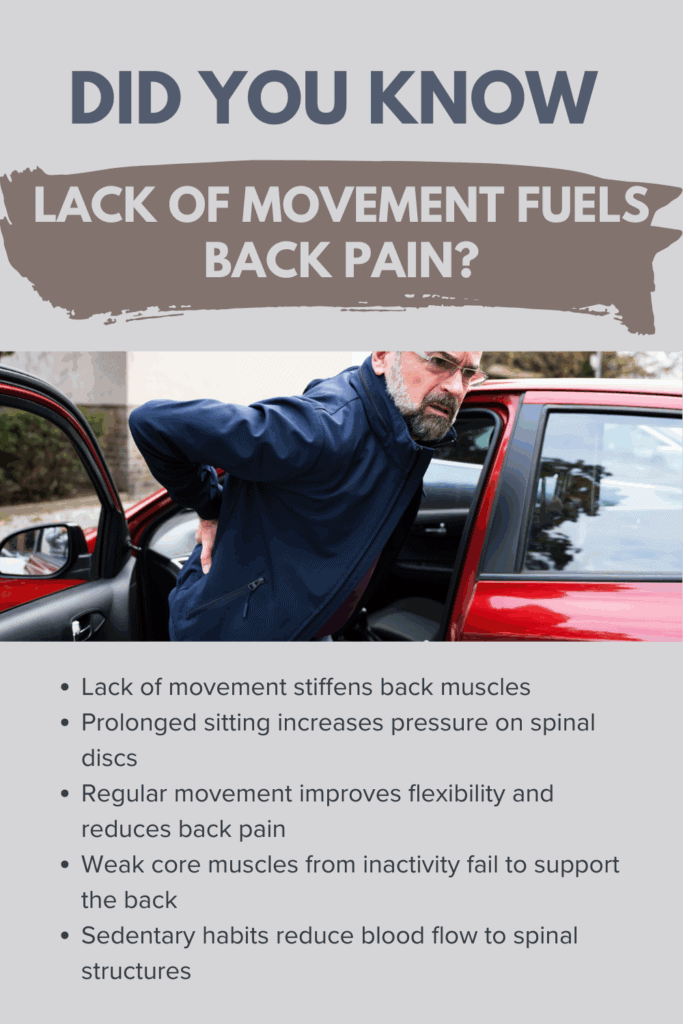
💢 1. Inactivity Stiffens Your Back Muscles
When you stay in one position for too long, your muscles tighten and lose elasticity. Over time, this stiffness reduces your spine’s natural flexibility, making even simple movements—like bending or standing up—feel uncomfortable.
👉 Solution: Take short movement breaks every 30–60 minutes. Even a quick stretch or standing walk can make a big difference in keeping muscles supple.
🪑 2. Prolonged Sitting Increases Pressure on Spinal Discs
Sitting for hours compresses your spinal discs—the cushions between your vertebrae that absorb impact and maintain posture. This pressure can lead to pain, disc degeneration, or even herniation if ignored for too long.
👉 Solution: Use an ergonomic chair, keep your feet flat on the floor, and adjust your screen height to prevent slouching.
🏃 3. Movement Improves Flexibility and Reduces Pain
Gentle daily activity—like walking, stretching, or light yoga—helps your muscles stay loose and your joints mobile. It also encourages blood flow to your spine, nourishing tissues and reducing inflammation.
👉 Try this: Start your day with 5 minutes of back-friendly stretches. It’s a small habit that can bring noticeable relief.
💪 4. Inactivity Weakens Your Core Muscles
Your core acts like a support belt for your spine. When you’re inactive, those muscles weaken, leaving your back to bear the load alone. This imbalance often leads to recurring lower back pain.
👉 Solution: Add simple core exercises such as bridges, planks, or pelvic tilts to your weekly routine. Stronger abs mean less stress on your back.
❤️ 5. Sedentary Habits Slow Blood Flow to the Spine
Reduced movement means reduced circulation. Without enough oxygen and nutrients reaching your spinal structures, healing slows down and discomfort lingers longer.
👉 Solution: Incorporate micro-movements throughout your day—shoulder rolls, seated twists, or a few steps around the room every hour.
🌿 How to Keep Your Back Happy
-
Aim for at least 10 minutes of stretching daily.
-
Walk whenever possible—park farther away or take the stairs.
-
Switch positions frequently while working.
-
Stay hydrated to support spinal disc health.
These small, consistent actions protect your spine and keep back pain from becoming a daily struggle.
🌞 Final Thought
Your body thrives on movement—it’s nature’s built-in pain relief system. By moving more and sitting less, you can keep your back strong, flexible, and pain-free for years to come.
Take a moment today to stretch, stand tall, and remind yourself: motion is medicine.
🧘♀️ Save this post and share it with someone who spends too much time sitting!