If you want a simple, low-stress way to lose fat without extreme workouts, walking might be exactly what you need. The truth is, you don’t have to sprint, jump, or push yourself to exhaustion to see results — and that’s why walking feels so refreshing. It’s gentle, effective, and something you can start today without changing your entire schedule. This post takes inspiration from the pin you shared, “Lose More Fat by Walking,” and breaks down the real benefits of this underrated exercise, plus how to make it a natural part of your life.
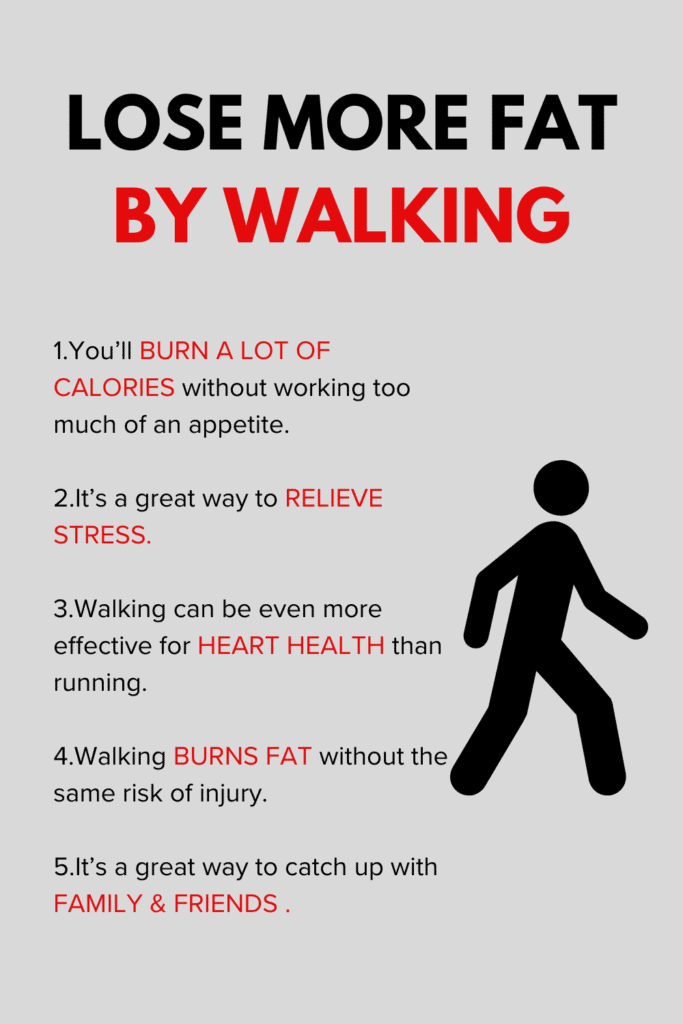
1. Walking Helps You Burn Calories Without Increasing Appetite
One of the biggest challenges with intense workouts is the hunger that follows. Walking gives you the opposite experience — you burn calories without triggering cravings or increasing your appetite as much. That means you stay in a better calorie balance throughout the day, which naturally supports fat loss.
A comfortable 30–45 minute walk can fit into almost anyone’s routine, and it doesn’t drain your energy. You’re moving at a pace that boosts fat metabolism while still keeping your body relaxed.
2. Walking Is a Powerful Way to Relieve Stress
The pin highlights something many people overlook: walking is one of the easiest ways to reduce stress. And when your stress levels are lower, it becomes easier to manage emotional eating, nighttime snacking, and cravings.
Walking outdoors — even for 10 minutes — triggers your body to release endorphins, the “feel-good” hormones. Add in fresh air, sunshine, and quiet time away from screens, and the benefits multiply.
If you’ve ever ended a walk feeling clearer, lighter, or more peaceful, that’s not an accident. Stress reduction plays a huge role in weight loss, and walking helps you reach that state naturally.
3. Walking Supports Heart Health (Sometimes Even More Than Running)
Many people assume running is the only way to improve heart health, but walking has been shown to offer similar — and in some cases better — cardiovascular benefits, especially over the long term.
Here’s why:
-
Walking reduces joint stress
-
It keeps your heart rate in a sustainable fat-burn zone
-
You’re more likely to stay consistent with it
Healthy habits that last always produce better results than intense routines you quit after two weeks.
Even a brisk walk counts as moderate exercise, which is enough to improve blood circulation, lower blood pressure, and support heart health according to multiple studies.
4. Walking Burns Fat Without the Risk of Injury
Running, HIIT, and high-impact workouts can burn calories faster, but they also come with a higher chance of injury, especially for people with knee, back, or ankle issues. Walking is different — it’s gentle and steady, making it suitable for nearly any age or fitness level.
Walking helps your body tap into stored fat because you stay in a comfortable intensity zone, often called the fat-burn zone. Since you can maintain it longer, you often burn more fat overall compared to short bursts of intense activity.
Plus, less soreness and fewer aches mean you can walk every day — and daily consistency is one of the biggest secrets to weight loss that people rarely talk about.
5. Walking Helps You Connect With Friends and Family
The pin also mentions a beautiful benefit: walking is social. It’s an easy way to catch up with loved ones, spend quality time, and build deeper connections — all while staying active.
A few simple ideas:
-
Evening walks with your partner
-
Weekend walks with your kids
-
Coffee-and-walk hangouts with friends
-
Walking meetings instead of sitting indoors
Walking doesn’t just improve your body — it strengthens your relationships and boosts emotional wellness.
How to Start a Simple Fat-Burning Walking Routine
If you want to turn walking into a realistic fat-burning habit, here’s a friendly plan to begin with:
Start With 20–30 Minutes a Day
This is enough to build momentum without overwhelm.
Aim for a Brisk Pace
You should feel warm and slightly out of breath, but still able to talk.
Add Small Challenges Over Time
-
Small hills
-
Longer routes
-
Faster intervals for 30–60 seconds
-
A weighted backpack (optional)
Walk After Meals
A 10-minute post-meal walk helps reduce blood sugar spikes and supports fat metabolism.
Keep It Fun
Podcasts, music, nature trails, or a walking buddy make it enjoyable.
Final Thoughts: A Simple Step Toward Feeling Lighter
Walking isn’t flashy, but that’s its power — it’s practical, sustainable, and something you can stick with long enough to see real results. Whether you walk to feel lighter, clear your mind, or improve your heart health, it’s one of the easiest habits to add to your daily routine. Start with one walk today and notice how different your body and mind feel.
Save this post for later — and take your next walk as soon as you can. Your future self will thank you. 🚶♀️✨