
Tinnitus — that constant ringing or buzzing in your ears — can feel endless and overwhelming. Many people try to manage it on their own, but unknowingly make small mistakes that make things worse. Whether it’s avoiding sound therapy or ignoring stress, these habits can hold you back from real relief.
In this post, you’ll discover 5 common mistakes people make when managing tinnitus and learn simple ways to correct them for a calmer, more peaceful life.
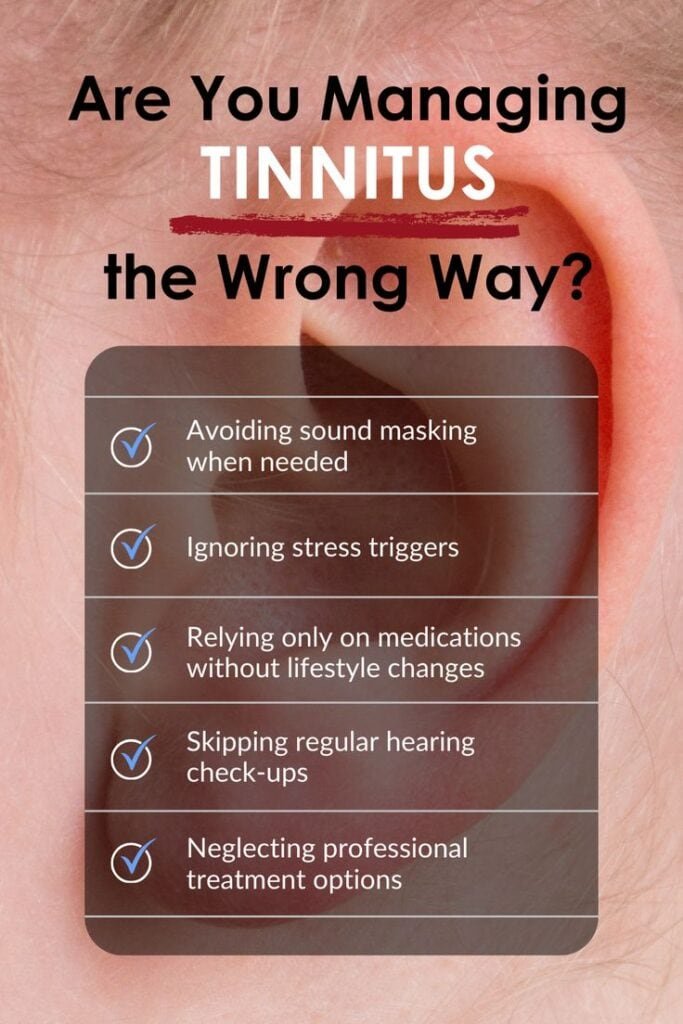
1. Avoiding Sound Masking When Needed
Sound masking, like using soft background noises, can help your brain tune out the ringing. Yet, many people avoid it thinking silence is better — when in fact, silence makes tinnitus louder and more noticeable.
Try gentle ambient sounds, such as rainfall, ocean waves, or white noise machines. Even apps designed for tinnitus can help you relax while focusing less on the ringing. Think of it as giving your ears a break instead of fighting the noise.
2. Ignoring Stress Triggers
Stress is one of the biggest tinnitus amplifiers. When your body’s on edge, your perception of tinnitus increases. Over time, this cycle can feel endless.
Take small daily actions to manage stress — like deep breathing, stretching, or a quiet walk. Yoga and mindfulness are also proven to help calm both your mind and your auditory system. Reducing stress won’t cure tinnitus, but it can make symptoms much easier to handle.
3. Relying Only on Medications Without Lifestyle Changes
While medications or supplements may help, relying solely on them rarely solves the root issue. Tinnitus management works best when combined with healthy habits — balanced nutrition, hydration, and consistent sleep.
You might try reducing caffeine or alcohol intake, both known to worsen ear ringing for some people. Pairing professional guidance with small lifestyle adjustments can make a noticeable difference over time.
4. Skipping Regular Hearing Check-ups
Your hearing health is deeply connected to tinnitus. Many people skip hearing tests because they assume ringing is “just stress.” But even mild hearing loss can make tinnitus louder.
Seeing an audiologist at least once a year helps track changes early. They can recommend hearing aids, sound therapies, or customized programs to reduce tinnitus intensity. Regular care ensures you’re not missing a key part of your recovery.
5. Neglecting Professional Treatment Options
One of the biggest mistakes is not seeking help from a hearing professional. Audiologists, ENT specialists, and tinnitus-focused therapists can offer treatment options most people don’t know exist — like cognitive behavioral therapy (CBT), tinnitus retraining therapy (TRT), or sound-based programs.
Professional support turns frustration into progress. Even if you’ve had tinnitus for years, personalized guidance can help you regain control and confidence.
Final Thoughts: Don’t Let Tinnitus Manage You
Tinnitus may not disappear overnight, but managing it effectively is possible. Start by addressing these five common mistakes and focusing on small, consistent improvements.
Pay attention to your stress levels, explore sound therapy, and talk to a hearing professional if you haven’t already. The sooner you take action, the sooner you’ll notice relief.
💡 Pin this post to revisit these tinnitus care tips later — your ears will thank you!