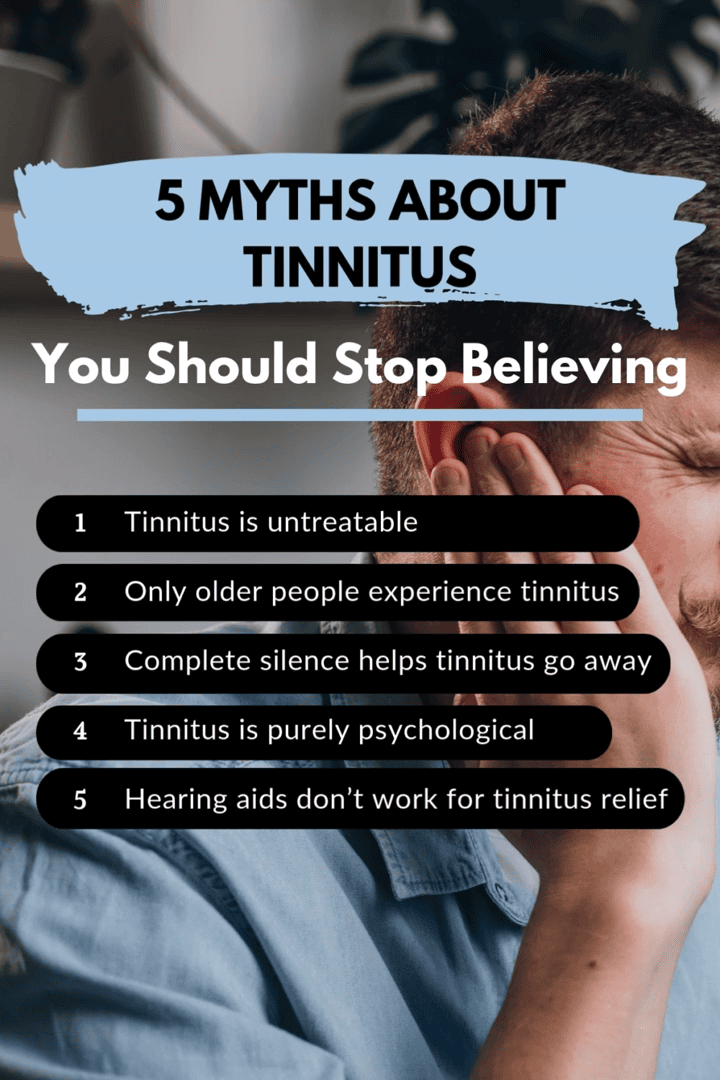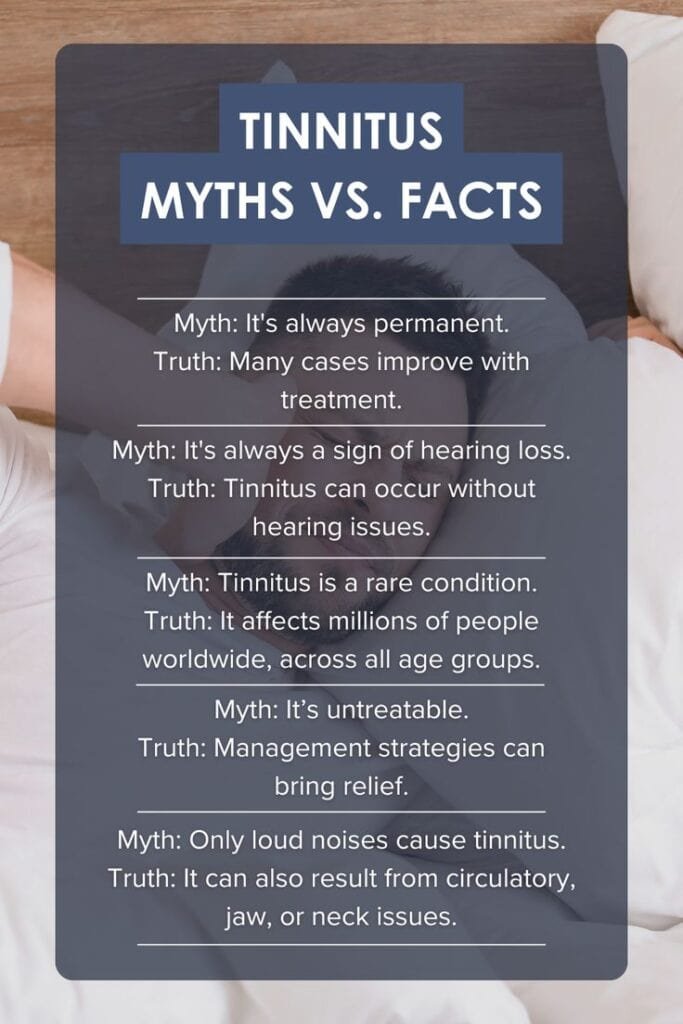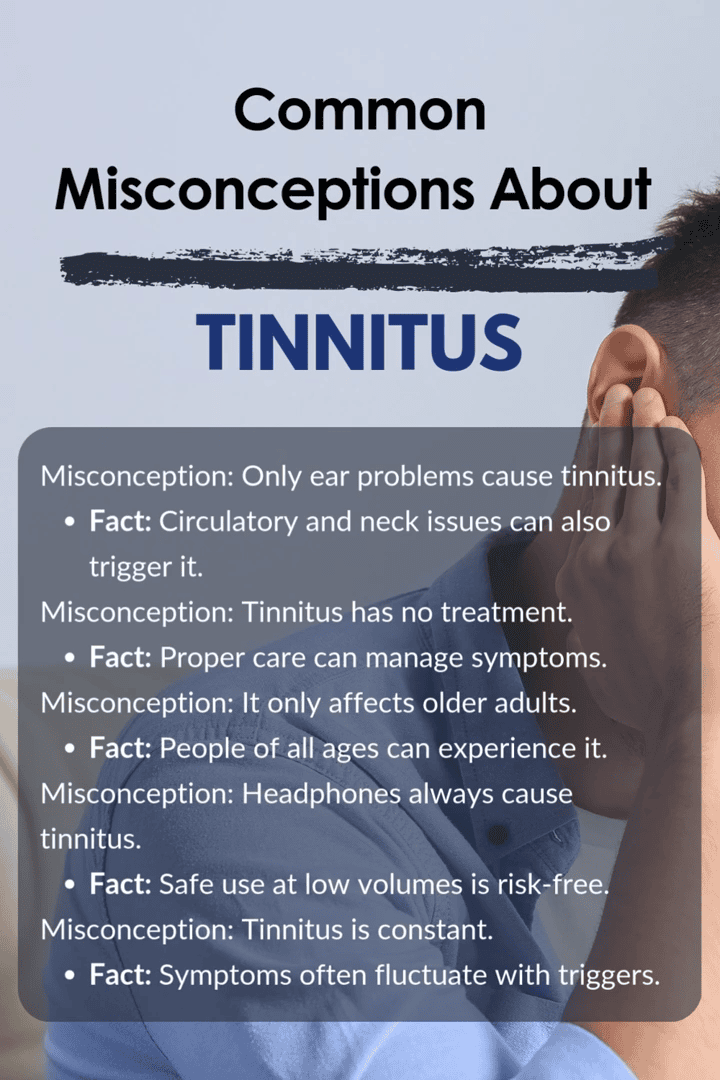
If you’ve ever experienced ringing, buzzing, or humming in your ears, you know how frustrating tinnitus can be. Unfortunately, there’s a lot of misinformation out there that can make living with tinnitus even harder.
Many people believe it’s untreatable or that it only affects older adults, but science tells a different story. In this post, we’ll bust five common tinnitus myths — and share the truths that can help you manage your symptoms more effectively.
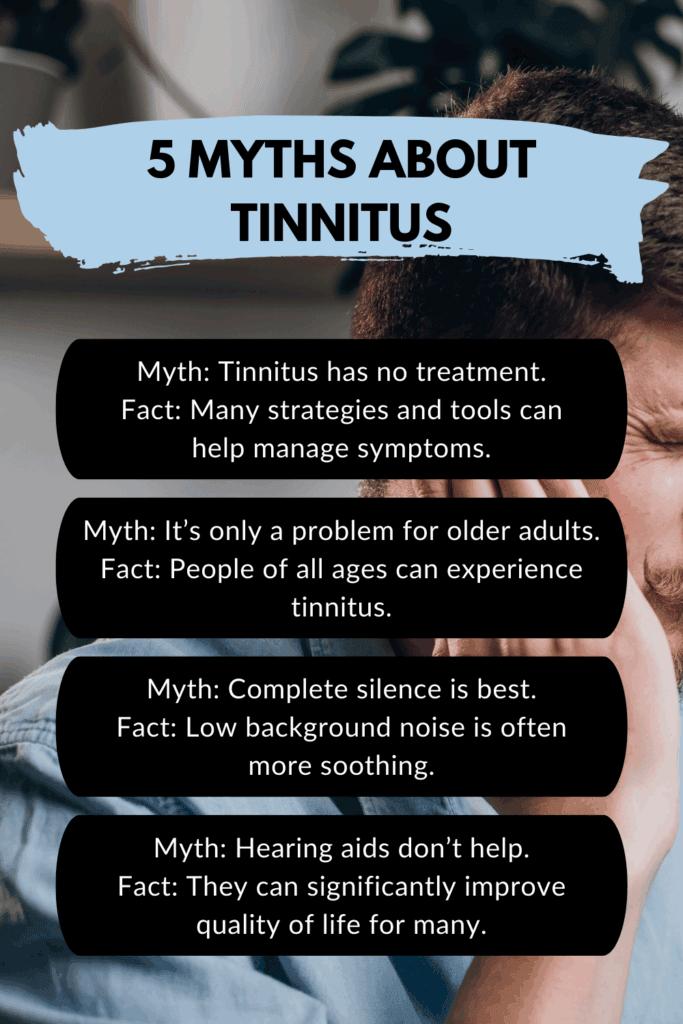
🧠 Myth 1: Tinnitus Has No Treatment
Fact: While there’s no single cure for tinnitus, there are many effective ways to manage it.
Therapies like sound therapy, cognitive behavioral therapy (CBT), and tinnitus retraining therapy (TRT) can all reduce how loud or intrusive the ringing feels. Lifestyle adjustments — such as managing stress, improving sleep, and avoiding known triggers — can also make a huge difference.
The key is to think of tinnitus not as a permanent sentence, but as a condition that can be controlled and improved with the right tools and guidance.
👵 Myth 2: Tinnitus Only Affects Older Adults
Fact: People of all ages can experience tinnitus.
While it’s more common as people age due to natural hearing loss, tinnitus also affects young adults and teens — especially those exposed to loud music, concerts, or earbuds at high volumes.
In fact, increased use of headphones and noisy environments has made tinnitus more prevalent among younger generations. Protecting your ears now can help prevent worsening symptoms later.
🤫 Myth 3: Complete Silence Is Best
Fact: Silence can actually make tinnitus feel louder.
When your surroundings are completely quiet, the internal ringing becomes more noticeable. Instead, a gentle background sound — like soft music, a fan, or nature sounds — helps distract the brain and reduce tinnitus perception.
This is why sound masking and white noise machines are commonly recommended by audiologists. They don’t eliminate tinnitus, but they make it much easier to ignore.
🎧 Myth 4: Hearing Aids Don’t Help
Fact: For many people, hearing aids can dramatically improve tinnitus symptoms.
If your tinnitus is linked to hearing loss, a hearing aid can amplify external sounds — helping your brain focus on real noises instead of internal ringing. Many modern hearing aids even come with built-in tinnitus maskers that generate soothing background sounds to ease discomfort.
By restoring sound balance, hearing aids can also improve focus, sleep, and overall quality of life.
🚫 Myth 5: There’s Nothing You Can Do About It
Fact: You have more control than you think.
Tinnitus often feels overwhelming, but your daily habits play a big role in how severe it feels. Simple steps like:
-
Limiting caffeine and alcohol
-
Staying hydrated
-
Managing stress with mindfulness or gentle yoga
-
Getting consistent sleep
…can all help calm your nervous system and reduce tinnitus intensity over time.
Remember, progress might be gradual — but consistency brings relief.
🌿 The Truth: You’re Not Alone
Tinnitus affects millions of people worldwide, but awareness and treatment options are improving every year. From natural remedies and sound therapy to professional hearing support, there are multiple paths toward a quieter, calmer life.
Don’t let myths hold you back — with the right strategies, you can regain control and live comfortably again.