If you’ve ever experienced that constant ringing, buzzing, or hissing sound in your ears, you know how frustrating tinnitus can be. But what’s even more confusing? The myths and misinformation surrounding it. From “tinnitus is untreatable” to “it only affects older people,” these misconceptions can keep you from finding real relief.
Let’s break down five of the biggest tinnitus myths — and reveal what’s actually true.
🩺 1. Myth: Tinnitus Is Untreatable
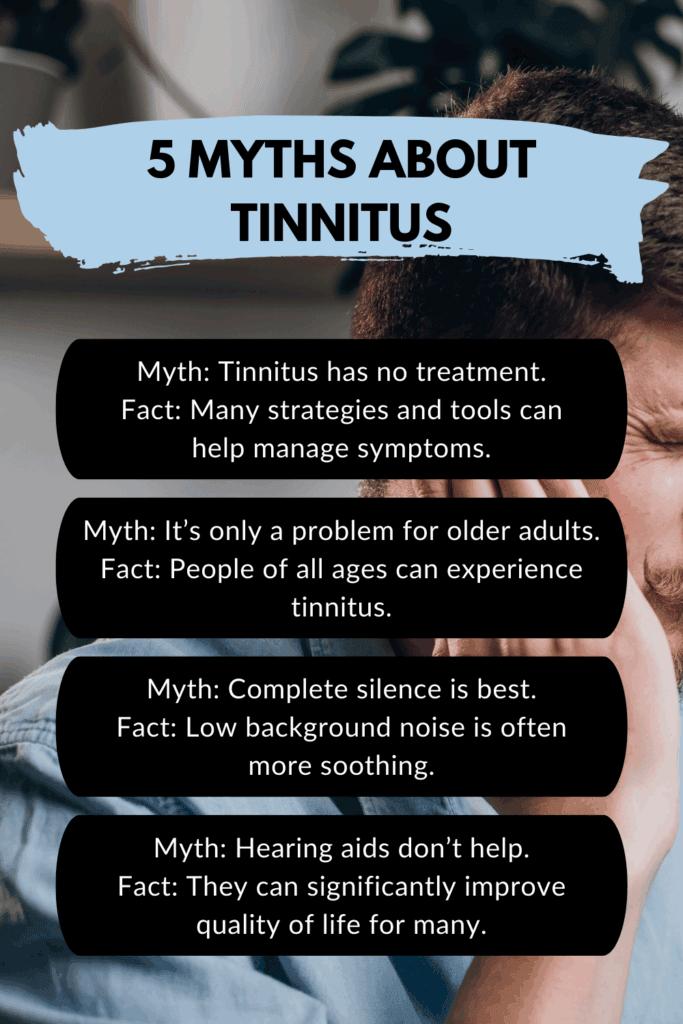
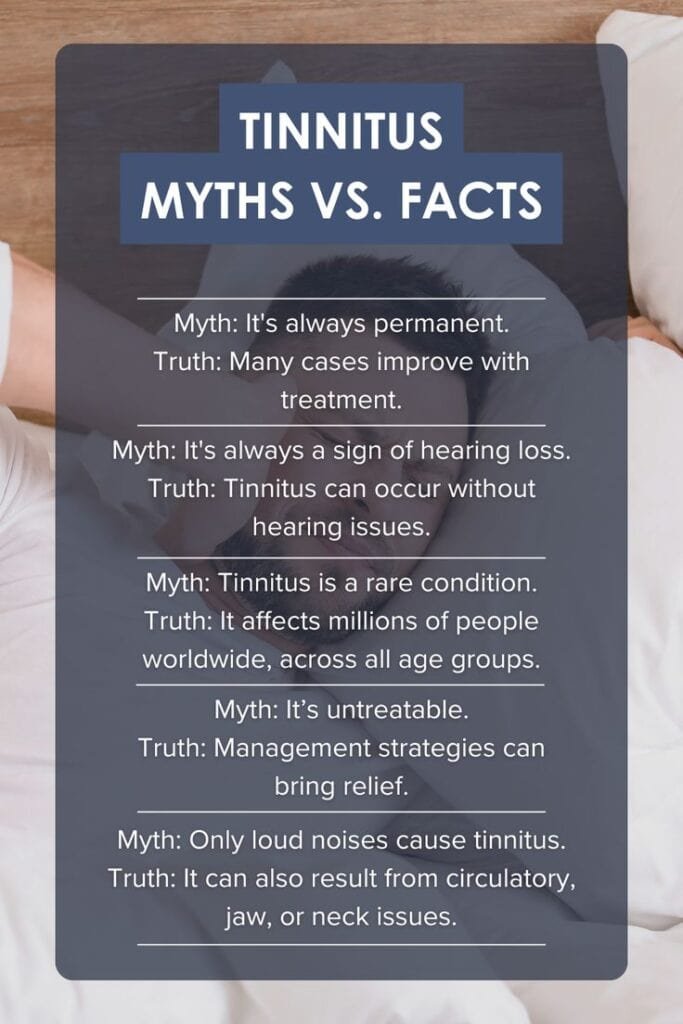
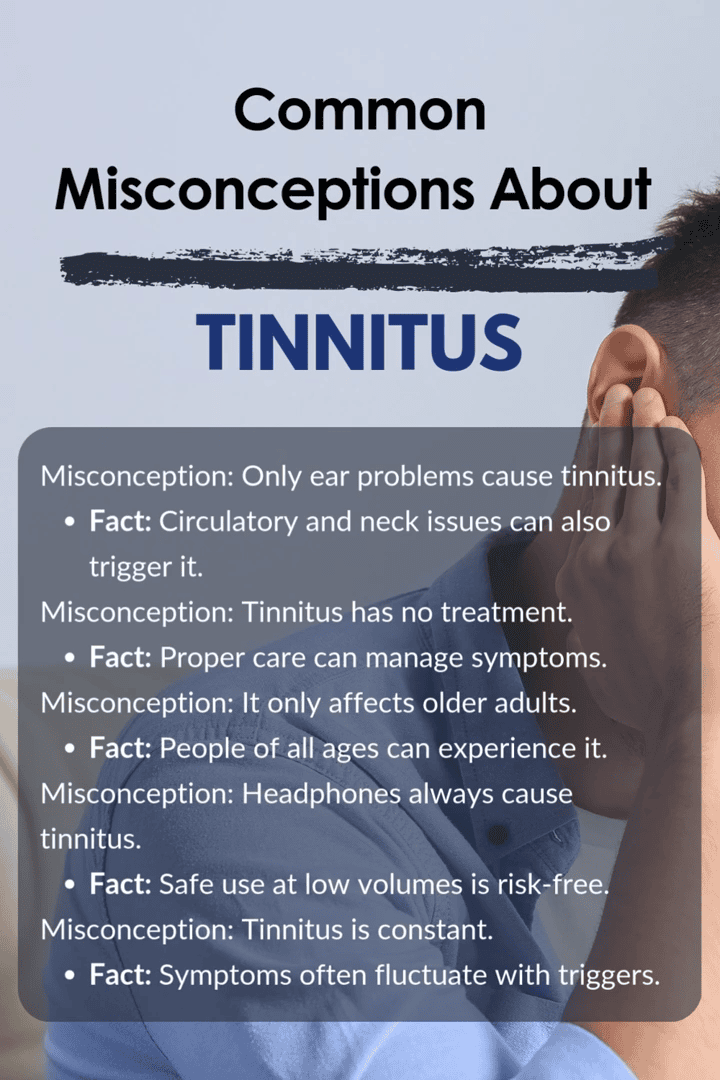
While there’s no single cure for tinnitus, calling it “untreatable” isn’t accurate. Many people experience significant improvement through sound therapy, stress management, and dietary adjustments. In some cases, treating the underlying issue — like ear infections, hearing loss, or jaw tension — can drastically reduce symptoms.
👉 Truth: Tinnitus can be managed effectively with the right combination of therapies and lifestyle changes.
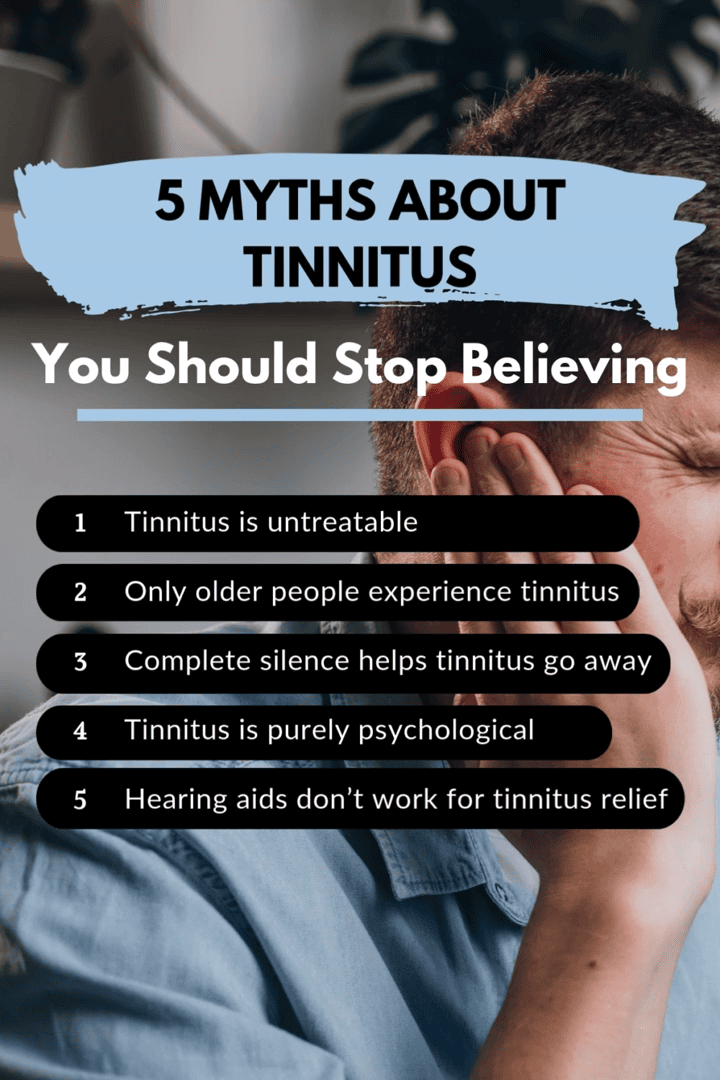
👵 2. Myth: Only Older People Experience Tinnitus
Tinnitus is often linked to aging, but it can affect anyone, including young adults and even teenagers. Exposure to loud music, headphones, or workplace noise are major causes in younger people today.
👉 Truth: Tinnitus can develop at any age, especially if your ears are regularly exposed to high-volume sounds.
🤫 3. Myth: Complete Silence Helps Tinnitus Go Away
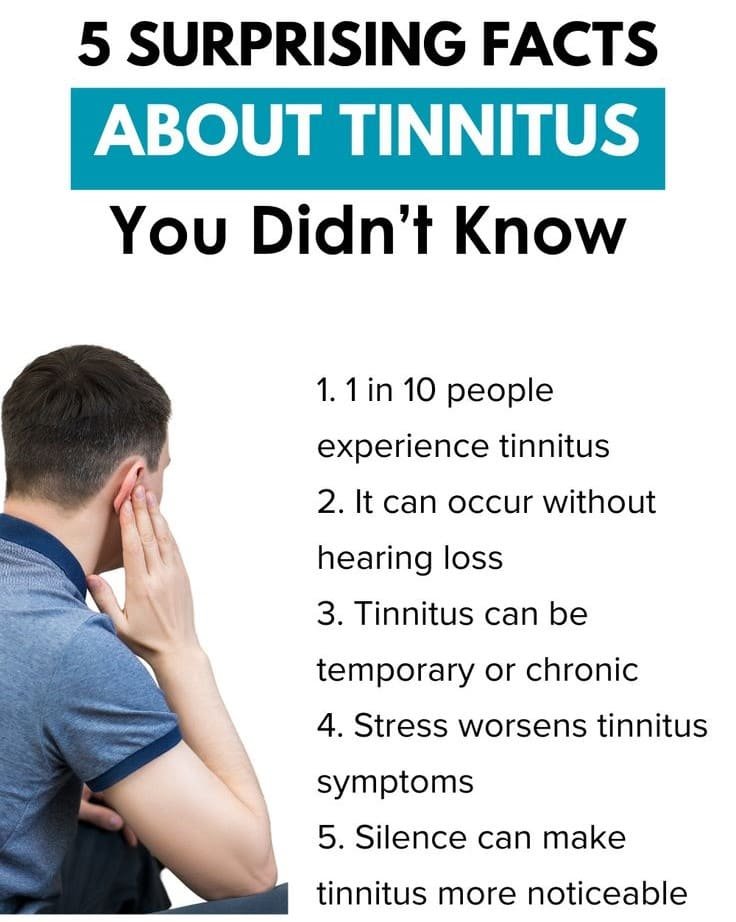
Many assume that resting in silence can calm the ringing, but for most people, quiet environments actually make tinnitus more noticeable. That’s because your brain focuses more on internal sounds when there’s no external noise.
👉 Truth: Gentle background sounds — like soft music, white noise, or nature sounds — can help mask tinnitus and reduce stress.
🧠 4. Myth: Tinnitus Is Purely Psychological
While stress can make tinnitus worse, it’s not “all in your head.” The condition often stems from physical causes like nerve damage, earwax buildup, or hearing loss. However, mental health does play a role — anxiety or depression can amplify how you perceive the noise.
👉 Truth: Tinnitus is a real physical condition with both auditory and emotional components. Managing stress can help, but it’s not the sole cause.
👂 5. Myth: Hearing Aids Don’t Work for Tinnitus Relief
This is one of the most persistent myths — and it’s completely false. For people with hearing loss, hearing aids can significantly reduce tinnitus by amplifying external sounds and retraining how the brain processes noise.
👉 Truth: Modern hearing aids often include built-in tinnitus maskers and sound therapy options that provide real relief.
💡 Final Thoughts
Believing myths about tinnitus can make coping with it even harder. The truth is, tinnitus is manageable — and in many cases, life can feel normal again with the right approach. From protecting your hearing to trying sound therapy or relaxation techniques, small steps make a big difference.
So the next time you hear a “fact” about tinnitus, take a moment to check the science behind it. Your hearing health deserves clarity, not confusion.
👉 Save this post for later or share it with someone who needs to know the truth about tinnitus.