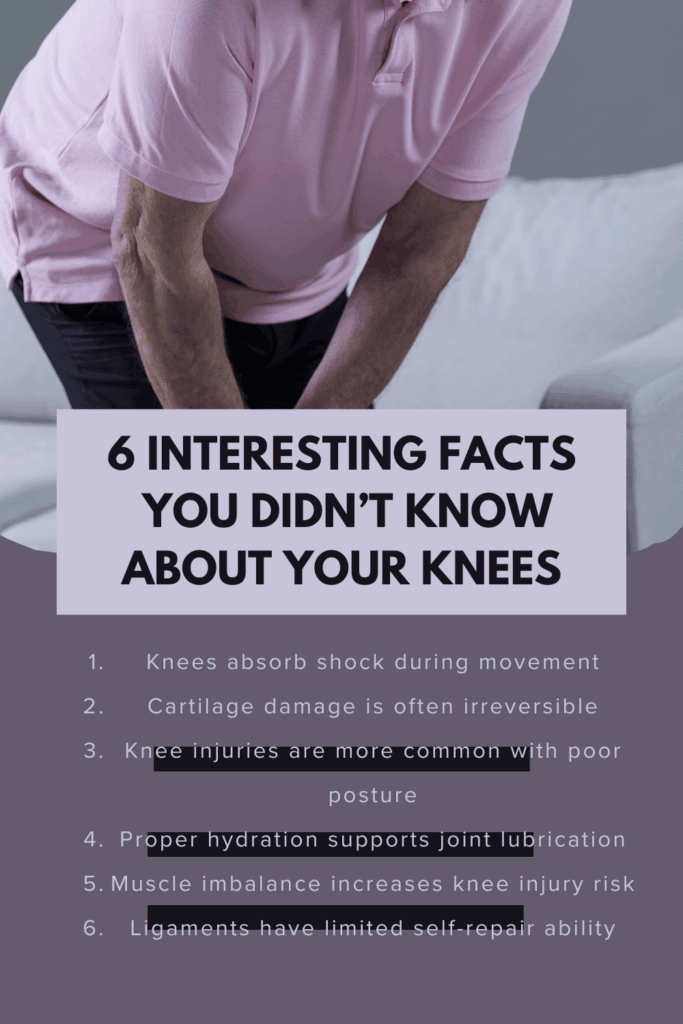
Your knees do a lot more than help you walk — they carry your body weight, absorb shock, and keep you moving every single day. Yet, most of us don’t give them much thought until pain or injury strikes. Understanding how your knees work can help you protect them and stay active longer.
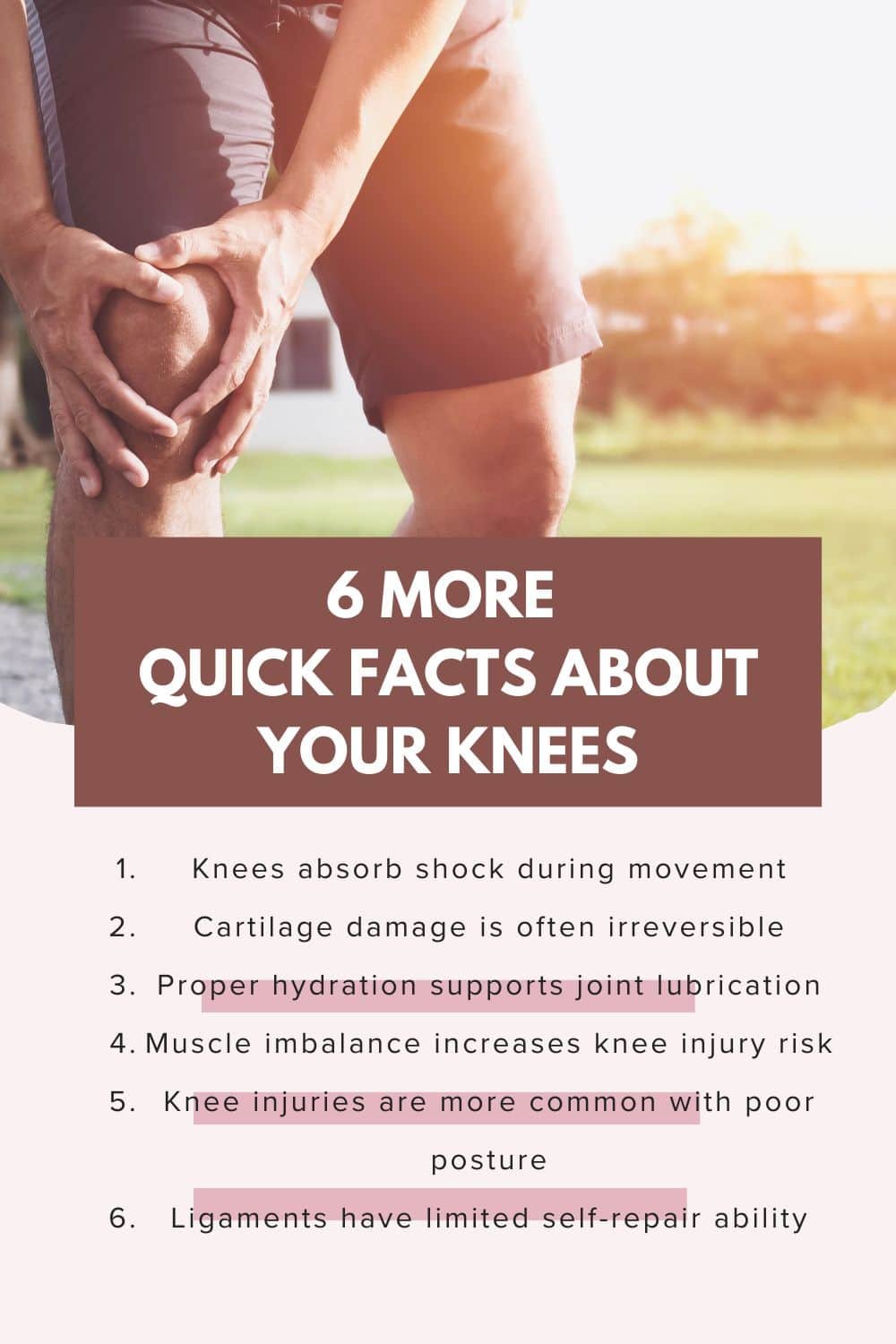
Here are 6 quick facts about your knees that may surprise you and inspire you to give them the care they deserve.
1. Knees Absorb Shock During Movement
Every step, jump, or squat you take sends pressure through your knees. Thankfully, your knees act like built-in shock absorbers, protecting your bones from impact. This is why strong leg muscles and supportive shoes matter — they reduce stress on the joint and help prevent wear and tear.
2. Cartilage Damage Is Often Irreversible
Cartilage cushions your knees, allowing them to move smoothly. But once it’s worn down or injured, it doesn’t heal easily. This makes prevention key: maintaining a healthy weight, avoiding repetitive strain, and strengthening the muscles around your knees can all protect cartilage in the long run.
3. Proper Hydration Supports Joint Lubrication
Think of your joints like hinges — they need lubrication to move smoothly. Staying hydrated ensures your synovial fluid (the natural joint lubricant) can do its job. If you often hear cracking or popping sounds in your knees, sometimes water intake plays a bigger role than you’d expect.
4. Muscle Imbalance Increases Injury Risk
When certain muscles around your knees are weaker than others, it creates imbalance. For example, strong quads but weak hamstrings can pull unevenly on the knee joint, raising the risk of injury. Regularly training all muscle groups in your legs keeps the load balanced and your knees stable.
5. Poor Posture Can Lead to More Knee Injuries
It’s not just your back that suffers from bad posture — your knees do too. Slouching, leaning forward, or standing unevenly places stress on the joints over time. Practicing proper posture and alignment helps distribute weight evenly and protects the knees from unnecessary strain.
6. Ligaments Have Limited Self-Repair Ability
Your knee ligaments are tough but not invincible. Once overstretched or torn, they don’t repair themselves fully. That’s why injuries like ACL tears often require rehab or surgery. Taking preventive steps — like warming up before workouts and avoiding sudden twists — can save you from serious setbacks.
Final Thoughts
Your knees are powerful, but they’re also vulnerable. From hydration and posture to balanced strength training, these 6 quick facts about your knees show how small daily choices can add up to better joint health.
✨ Save this post for later or share it with someone who could use a reminder to take care of their knees!