That constant ringing, buzzing, or whooshing sound in your ears — even when the world around you is silent — can be frustrating and worrying. This condition, known as tinnitus, affects millions worldwide, yet its real causes are often misunderstood.
While tinnitus itself isn’t a disease, it’s usually a signal from your body that something deeper needs attention. Let’s uncover the real reasons behind tinnitus symptoms and explore how you can protect your ears for long-term relief.

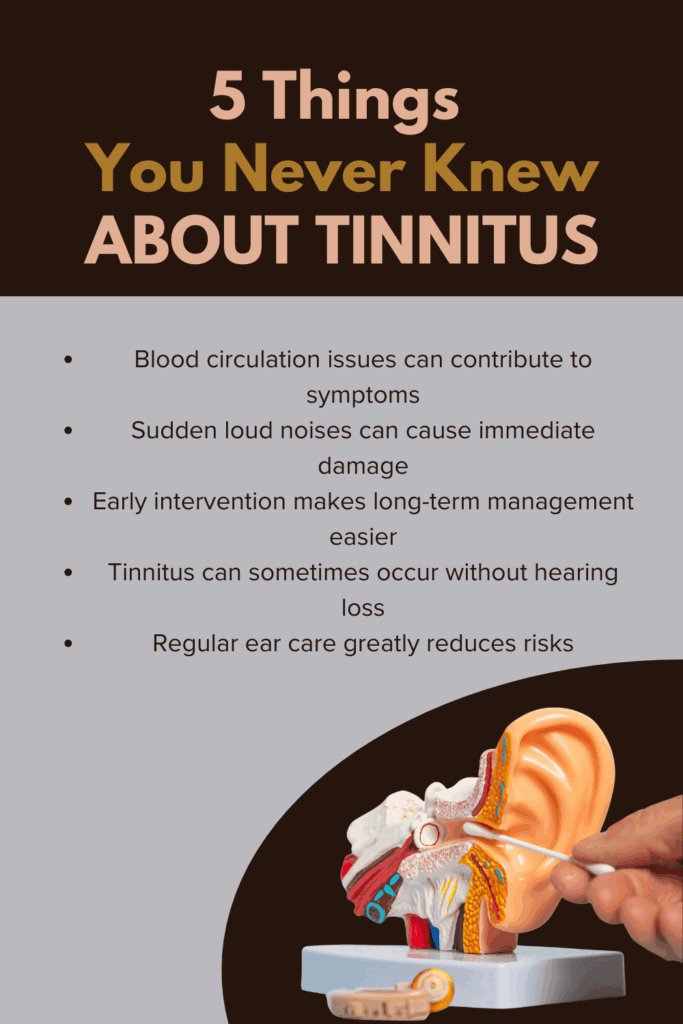
❤️ 1. Blood Circulation Issues Can Contribute to Symptoms
Healthy blood flow is essential for your ears to function properly. The tiny hair cells in your inner ear depend on steady oxygen and nutrient supply. When circulation is poor — due to high blood pressure, cholesterol buildup, or vascular issues — these cells can become stressed, triggering tinnitus.
What helps:
-
Maintain a heart-healthy diet rich in leafy greens, fish, and whole grains.
-
Practice light exercise to boost blood circulation.
-
Manage your blood pressure with your doctor’s guidance.
Better circulation means better ear health and reduced tinnitus risk.
🔊 2. Sudden Loud Noises Can Cause Immediate Damage
Exposure to loud sounds — like concerts, machinery, or headphones at high volume — can damage the sensitive auditory cells inside your ear. Even a single loud event can lead to ringing that lingers for days or becomes permanent.
Protect your hearing by:
-
Keeping your headphone volume below 60%
-
Wearing earplugs in noisy environments
-
Giving your ears rest after loud exposure
Once those inner ear cells are damaged, they can’t regenerate — so prevention is key.
🕑 3. Early Intervention Makes Long-Term Management Easier
The earlier tinnitus is addressed, the better the outcomes. When symptoms are ignored for months or years, the brain can adapt to the ringing as “normal,” making it harder to reverse.
What to do:
-
Seek professional evaluation early.
-
Rule out treatable causes like earwax buildup, infections, or medication effects.
-
Consider therapies such as sound therapy or cognitive retraining for relief.
Early action can make the difference between temporary and chronic tinnitus.
👂 4. Tinnitus Can Sometimes Occur Without Hearing Loss
While hearing loss and tinnitus often go hand in hand, not everyone with tinnitus experiences hearing problems. Sometimes, nerve sensitivity, stress, or even jaw tension can trigger the ringing independently.
Helpful practices:
-
Relax your jaw and neck muscles with gentle stretches.
-
Practice stress management through deep breathing or meditation.
-
Monitor symptoms to identify any patterns or triggers.
Understanding your unique triggers helps tailor an effective care plan.
🧴 5. Regular Ear Care Greatly Reduces Risks
Simple habits like avoiding cotton swabs, cleaning ears safely, and getting periodic ear check-ups can prevent infections or blockages that contribute to tinnitus.
Try this:
Use a few drops of warm olive oil or saline spray occasionally to soften earwax naturally. And if you notice discomfort or reduced hearing, consult an audiologist instead of self-cleaning.
Caring for your ears consistently can reduce the risk of tinnitus flare-ups and maintain long-term hearing health.
🌿 Final Thoughts
Tinnitus doesn’t appear out of nowhere — it’s often a message from your body that something needs attention, whether it’s circulation, stress, or ear health. The good news? With the right care, awareness, and protection, many people experience significant improvement.
Your ears are delicate but resilient — treat them with care, and they’ll reward you with the beautiful sound of silence. 💚