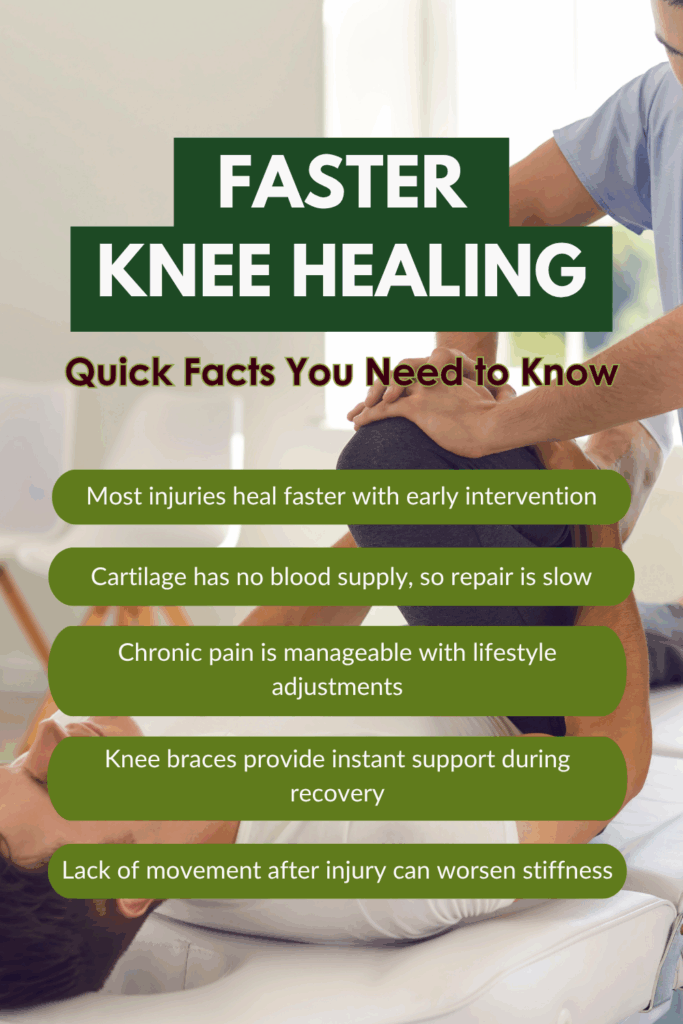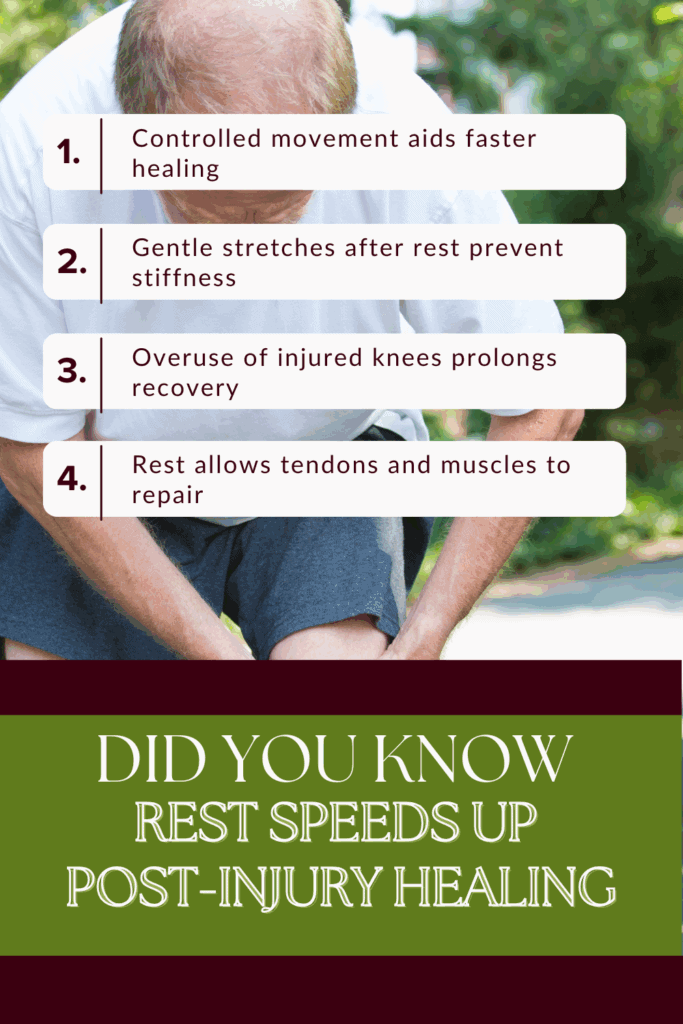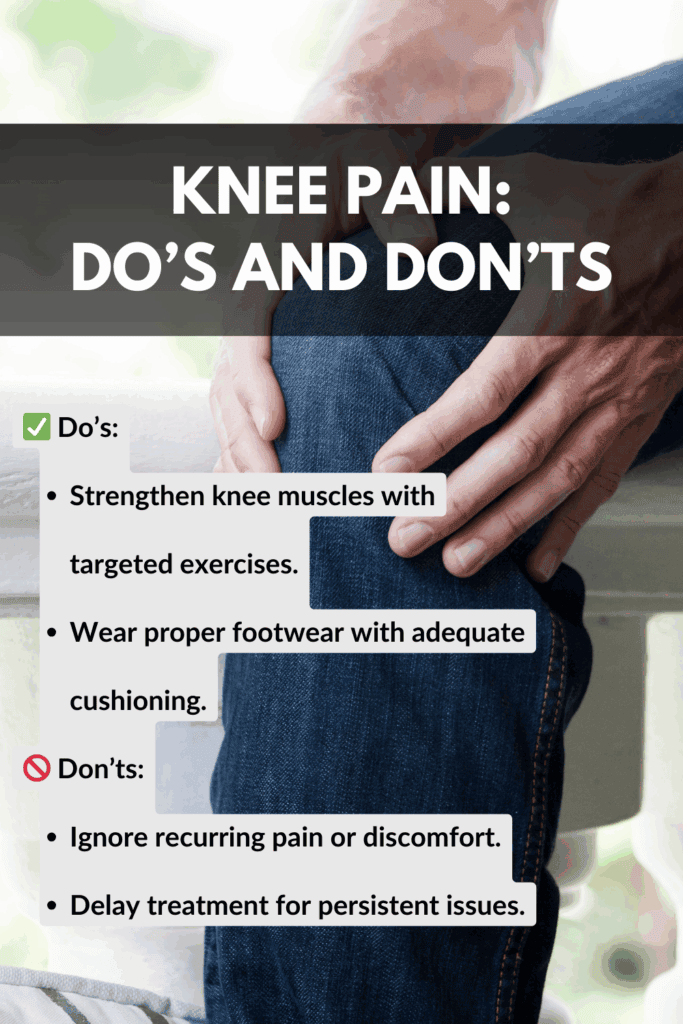
When it comes to joint health, most people focus on exercise and movement — but few realize how powerful rest truly is for recovery. Your knees, which carry the load of your daily life, need time to repair microscopic wear and tear that builds up with every step, squat, or climb.
Ignoring rest doesn’t just delay healing — it can gradually lead to chronic stiffness, inflammation, or even ligament damage. Let’s explore why rest matters so much for your knees and how to make it work in your favor.
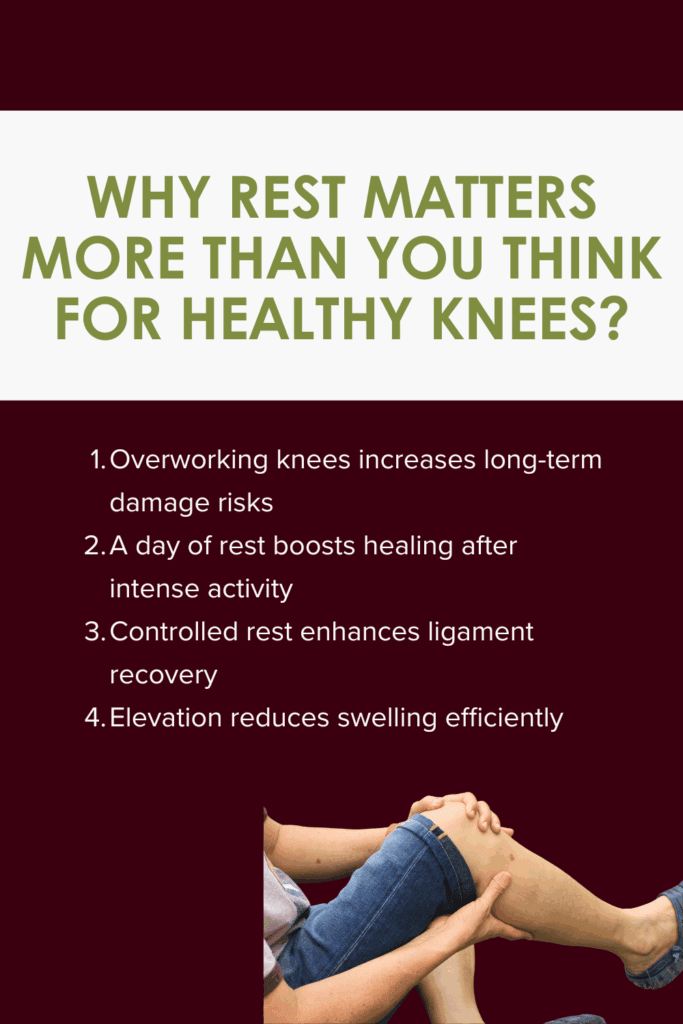
🏋️ 1. Overworking Your Knees Increases Long-Term Damage
Your knees are resilient, but they’re not indestructible. Repeated high-impact movements — like running, jumping, or prolonged standing — without enough downtime can cause the cartilage and ligaments to weaken over time.
Why it matters: Continuous strain can lead to inflammation and microscopic tears that don’t have a chance to heal. Eventually, this can result in pain, stiffness, or early-onset arthritis.
What to do instead: Alternate intense activity days with lower-impact ones. Try swimming, cycling, or gentle stretching to keep blood flowing without overloading your joints.
🕒 2. A Day of Rest Boosts Healing After Intense Activity
After workouts, sports, or physically demanding days, your knee joints experience minor stress. Taking a full day to rest allows your body to repair connective tissue, replenish joint fluid, and reduce inflammation naturally.
Think of rest as part of your training plan. It’s the recovery phase that makes your knees stronger and more resilient for the next challenge.
Smart rest idea: Use gentle movement like walking or light yoga instead of complete inactivity — this improves circulation and helps nutrients reach your joints faster.
🦴 3. Controlled Rest Enhances Ligament Recovery
Ligaments — the tissues connecting your bones — rely heavily on rest to regain elasticity and strength after stress. Without enough downtime, these structures can remain inflamed, leading to instability or long-term weakness.
Controlled rest means avoiding overuse while still maintaining light movement. For example, if your knees feel sore, skip squats but still go for a light stroll or gentle stretching session.
Key takeaway: Balance is everything. Total immobility can stiffen your knees, while overuse can damage them — aim for mindful, active recovery instead.
🪵 4. Elevation Reduces Swelling Efficiently
When your knees feel swollen or heavy after standing or exercise, elevation can make a world of difference. Lifting your legs above heart level encourages fluid drainage and reduces inflammation naturally.
Try this: Lie down and prop your legs on a pillow for 15–20 minutes. Combine elevation with an ice pack for an added anti-inflammatory boost.
This simple habit supports better joint comfort and speeds up healing — especially if you’re recovering from strain or mild injury.
🌿 How to Integrate Healthy Rest into Your Routine
Rest doesn’t mean doing nothing — it means doing the right kind of recovery. Here are some simple ways to make it part of your daily lifestyle:
-
🕐 Plan rest days between intense workouts.
-
🪑 Avoid sitting too long — alternate between sitting, standing, and walking.
-
🧊 Use ice or compression wraps after activity to reduce inflammation.
-
🧘♀️ Practice gentle stretching or mobility exercises on rest days.
-
🛏️ Sleep 7–9 hours nightly to give your joints time to repair.
Even 10–15 minutes of focused rest or elevation daily can help your knees recover faster and feel more stable.
💭 Final Thoughts
Your knees are built to move — but also to rest. Ignoring recovery time can silently wear them down, while proper rest keeps them strong, flexible, and pain-free.
So, listen to your body. If your knees ache or feel tight, that’s not weakness — it’s your body asking for care. Give your joints the downtime they deserve, and they’ll reward you with years of healthy movement. 🌿