
When you’re injured, especially around the knees, it’s tempting to “walk it off” or get back to your routine too soon. But recovery isn’t about rushing — it’s about giving your body the right balance between rest and movement.
Rest allows your tendons, ligaments, and muscles to repair themselves — a vital step most people overlook. Let’s explore four simple, evidence-backed recovery principles that can help your knees heal faster and stronger.
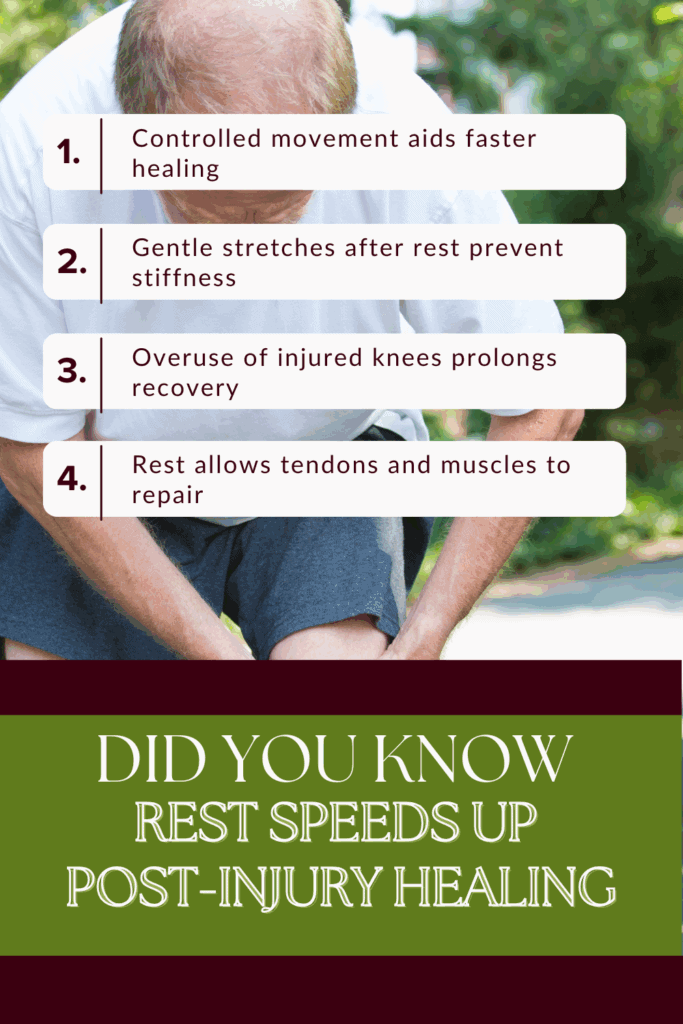
1. Controlled Movement Aids Faster Healing
While rest is essential, complete immobility can slow recovery. Gentle, controlled movements improve circulation and prevent stiffness in the injured area. Movement helps your body deliver oxygen and nutrients to tissues, which accelerates healing.
Try this:
-
Light range-of-motion exercises, such as leg extensions or heel slides.
-
Avoid pushing through pain; stop if discomfort increases.
-
Follow a physical therapist’s guidance for safe movement routines.
The key is balance — move enough to keep blood flowing, but never to the point of strain.
2. Gentle Stretches After Rest Prevent Stiffness
After a period of rest, muscles and joints can tighten. That’s why gentle stretching is crucial once your pain begins to ease. Stretching maintains flexibility and restores mobility to injured knees.
Tips for gentle stretching:
-
Warm up first with a brief walk or mild movement.
-
Focus on hamstrings, calves, and quads — they support your knees.
-
Breathe deeply and avoid bouncing movements.
Even two minutes of stretching daily can make a noticeable difference in comfort and recovery.
3. Overuse of Injured Knees Prolongs Recovery
It’s easy to think that staying active speeds healing, but overusing an injured joint can cause inflammation and tissue breakdown. Your body needs energy and time to rebuild collagen and muscle fibers — overloading it delays this process.
How to avoid overuse:
-
Don’t return to exercise or work too quickly.
-
Use supportive aids like knee braces if recommended.
-
Alternate activity with rest periods throughout the day.
Remember: healing is a process — pushing too soon can set you back weeks.
4. Rest Allows Tendons and Muscles to Repair
When you rest, your body switches to repair mode. This is when tendons, ligaments, and muscles regenerate damaged cells and strengthen weak spots. Skipping this step can lead to chronic pain or re-injury.
For effective rest:
-
Prioritize quality sleep (7–9 hours).
-
Elevate your legs to reduce swelling.
-
Maintain gentle movement to avoid stiffness.
Think of rest not as doing nothing — but as your body’s most productive healing time.
Final Thoughts: Listen to Your Body, Not the Clock
Healing takes patience, consistency, and care. Combining rest, light movement, and mindful recovery helps your knees rebuild strength the right way.
Don’t rush your progress — your body knows what it’s doing. 🌿
Save this post or pin it for later — a reminder that sometimes, the best recovery starts with slowing down.