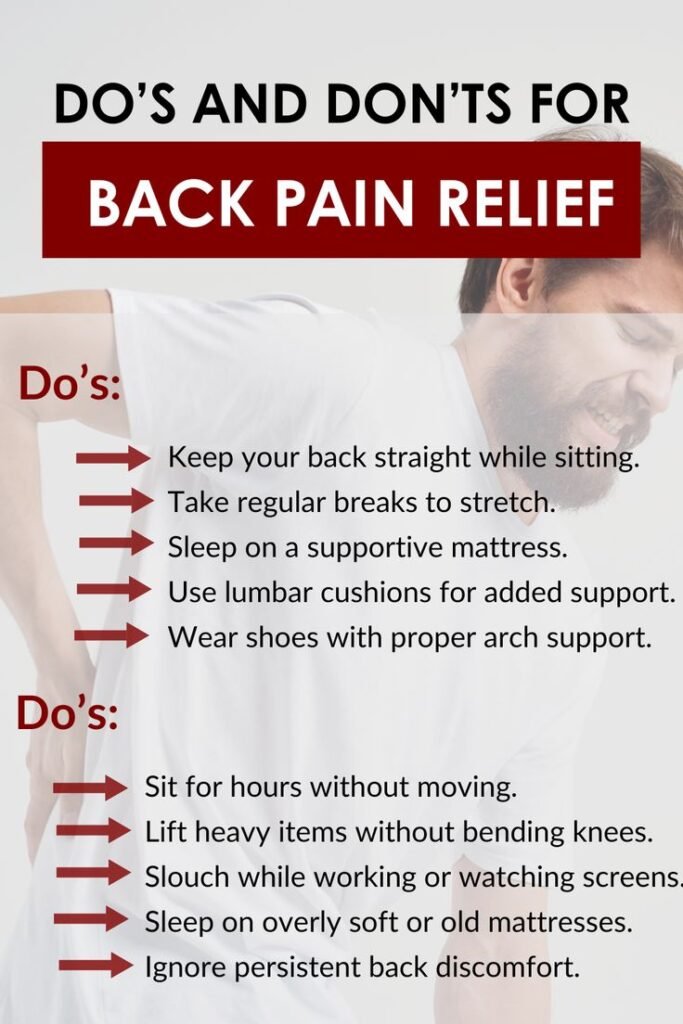
If you spend long hours sitting — whether at work, in your car, or at home — you’re not alone. But here’s something many people overlook: how you sit matters more than how long you sit. Poor sitting habits can strain your spine, tighten your muscles, and lead to chronic back pain over time. The good news? A few simple adjustments can make a world of difference for your posture and comfort.
Let’s look at how sitting habits affect your back — and how to fix them for good.
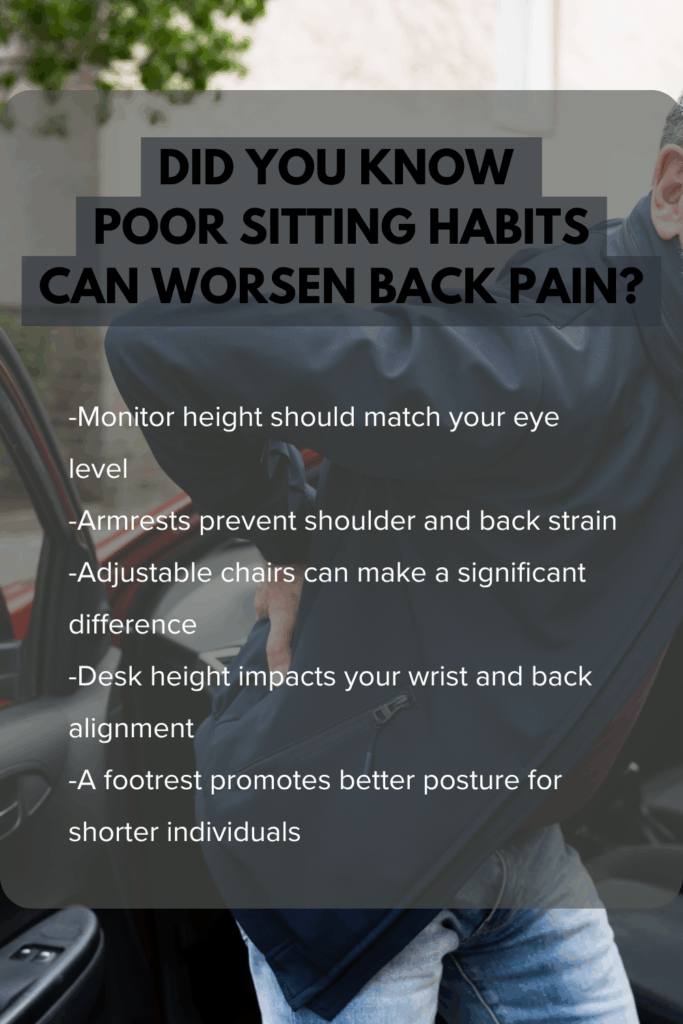
🖥️ 1. Monitor Height Should Match Your Eye Level
If your screen is too low or too high, you’ll naturally tilt your neck — leading to tension in your upper back and shoulders. Ideally, your monitor should be at eye level, about an arm’s length away. This keeps your head neutral and your spine aligned.
💡 Quick fix: Use a monitor stand or stack books under your screen until your eyes are level with the top third of the display.
🪑 2. Armrests Prevent Shoulder and Back Strain
Armrests are more than just comfort features — they support your shoulders and prevent hunching. Without them, you’re more likely to slouch or elevate your shoulders unconsciously, increasing tension in your upper back.
💡 Pro tip: Adjust your armrests so your elbows rest comfortably at a 90-degree angle, keeping your shoulders relaxed.
🧍 3. Adjustable Chairs Make a Big Difference
A good chair supports your lower back’s natural curve. If your seat height or lumbar support is off, it can put uneven pressure on your spine. Adjustable chairs allow you to customize your posture for proper balance and alignment.
💡 Try this: Your knees should be level with or slightly below your hips, and both feet should rest flat on the floor or a footrest.
🪵 4. Desk Height Impacts Wrist and Back Alignment
When your desk is too high, your shoulders lift; too low, and you lean forward — both harmful for your posture. An ideal desk height allows your wrists to remain straight while typing and your elbows to stay close to your body.
💡 Bonus tip: Keep frequently used items (like your mouse or phone) within easy reach to avoid twisting or stretching repeatedly.
🦶 5. A Footrest Improves Posture for Shorter Individuals
If your feet don’t touch the ground comfortably, your lower back bears extra pressure. A small footrest helps distribute your body weight evenly and supports a neutral spine position.
💡 DIY fix: Use a sturdy box or cushion under your feet until you find the right height.
🌿 6. Movement Is the Real Solution
Even with perfect posture, sitting for hours can stiffen your muscles and joints. The key is to move regularly. Standing, stretching, or walking every 30 minutes helps reduce pressure on your spine and boost circulation.
💡 Simple habit: Set a reminder to stand up for 2–3 minutes every half hour — your back will thank you later.
🧘 Final Thoughts
Poor sitting habits might seem harmless now, but over time they can seriously affect your spine, posture, and overall comfort. The best approach is awareness — notice how you sit, make small changes, and move often.
✨ Pin this post to remind yourself: good posture isn’t just about sitting straight — it’s about sitting smart!