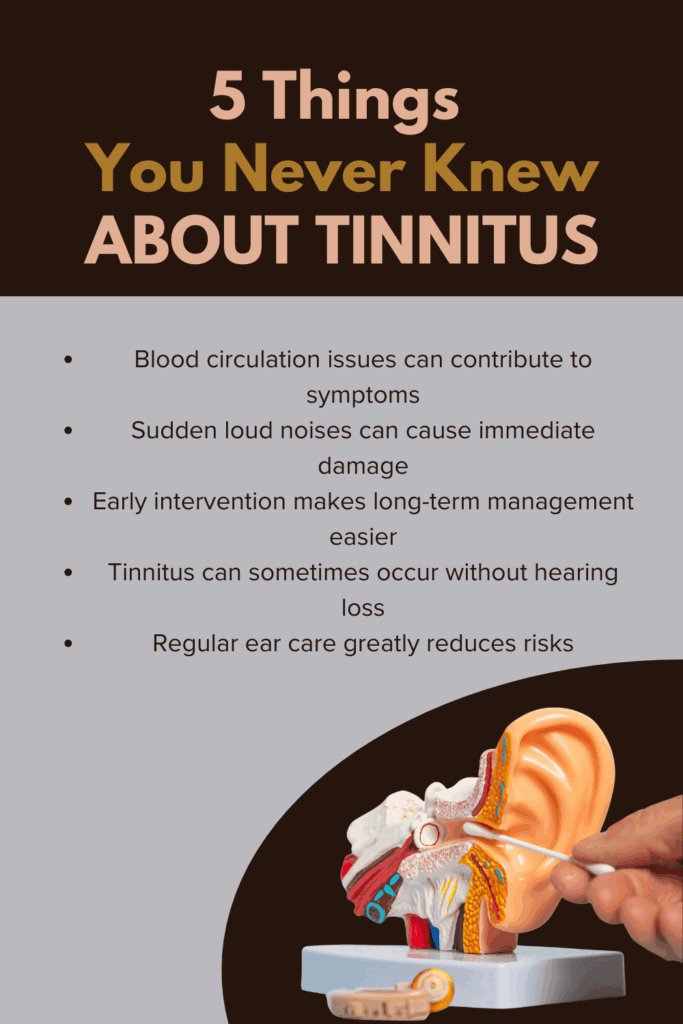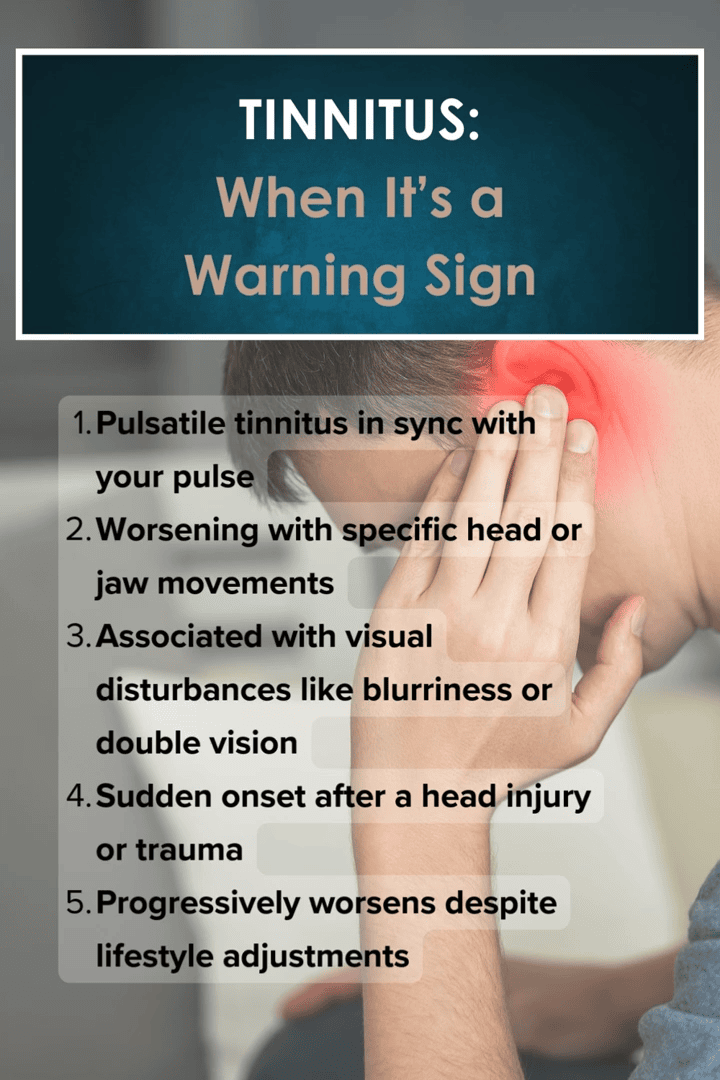
Ever heard a faint ringing, buzzing, or hissing in your ears — even when everything around you is quiet? That could be an early sign of tinnitus. While many people ignore these subtle noises, recognizing them early can make a huge difference in preventing long-term hearing issues.
In this post, we’ll go over how to spot tinnitus early, what symptoms to look for, and why early detection matters for your ear health. Let’s dive in and understand the early whispers your ears might be sending.
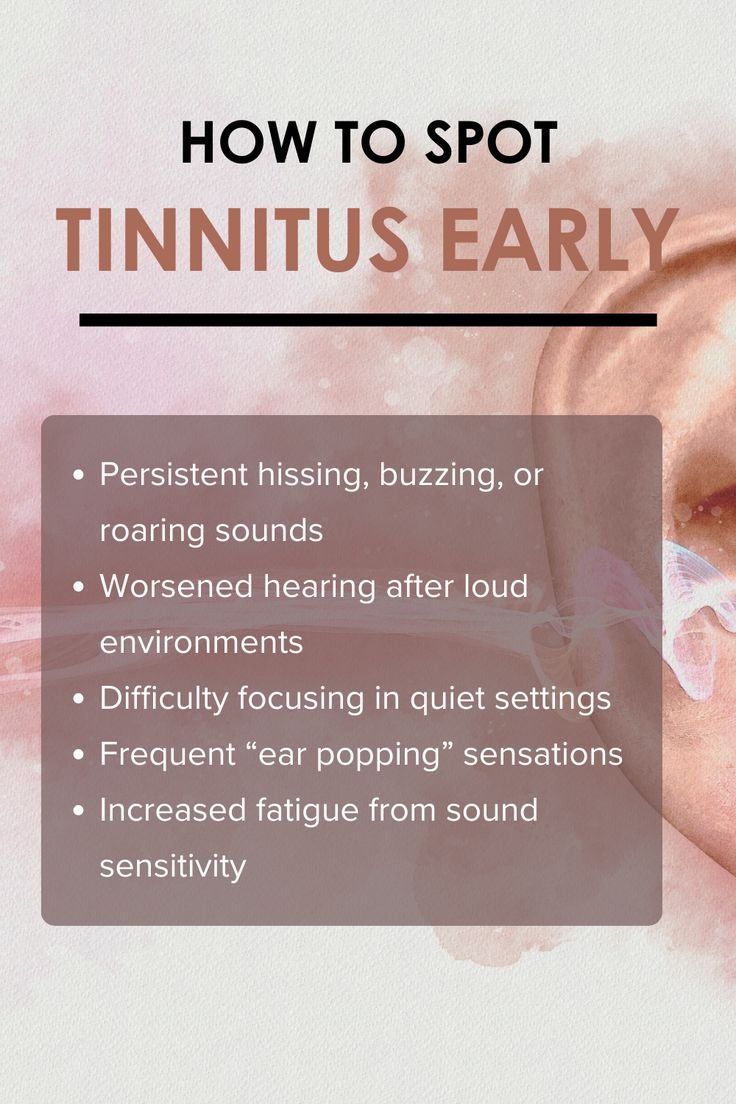
1. Persistent Hissing, Buzzing, or Roaring Sounds
The most common sign of tinnitus is a constant or recurring noise that no one else can hear. It may sound like ringing, hissing, buzzing, or even roaring.
These sounds often come and go — or get louder at night when it’s quiet. If you notice them frequently, especially in one ear, it’s time to pay attention.
💡 Tip: Keep a note of when you hear these sounds and for how long. This can help a doctor identify potential triggers.
2. Worsened Hearing After Loud Environments
Have you ever left a concert or noisy place and felt like your hearing was muffled? While temporary hearing loss can happen, if the ringing persists afterward, it might be an early tinnitus symptom.
Repeated exposure to loud sounds can damage the delicate hair cells inside your inner ear, leading to noise-induced tinnitus. Wearing earplugs in loud settings is one of the simplest ways to protect your ears.
3. Difficulty Focusing in Quiet Settings
If silence feels uncomfortable — or you notice it’s harder to concentrate in calm environments — tinnitus could be the reason. The constant inner noise can make it difficult to focus, read, or even fall asleep.
You might find background sounds like a fan or soft music help mask the ringing. That’s a helpful temporary solution, but ongoing focus struggles should never be ignored.
4. Frequent “Ear Popping” or Pressure Sensations
That feeling of fullness or popping inside the ear, especially if it happens often, can be linked to earwax buildup, fluid, or Eustachian tube issues, all of which may trigger tinnitus.
Try to avoid inserting objects or cotton swabs into your ears — they can push wax deeper. Instead, consider safe cleaning methods like ear drops or professional ear irrigation.
5. Increased Fatigue from Sound Sensitivity
Tinnitus can make your brain work overtime to filter out unwanted noise, leading to mental fatigue, stress, and even sleep problems. You might also notice that everyday sounds — like clinking dishes or typing — suddenly feel too loud or irritating.
If you’re becoming more sensitive to sound or constantly tired from auditory strain, these could be early signs of sound sensitivity tied to tinnitus.
6. Subtle Hearing Loss or Ear Imbalance
Some people don’t realize they have tinnitus until they start missing parts of conversations or need to turn the volume up higher. This often goes hand-in-hand with mild hearing loss.
If you catch yourself saying “what?” more often or feeling off-balance, schedule a hearing test with an audiologist. Early intervention can slow progression and protect your hearing long-term.
Conclusion
Recognizing tinnitus early gives you the best chance to manage symptoms before they worsen. By paying attention to changes like buzzing, ear popping, or hearing fatigue, you can take proactive steps to protect your hearing health.
Start small: lower noise exposure, manage stress, and get your ears checked regularly. 👂✨
Save this post for later, and don’t ignore what your ears are trying to tell you.