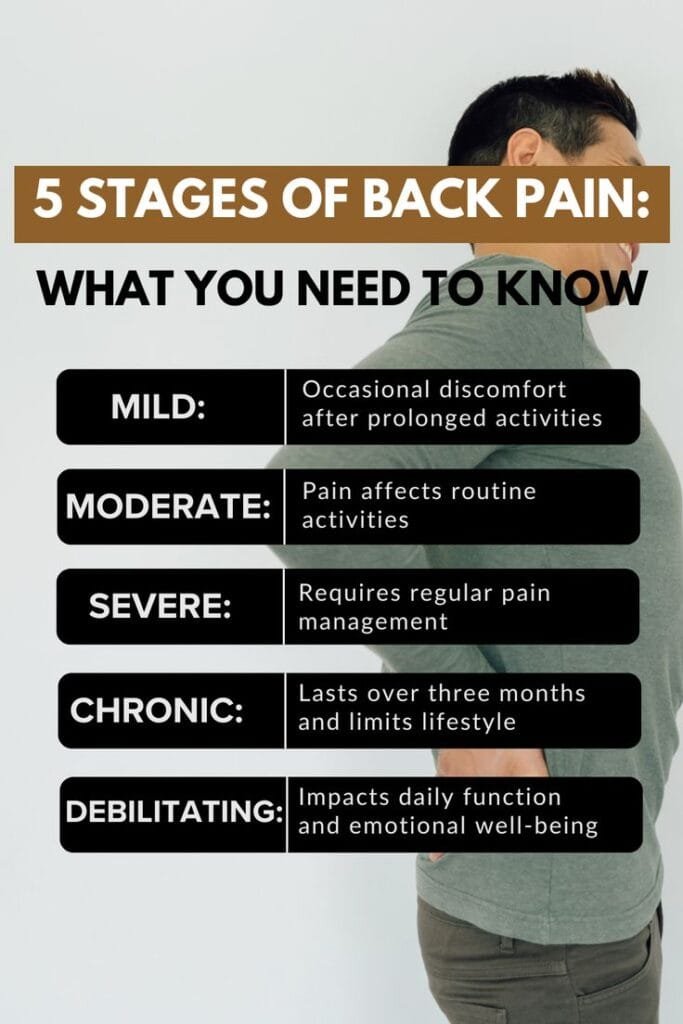
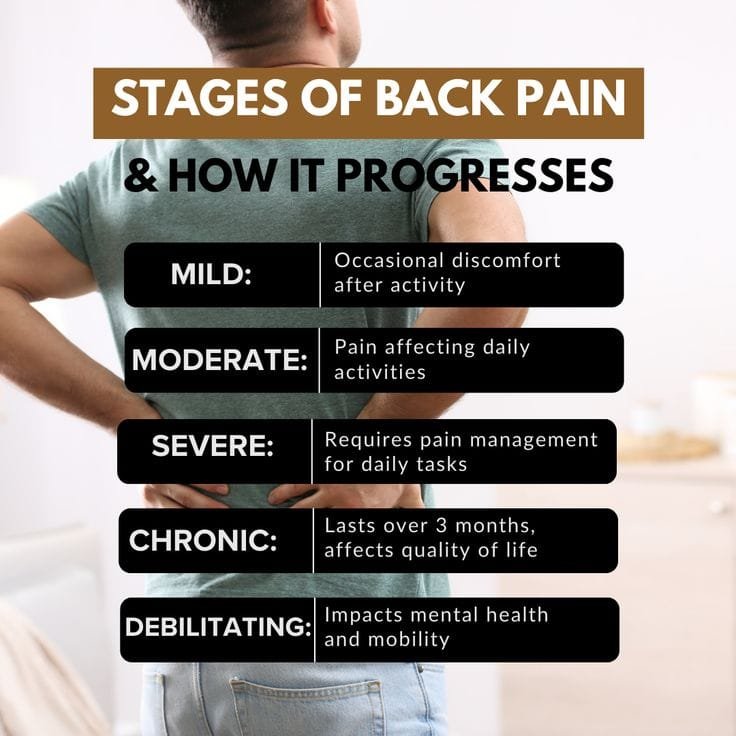
Back pain rarely starts as a sudden problem—it’s a gradual progression that often begins with mild discomfort and can evolve into chronic pain if ignored. Understanding these stages can help you take action early, protect your spine, and prevent long-term issues. Let’s break down how back pain develops and what you can do at each stage to stay mobile and healthy.
1. Mild Back Pain — The Warning Stage
At this stage, you might notice occasional tightness or soreness after activities like lifting, sitting too long, or bending awkwardly. It’s your body’s way of saying, “Something’s off.”
Common Causes: Poor posture, weak core muscles, or minor strain.
What to Do:
-
Stretch daily, especially your hamstrings and lower back.
-
Strengthen your core through gentle exercises like planks or bridges.
-
Maintain proper sitting posture with lumbar support.
💡 Tip: If you wake up stiff, it may be time to upgrade your mattress or pillow support.
2. Moderate Back Pain — Daily Activities Affected
Now, the discomfort begins to interfere with routine tasks like driving, cleaning, or standing for long periods. The pain may flare up more often, signaling inflammation or muscle imbalance.
Common Causes: Repetitive strain, weak posture, or mild disc issues.
What to Do:
-
Add mobility exercises to improve flexibility.
-
Apply heat therapy for stiffness and ice for inflammation.
-
Avoid heavy lifting and maintain a neutral spine.
💡 Try alternating between sitting and standing if you work long hours at a desk.
3. Severe Back Pain — Pain Management Required
At this stage, pain starts to dominate your day. Even simple actions like walking or bending may require support. You might rely on medication or physical therapy for relief.
Common Causes: Herniated disc, nerve compression, or spinal misalignment.
What to Do:
-
Consult a physical therapist or chiropractor for targeted treatment.
-
Incorporate gentle stretches under supervision.
-
Avoid long rest periods — controlled movement helps healing.
💡 Hydrate well — dehydration can worsen spinal disc pressure.
4. Chronic Back Pain — Lasting Over 3 Months
When pain persists for over three months, it becomes chronic. It can affect sleep, mood, and energy levels, creating a cycle of tension and discomfort.
Common Causes: Degenerative disc disease, arthritis, or unresolved injuries.
What to Do:
-
Focus on long-term posture correction and ergonomic habits.
-
Include low-impact exercises like swimming or yoga.
-
Practice mindfulness or breathing exercises to reduce stress-related tension.
💡 Tracking your pain patterns can help identify triggers and improve management.
5. Debilitating Back Pain — Mental & Mobility Impact
In the final stage, back pain affects both physical movement and mental well-being. Daily life becomes a struggle, and emotional strain—like frustration or depression—often follows.
Common Causes: Severe spinal degeneration or chronic inflammation.
What to Do:
-
Seek multidisciplinary care: physiotherapy, counseling, and pain management.
-
Use assistive devices if needed to maintain independence.
-
Prioritize mental health — chronic pain support groups can be helpful.
💡 Remember: pain doesn’t define you — consistent care can restore confidence and comfort.
Preventing the Progression of Back Pain
Here’s how you can stop back pain from escalating through these stages:
- Keep moving — avoid a sedentary lifestyle.
- Maintain a healthy weight to reduce pressure on the spine.
- Strengthen your core and back muscles.
- Use ergonomic furniture and correct sitting posture.
- Listen to your body — address mild pain before it worsens.
Final Thoughts
Back pain doesn’t have to control your life. By recognizing the stages of back pain and responding early, you can stop the discomfort before it becomes chronic. Start small — stretch today, move more tomorrow, and listen to your body’s signals. 🌿
📌 Pin this guide for quick reference — your future self (and your spine) will thank you!