Tinnitus isn’t the same for everyone. For some, it’s a faint hum that comes and goes. For others, it’s a constant ringing that disrupts sleep, focus, and emotional balance. Understanding where you are on the tinnitus scale helps you choose the right coping strategies — and reminds you that your experience can change with the right management.
Tinnitus tends to progress through identifiable stages. Here’s what each one looks like, how it feels, and what you can do about it.
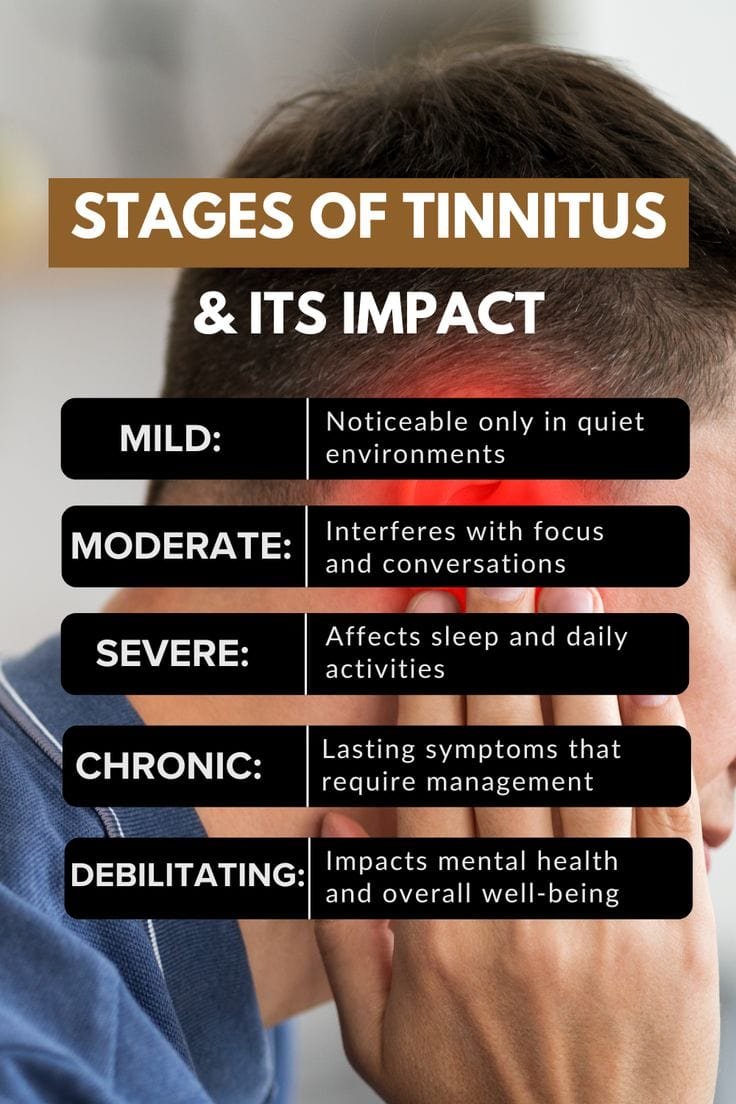
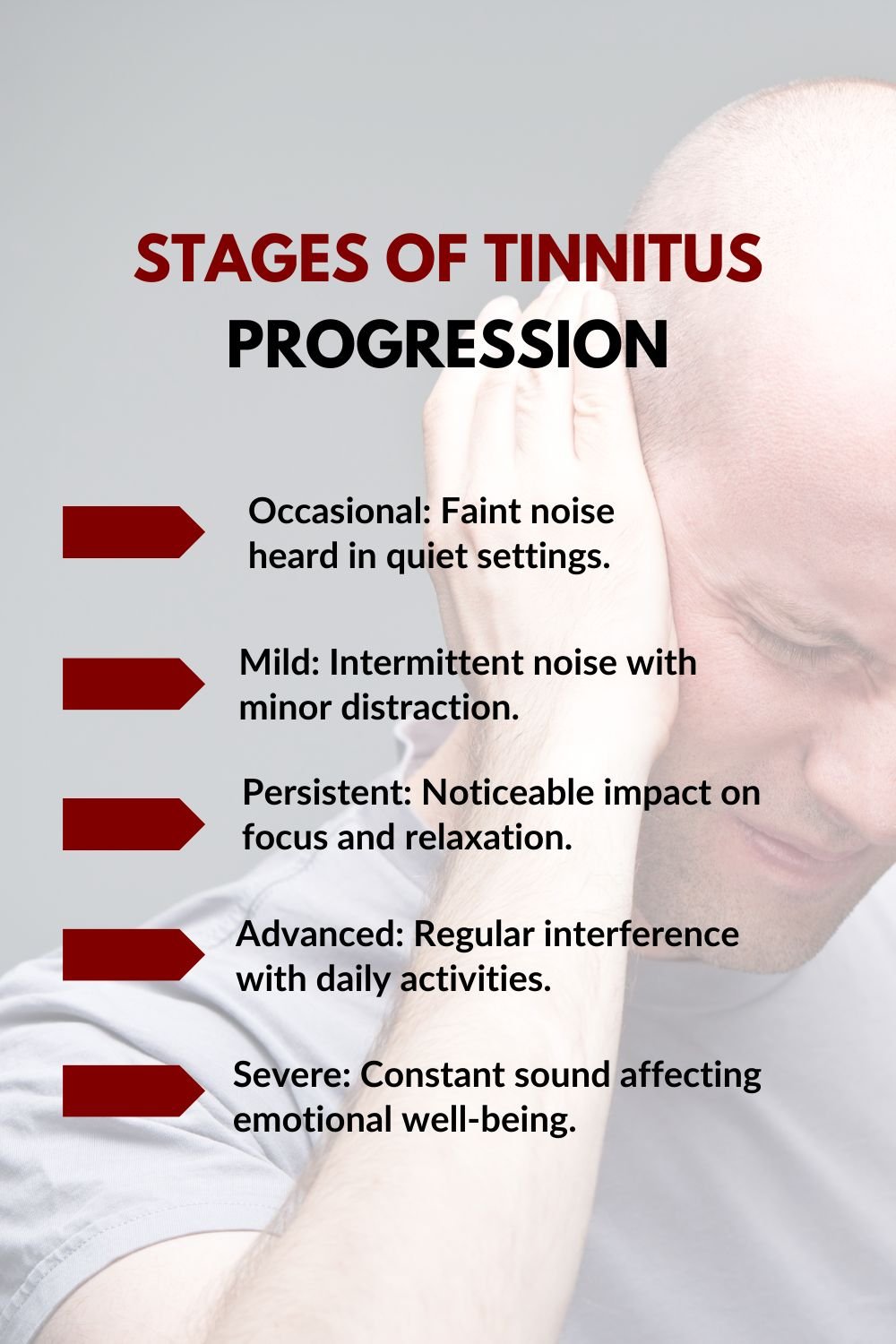
Stage 1: Mild — Only Noticeable in Quiet Environments
At this early stage, tinnitus often appears as a faint buzzing, ringing, or whooshing sound that becomes noticeable mainly when the surroundings are quiet — like before sleep or during meditation.
It’s more of an awareness than a disturbance. Mild tinnitus can be triggered by recent noise exposure, earwax buildup, or temporary stress.
💡 Helpful Tip: Keep background sounds like soft music or nature noise at bedtime. This prevents your brain from fixating on the ringing and helps you drift off more easily.
Stage 2: Moderate — Begins Interfering with Focus and Conversation
In the moderate phase, tinnitus becomes more noticeable even in everyday settings. You might catch yourself asking people to repeat themselves or struggling to concentrate at work.
It’s not just about the sound — it’s about how much attention it demands from your brain. This constant distraction can lead to frustration and mild anxiety.
💡 Helpful Tip: Try using sound masking apps or tinnitus retraining therapy (TRT). These help the brain filter out the noise and reduce its emotional impact.
Stage 3: Severe — Disrupts Sleep and Daily Activities
At this point, tinnitus feels more intrusive. The noise may vary in pitch or intensity and can make it hard to relax or fall asleep. For some, silence becomes uncomfortable.
This stage often coincides with sleep deprivation, fatigue, or irritability — which in turn, can make tinnitus seem even louder.
💡 Helpful Tip: Focus on a consistent night routine — avoid caffeine after 4 p.m., limit screen time before bed, and use gentle white noise machines to maintain a steady, calming background sound.
Stage 4: Chronic — Requires Ongoing Management
When tinnitus becomes chronic, the sound rarely fades completely. However, that doesn’t mean you’re out of options. This stage is all about long-term management rather than constant frustration.
With the right combination of therapies — like cognitive behavioral therapy (CBT), hearing aids, or stress-reduction techniques — many people learn to live comfortably again.
💡 Helpful Tip: Don’t face it alone. Join tinnitus support groups or work with an audiologist to track your triggers and improvement. Consistency matters more than quick fixes.
Stage 5: Debilitating — Impacts Mental Health and Well-Being
At the most severe level, tinnitus doesn’t just affect your hearing — it affects your entire life. The sound becomes overwhelming, leading to anxiety, depression, and a sense of isolation.
But even here, there is hope. New therapies, relaxation methods, and guided brain retraining programs can reduce how strongly the brain reacts to tinnitus. Professional support from a hearing specialist or therapist can make a significant difference.
💡 Helpful Tip: Incorporate mindfulness and breathing exercises into your routine. Calming the nervous system helps reduce tinnitus intensity and emotional distress.
You’re Not Alone — Relief Is Possible
Whether your tinnitus is mild or chronic, remember that improvement is absolutely possible. The key is early awareness, healthy daily habits, and a willingness to explore what works for you.
With the right support, tinnitus can shift from a dominating sound to a background whisper. Be patient — and take one small step toward relief each day.
💡 Pin this post to your “Tinnitus Journey” board — because awareness is the first step toward healing.