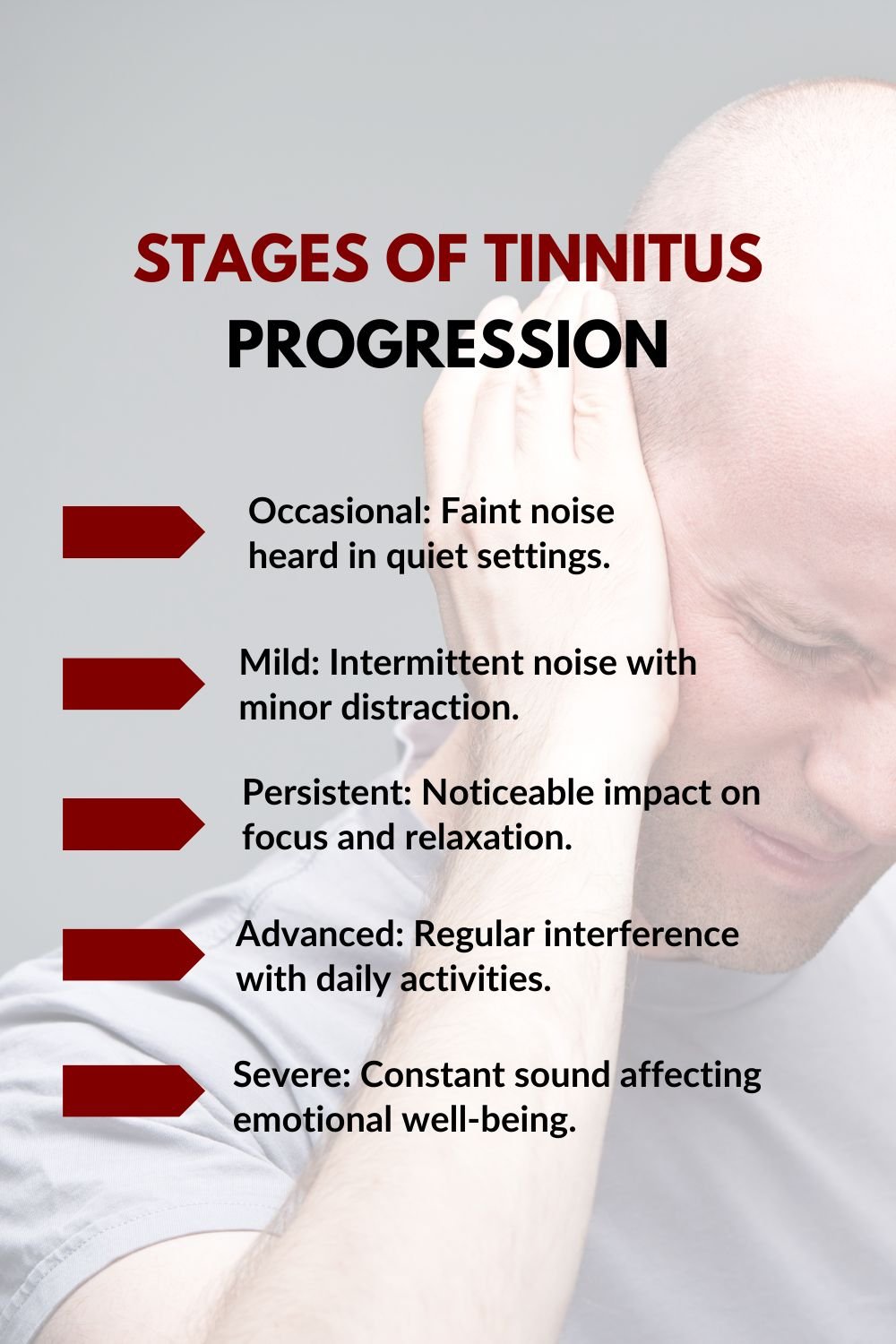
Living with tinnitus can feel like carrying an invisible noise in your head — one that only you can hear. Whether it’s a faint ringing or a loud buzz, this condition affects millions worldwide. Understanding its stages can help you manage symptoms better and find the right support. Let’s break down the 5 stages of tinnitus and how each one impacts daily life.
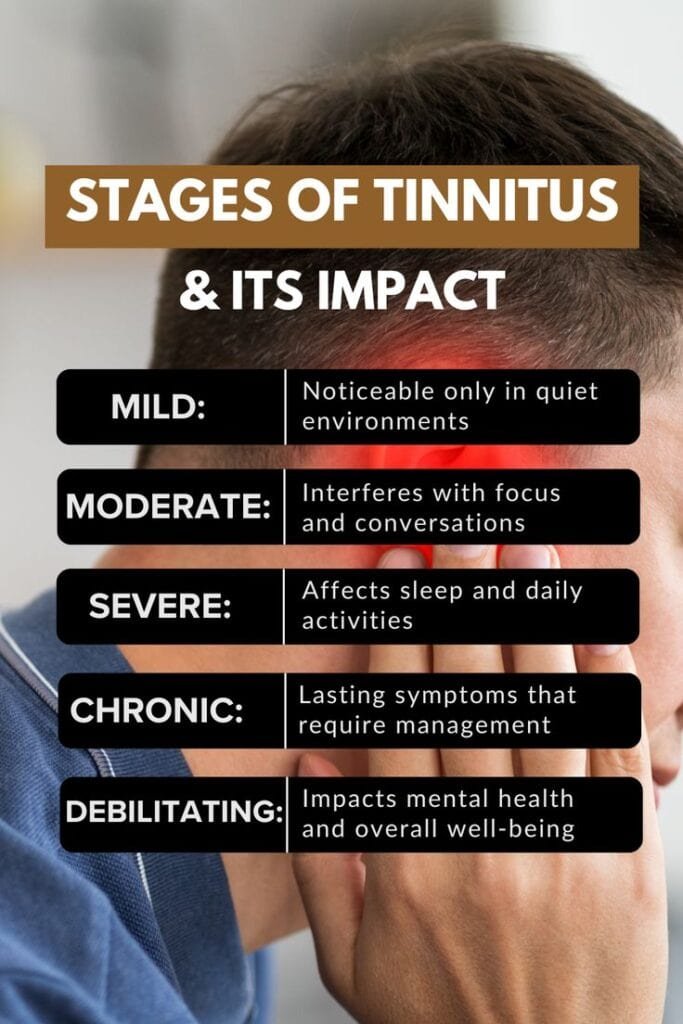
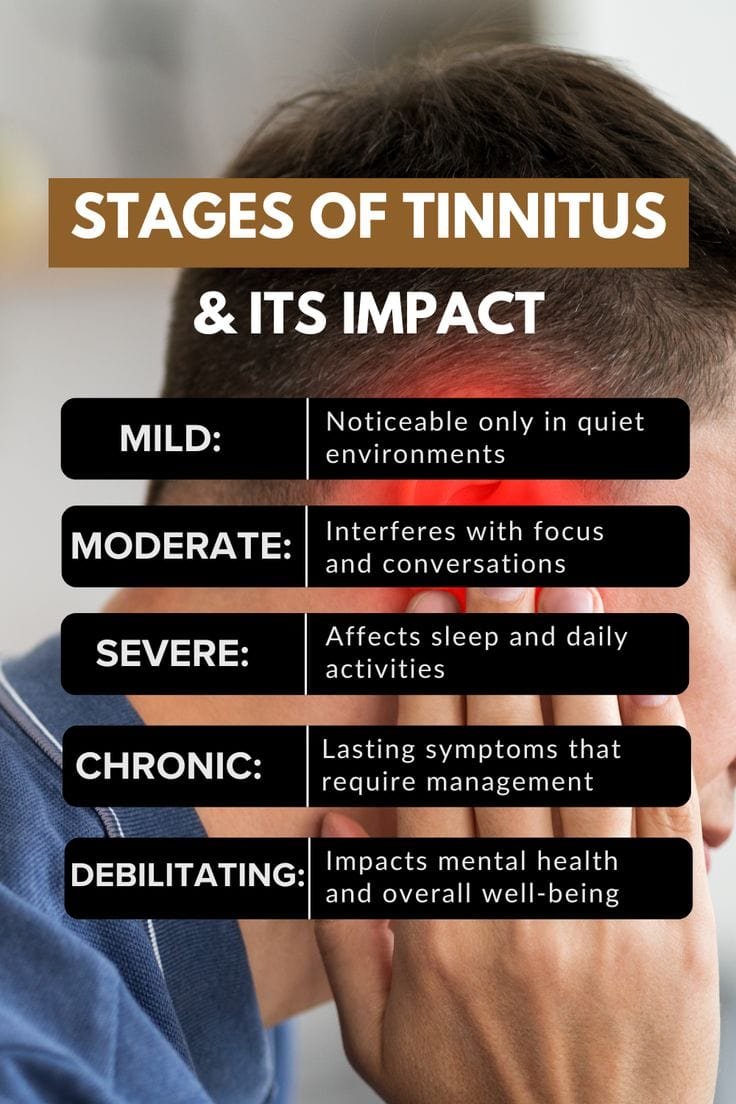
1. Mild: Noticeable Only in Quiet Environments
At the mild stage, tinnitus tends to show up only when everything else is silent — like at night or in a quiet room. It’s often a light ringing or humming that disappears once background sounds return.
Tip: Try adding gentle white noise or calming nature sounds before bed to reduce awareness of the ringing.

2. Moderate: Interferes with Focus and Conversations
This is when tinnitus starts to compete with everyday sounds. You might notice it while talking, working, or studying. It can become frustrating and affect your ability to concentrate.
Try this: Mindful breathing or short meditation breaks can reduce the stress that often worsens tinnitus perception.
3. Severe: Affects Sleep and Daily Activities
At this point, tinnitus becomes hard to ignore. Sleep may suffer, and the constant noise can lead to irritability or fatigue.
Helpful step: Build a calming bedtime routine — dim lights, avoid caffeine in the evening, and use soft background music to mask the sound.
4. Chronic: Lasting Symptoms That Require Management
Chronic tinnitus doesn’t just come and go — it’s persistent. Management becomes essential, whether through sound therapy, hearing aids, or lifestyle adjustments.
Support tip: Keep a “sound diary” to track when symptoms worsen. This helps your healthcare provider tailor a personalized plan.
5. Debilitating: Impacts Mental Health and Well-Being
In the most severe stage, tinnitus can deeply affect emotional health. Feelings of anxiety, sadness, or isolation may appear.
What helps: Seeking therapy or joining a tinnitus support group can provide both relief and community — reminding you that you’re not alone.
Final Thoughts
Tinnitus may not always go away, but it can become manageable. Focus on stress reduction, hearing protection, and professional guidance. Even small changes — like adjusting your diet, limiting noise exposure, or practicing relaxation — can make a big difference over time.
👉 Save this post for later and share it with someone who may need help understanding tinnitus better.