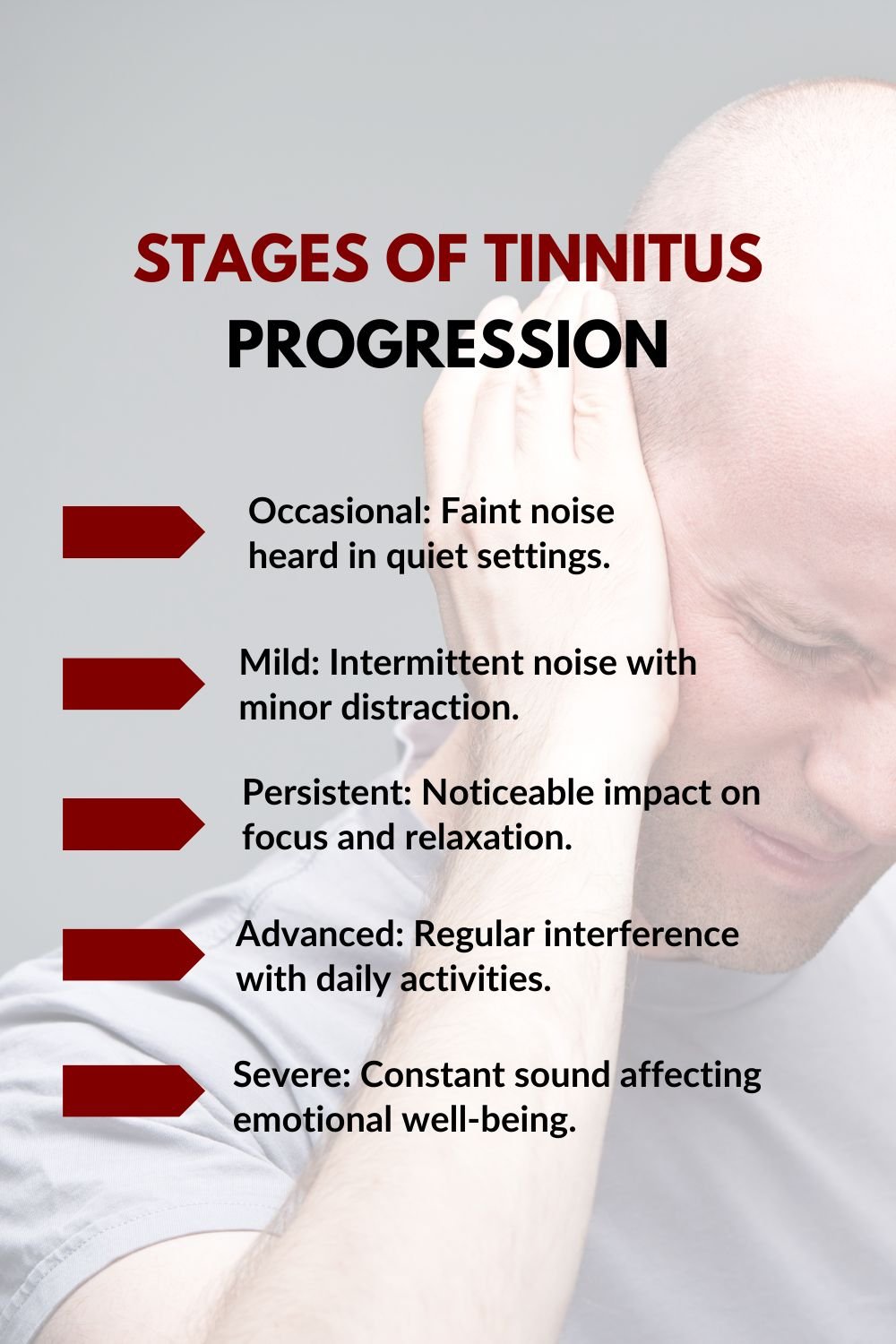
Tinnitus is more than just a ringing in the ears — for many, it changes how they live, sleep, and connect with others. The experience isn’t the same for everyone. Some people notice it only at night, while others struggle daily with constant, overwhelming noise. Understanding the stages of tinnitus can help you recognize where you are and take steps to manage it effectively.
Here’s a simple breakdown of each stage and how it can impact your life.
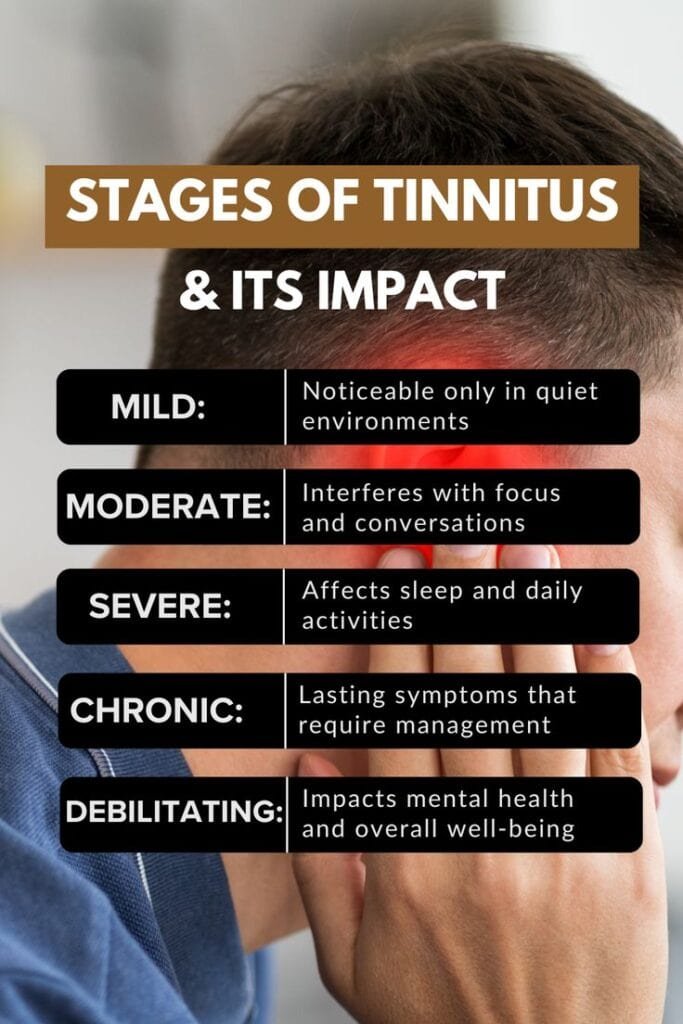
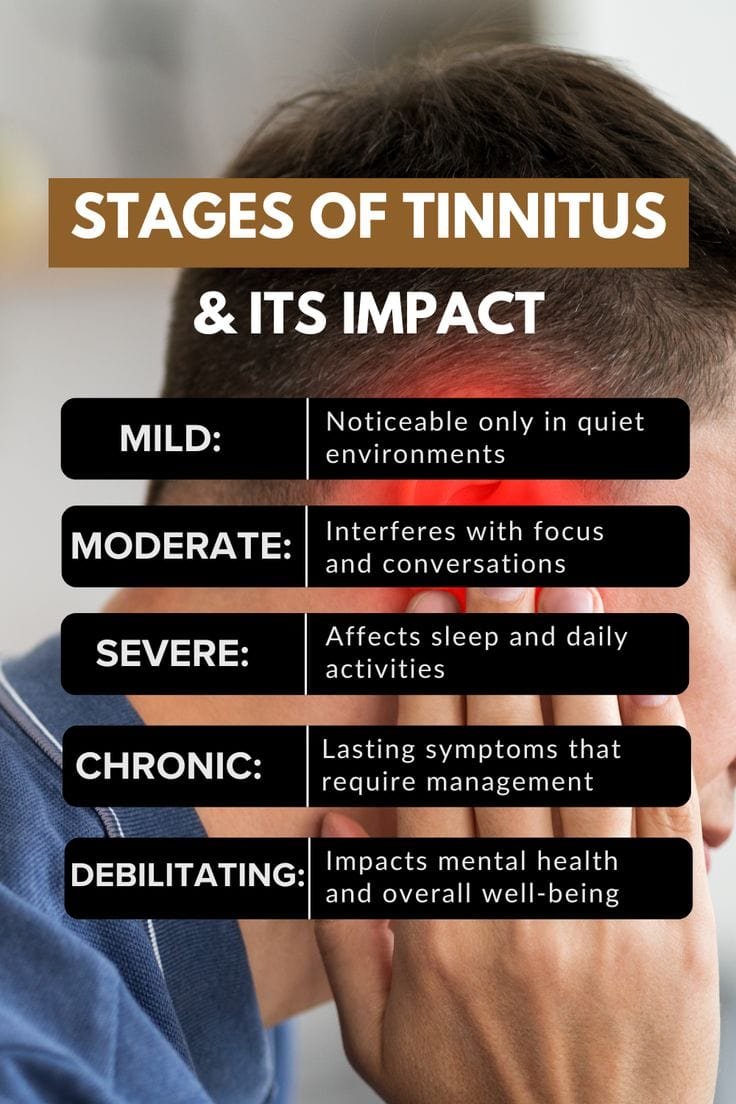
🔹 Mild: Noticeable Only in Quiet Environments
In the earliest stage, tinnitus is subtle. You may only notice it in quiet rooms, like at bedtime or during meditation. While mild tinnitus doesn’t usually interfere with daily life, it can become bothersome if ignored. Protecting your ears from loud sounds and managing stress early can help prevent it from worsening.
🔹 Moderate: Interferes with Focus and Conversations
At this stage, the ringing or buzzing begins to affect concentration. You may find it harder to stay focused at work or follow conversations in noisy settings. White noise machines, background music, and relaxation techniques can help mask the sound and reduce frustration.
🔹 Severe: Affects Sleep and Daily Activities
Severe tinnitus isn’t just an annoyance — it interrupts rest, focus, and productivity. Many people at this stage struggle with sleep, which creates a cycle of fatigue and worsening symptoms. Managing stress, limiting caffeine, and seeking support from an audiologist can bring meaningful relief.
🔹 Chronic: Lasting Symptoms That Require Management
When tinnitus becomes chronic, the symptoms are ongoing and don’t fade away on their own. At this point, lifestyle changes, hearing check-ups, and sometimes therapy (like CBT or sound therapy) are essential for long-term management. Think of it as learning how to “live with” tinnitus without letting it control you.
🔹 Debilitating: Impacts Mental Health and Well-Being
In its most intense stage, tinnitus affects more than just your ears — it weighs heavily on mental health and overall well-being. Anxiety, depression, and social withdrawal are common. This stage requires medical attention, therapy, and support systems to prevent isolation and improve quality of life.
Final Thoughts
Tinnitus can range from mild to debilitating, but knowing the stages of tinnitus helps you understand your experience better and explore the right management strategies. Whether it’s using ear protection, seeking professional help, or adopting lifestyle adjustments, every step makes a difference in finding relief.
✨ Save this guide for later — and share it with someone who may be struggling with tinnitus too.