
If you’ve ever felt your back ache after a stressful day, you’re not imagining it. Stress can cause real, physical pain in your back — not just tension. When your body is under constant pressure, muscles tighten, posture changes, and circulation slows, all of which contribute to stress-related back pain.
In this post, we’ll explore how stress and back pain are connected, what’s happening inside your body, and easy ways to find relief right at home.
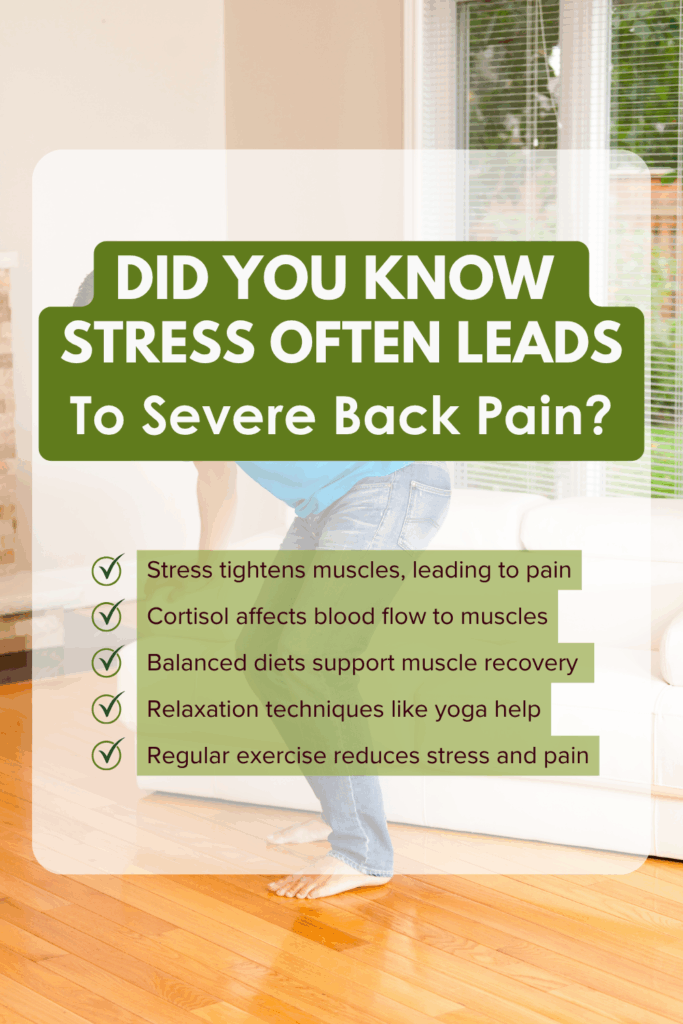
How Stress Triggers Back Pain
1. Muscle Tension Builds Up
When you’re stressed, your body goes into “fight or flight” mode. Muscles—especially in your neck, shoulders, and lower back—tighten automatically to protect you. If that tension doesn’t release, it turns into chronic pain.
2. Cortisol Affects Blood Flow
Cortisol, the main stress hormone, impacts how blood circulates to your muscles. Less blood flow means reduced oxygen and slower healing, leaving your muscles stiff and sore. Over time, this can trigger inflammation and lasting discomfort.
3. Poor Posture from Mental Strain
Stress can also change how you hold your body. People under tension often hunch over, clench their jaw, or sit for long hours in awkward positions—adding extra pressure to the lower back.
Simple Ways to Relieve Stress-Related Back Pain
1. Try Deep Breathing or Meditation
Breathing deeply helps lower cortisol and calm your nervous system. Even five minutes of slow, mindful breathing can relax tight back muscles and reduce stress instantly.
2. Add Gentle Movement
Yoga, stretching, or short walks help loosen your muscles while improving blood circulation. Movements like child’s pose or gentle twists are perfect for easing lower back tension.
3. Balance Your Diet
A nutrient-rich diet with anti-inflammatory foods—like leafy greens, salmon, and berries—supports muscle recovery. Stay hydrated and limit caffeine, which can increase stress hormones.
4. Create Small Relaxation Habits
Listen to calming music, take warm baths, or spend time outdoors. These micro-relaxations signal to your body that it’s safe to unwind, which in turn reduces tension and pain.
5. Get Quality Sleep
Sleep is when your body repairs muscles and balances hormones. Try to maintain a consistent bedtime and create a calm, screen-free evening routine to promote deeper rest.
When to Seek Professional Help
If stress-related back pain becomes severe or persistent, it’s worth consulting a physical therapist or chiropractor. They can identify if the pain is purely muscle-related or linked to deeper spinal issues. Sometimes, combining therapy with relaxation techniques gives the best results.
Final Thoughts
Your mind and body are deeply connected — and your back often feels the weight of your stress. By learning how to manage tension through movement, mindfulness, and healthy habits, you can significantly reduce stress-related back pain and feel more balanced overall.
So next time you feel that ache creeping in, take a deep breath — it might be your body’s way of saying, “It’s time to relax.” 🌿
Pin this post for later and share it with someone who needs a gentle reminder to slow down today.