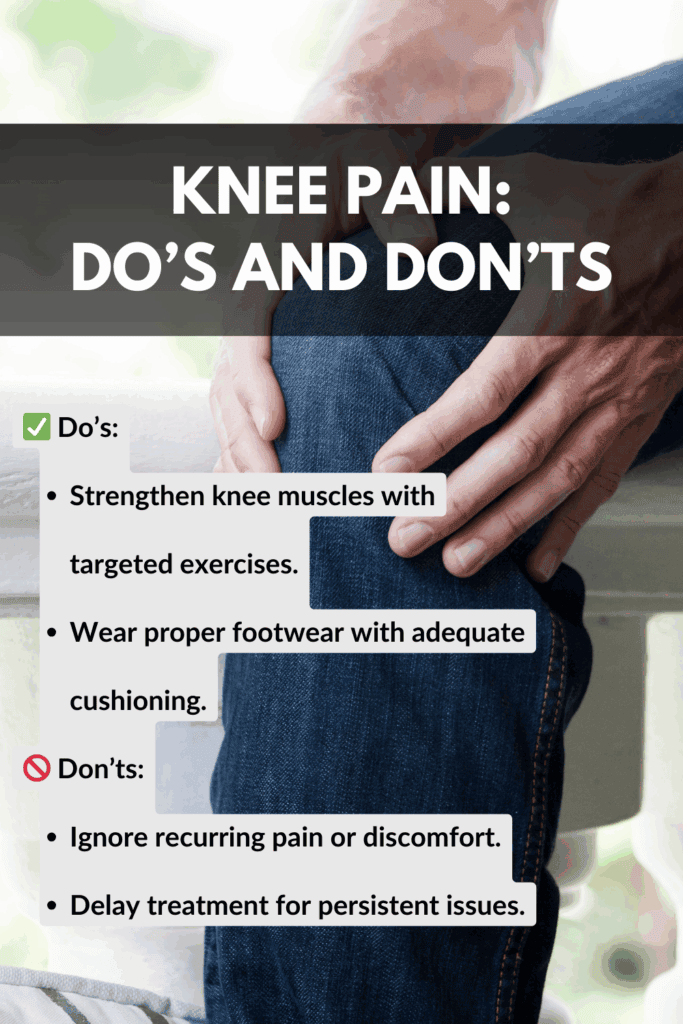
Healthy knees are essential for walking, climbing, and staying active — yet most people overlook how everyday habits affect their joints. Small actions like how you stand, sit, or sleep can make a big difference in how your knees feel over time.
Whether you’re recovering from discomfort or simply want to prevent knee pain, these simple everyday practices can help you build stronger, more resilient knees — naturally.
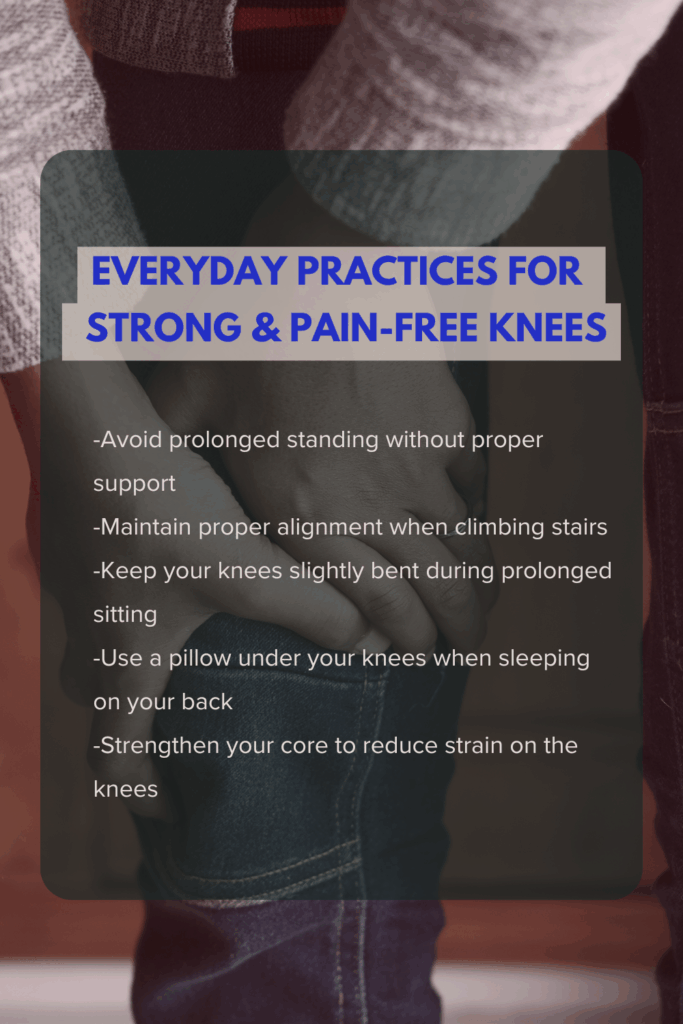
1. Avoid Prolonged Standing Without Proper Support
Standing for long periods puts continuous pressure on your knees, especially if you’re on hard surfaces or wearing unsupportive shoes. Over time, this strain can lead to stiffness, swelling, and fatigue.
💡 Tip: Wear cushioned footwear or use anti-fatigue mats if your job requires long hours of standing. Shift your weight between both legs regularly.
2. Maintain Proper Alignment When Climbing Stairs
Improper alignment — like turning your feet outward or leaning forward — increases joint pressure when climbing stairs. Over time, this can contribute to cartilage wear and discomfort.
💡 Tip: Always keep your knees aligned over your toes and use the railing for balance. Focus on controlled, even steps rather than rushing.
3. Keep Knees Slightly Bent During Prolonged Sitting
Sitting with legs straight or crossed for long hours restricts blood flow and adds pressure to the knee joints.
💡 Tip: Keep your knees slightly bent at a 90-degree angle and your feet flat on the floor. Take short breaks to stretch your legs every 30 minutes.
4. Use a Pillow Under Your Knees When Sleeping
Sleeping flat on your back can strain the lower spine and tighten the knee tendons. Placing a small pillow under your knees relieves that tension and promotes natural alignment.
💡 Tip: Side sleepers can place a pillow between the knees to reduce pressure and maintain hip and knee alignment.
5. Strengthen Your Core to Reduce Strain on the Knees
Your core muscles stabilize your entire body, including your knees. Weak abs or lower back muscles force your knees to absorb more impact when you move.
💡 Tip: Include low-impact exercises like bridges, planks, or gentle yoga poses that engage your core while improving joint balance and strength.
Bonus: Stay Active, But Avoid Overloading
Movement keeps your knees flexible and lubricated — but balance is key. Too much impact, such as running on concrete or heavy squatting, can aggravate the joints.
💡 Tip: Opt for low-impact activities like swimming, cycling, or brisk walking to maintain strength without over-stressing your knees.
Final Thoughts
Healthy knees don’t happen by chance — they’re built through mindful habits. By adjusting how you stand, sit, sleep, and move each day, you can protect your knees from pain and stiffness while improving strength and flexibility.
Remember: small, consistent changes today can save you from big knee problems tomorrow. 🌿
Pin this post for later and share it with anyone who could use a few simple tips for pain-free, stronger knees!