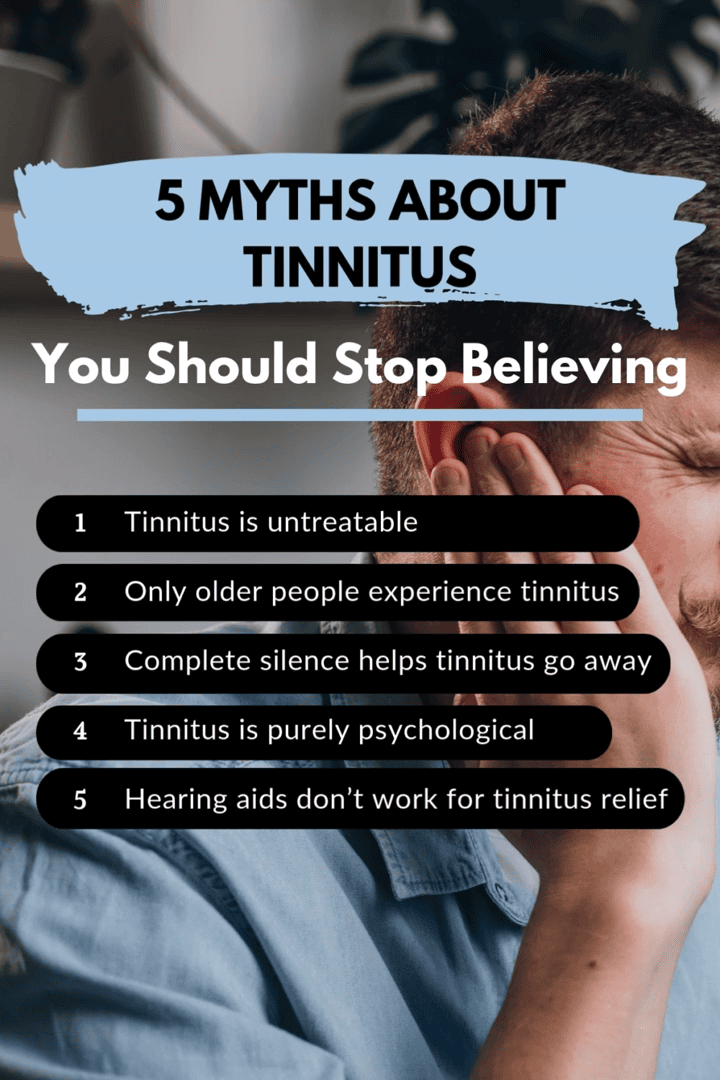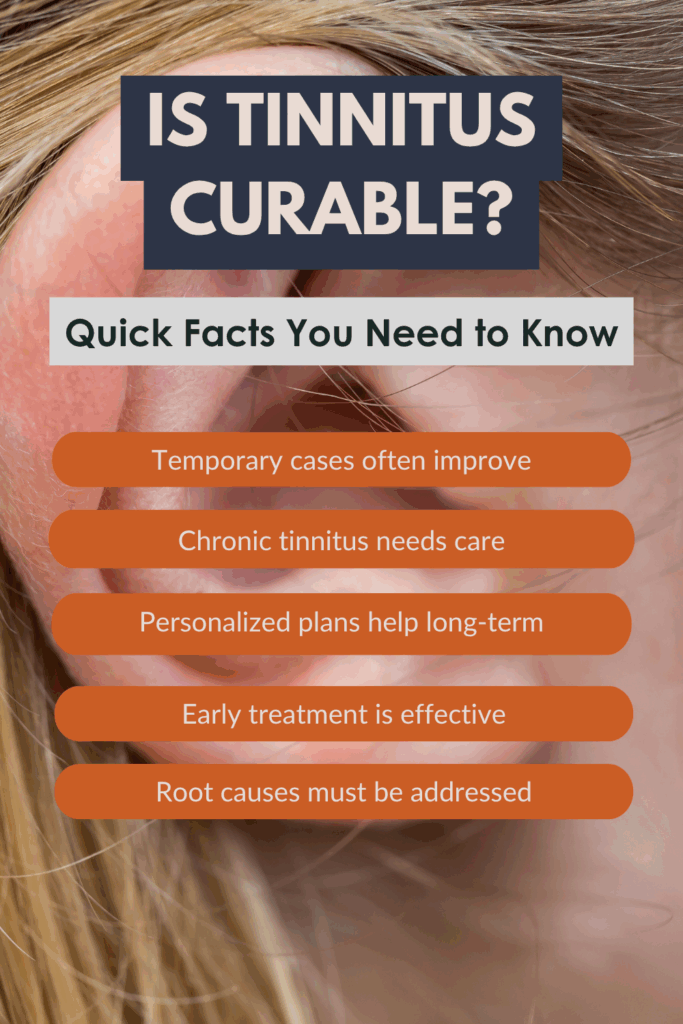
Tinnitus — the persistent ringing or buzzing sound in your ears — is surrounded by confusion and misinformation. Many people feel hopeless simply because they’ve heard the wrong things. The truth? While tinnitus can be challenging, it’s not always permanent, untreatable, or rare.
Let’s separate myths from facts so you can understand your condition better — and take more confident steps toward relief.
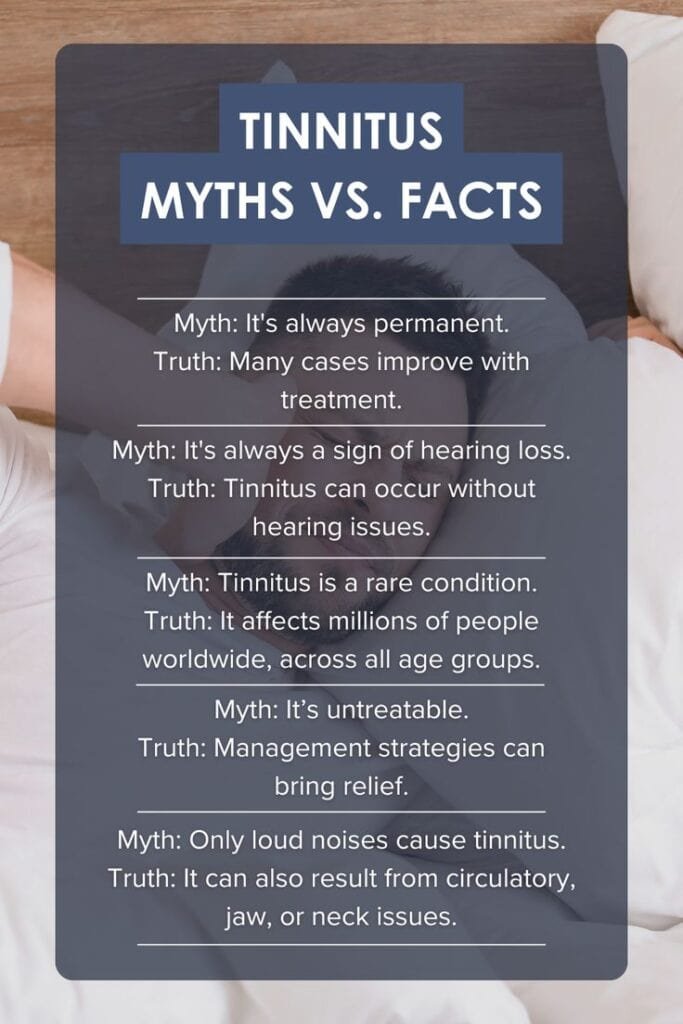
Myth 1: Tinnitus Is Always Permanent
Fact: Many tinnitus cases improve over time with the right treatment and care.
Sometimes, tinnitus fades naturally once the underlying cause (like earwax buildup or medication side effects) is addressed. Even when it doesn’t fully disappear, sound therapy, counseling, or lifestyle changes can make symptoms far more manageable.
Think of tinnitus management as retraining your brain — not just masking the noise.
Myth 2: It’s Always a Sign of Hearing Loss
Fact: Tinnitus can occur even without measurable hearing problems.
While hearing loss is a common trigger, tinnitus may also result from neck tension, jaw alignment, blood circulation, or medication side effects. This is why a full ear, jaw, and neurological check-up is so important.
Understanding the root cause helps personalize your treatment plan — instead of assuming hearing loss is to blame.
Myth 3: Tinnitus Is a Rare Condition
Fact: Over 700 million people worldwide experience tinnitus at some point in their lives.
It affects people of all ages — from musicians to office workers, students, and retirees. While it’s more common among older adults, even young people can develop tinnitus from earbuds, concerts, or stress.
You’re definitely not alone, and that’s good news — because there’s growing research and support available.
Myth 4: It’s Untreatable
Fact: Tinnitus may not have a universal cure, but it’s absolutely treatable.
Sound therapy, mindfulness, hearing aids, and cognitive behavioral therapy (CBT) have all been shown to reduce the distress tinnitus causes. For many, combining these approaches leads to significant relief and better sleep.
Managing tinnitus is about progress, not perfection — and every step helps reduce its impact.
Myth 5: Only Loud Noises Cause Tinnitus
Fact: Noise exposure is a major factor, but not the only one.
Tinnitus can also develop from jaw problems (like TMJ), neck strain, circulation issues, or certain medications. Even emotional stress can heighten tinnitus perception.
If your tinnitus came on suddenly or changes with movement, it’s worth discussing non-noise-related causes with your doctor or physiotherapist.
Final Thoughts: The Truth Is Empowering
Tinnitus can be confusing, but knowledge is your best tool for managing it. By replacing myths with facts, you’ll be better equipped to find what works for your unique situation.
Don’t let misinformation hold you back — seek professional advice, explore sound therapies, and remember: relief is possible.
💡 Pin this post to your “Tinnitus Relief Tips” board — you never know who might need to read this today.