We’ve all experienced that occasional ringing in the ears after a loud concert or stressful day. But what if that ringing doesn’t fade — or starts pulsing in rhythm with your heartbeat? Tinnitus can sometimes be more than just a minor annoyance.
This post will help you recognize when tinnitus is a warning sign of something deeper, how to spot red flags, and when to seek professional care.
1. Pulsatile Tinnitus in Sync with Your Pulse
If the ringing in your ears beats in rhythm with your pulse, it could indicate a vascular issue — meaning something is affecting blood flow near your ear. Conditions like high blood pressure, arterial blockages, or even abnormal blood vessel formations can cause this pulsing sound.
If you notice the ringing “throbs” with your heartbeat, it’s important to get checked by an ENT or neurologist right away.
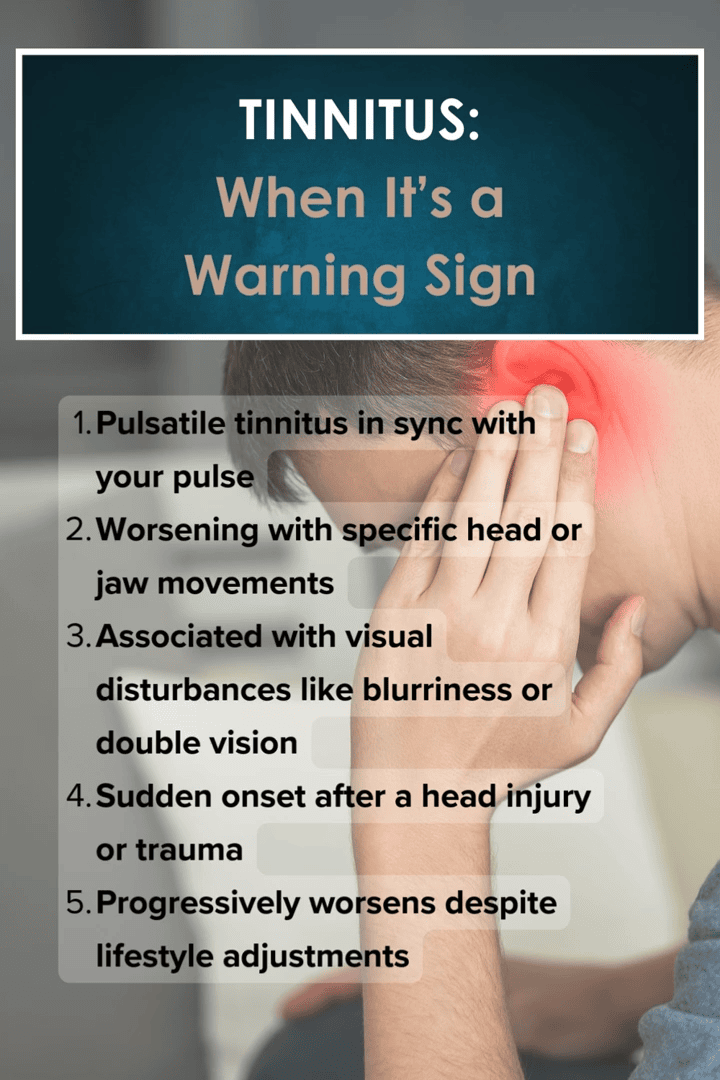
2. Worsening with Specific Head or Jaw Movements
Do you notice your tinnitus changing when you turn your head, clench your jaw, or move your neck? This can signal a musculoskeletal or temporomandibular joint (TMJ) disorder.
TMJ issues often create pressure around the ear canal, leading to ringing or fullness in one ear. Gentle jaw exercises, posture correction, and physical therapy may help — but persistent symptoms deserve professional assessment.
3. Accompanied by Vision Changes or Dizziness
When tinnitus comes with blurred or double vision, balance issues, or vertigo, it’s not something to brush off. These symptoms may point to inner ear disorders like Ménière’s disease, vestibular migraine, or even pressure-related problems in the brain.
If you’re experiencing both tinnitus and vision changes, schedule an immediate evaluation — these symptoms together can signal neurological involvement.
4. Sudden Onset After Head Injury or Trauma
A sudden ringing in the ears following an accident, fall, or concussion could indicate nerve or cochlear damage. Even minor head injuries can disrupt your auditory system.
If tinnitus appears abruptly after trauma, don’t wait for it to fade — prompt medical attention can prevent long-term hearing complications.
5. Progressively Worsening Despite Lifestyle Adjustments
If you’ve tried all the usual remedies — cutting caffeine, reducing stress, avoiding loud noise — and your tinnitus keeps getting worse, something more serious may be at play.
Persistent or worsening tinnitus can stem from hearing loss, ear infections, or neurological disorders. Seeing an audiologist or ENT early can help identify the root cause and prevent progression.
When to See a Doctor Immediately
Tinnitus should never be ignored if it’s:
-
In only one ear
-
Accompanied by hearing loss or dizziness
-
Sudden and severe in nature
-
Pulsatile (beating with your pulse)
-
Worsening over time despite changes
Getting a professional diagnosis ensures that any underlying condition — whether cardiovascular, neurological, or auditory — is treated before it becomes serious.
How You Can Support Ear Health
While waiting for a diagnosis, protect your ears by:
-
Using ear protection in noisy environments
-
Limiting headphone volume and listening duration
-
Managing stress through breathing exercises
-
Eating a balanced diet that supports blood flow and nerve health
Small, consistent habits can ease your symptoms and prevent further damage.
Final Thoughts
Tinnitus is your body’s way of saying, “Pay attention.” While not always dangerous, it can sometimes signal something that needs medical care. If you notice any of these warning signs, trust your instincts — seek help and protect your hearing early.
💡 Save this post for later or share it with someone who might be dealing with persistent ear ringing.