If you want to eat healthier and lose weight—but tracking every bite feels overwhelming—you’re not alone. Many people prefer a more relaxed, intuitive approach to lowering calories. The good news? You absolutely can make progress without using a calorie app or calculating every meal. Small, practical habits can naturally lower your intake while still keeping you satisfied.
In this post, we’ll walk through simple, Pinterest-inspired tips for lowering calories without counting calories, using the visuals from the pin—smoothies, protein-rich foods, water, fruit drinks, avocados, and snacks—as our guide. Let’s make this easy and enjoyable.
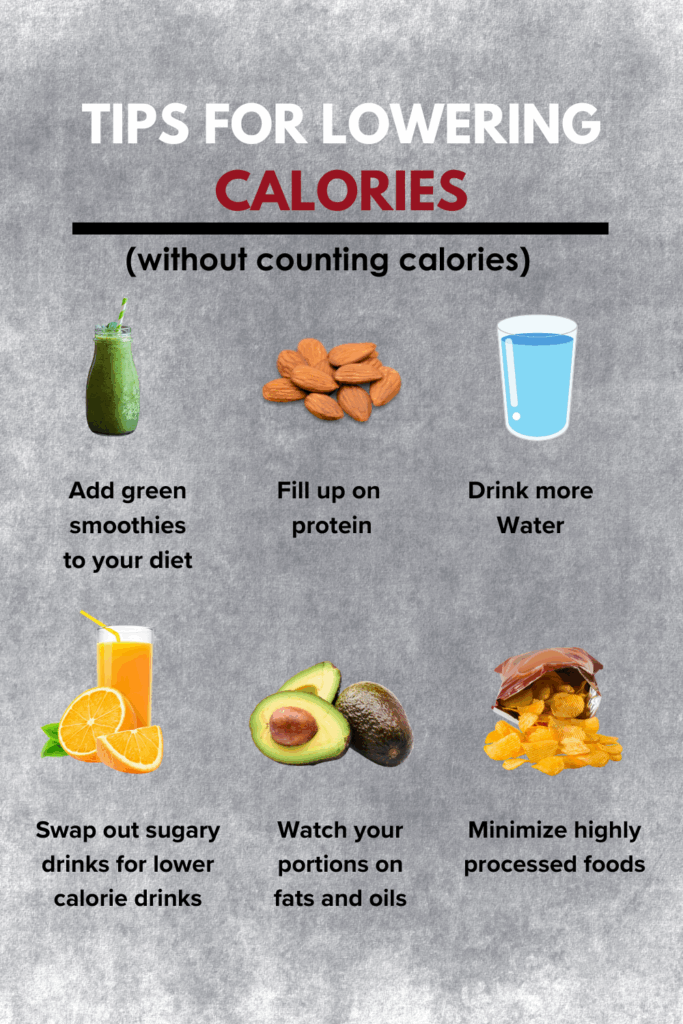
⭐ 1. Add Green Smoothies to Your Diet
Green smoothies are an effortless way to increase your nutrient intake while lowering overall calories. When you blend leafy greens with water, fruit, and optional protein, you get a drink that’s naturally light yet surprisingly filling.
Why it works:
-
High-volume, low-calorie ingredients (greens, cucumber, celery) help you feel full.
-
Smoothies replace heavier meals or snacks without feeling restrictive.
-
They boost hydration and fiber—both linked to lower calorie intake.
Simple Gut-Friendly Green Smoothie:
-
1 cup spinach
-
½ frozen banana
-
¼ avocado
-
1 cup water or coconut water
-
Ice + squeeze of lemon
Blend and enjoy as a refreshing breakfast or snack.
⭐ 2. Fill Up on Protein to Stay Satisfied Longer
Protein is one of the easiest ways to naturally reduce total calories without trying. When your meals include enough protein, hunger drops, cravings fade, and you’re less tempted to overeat.
Protein-rich ideas inspired by the pin:
-
Almonds
-
Greek yogurt
-
Cottage cheese
-
Eggs
-
Chicken breast
-
Tofu or lentils
Tip: Aim for protein in every meal to stay satisfied, especially earlier in the day.
⭐ 3. Drink More Water Throughout the Day
Hydration plays a bigger role in appetite than people think. Sometimes the body confuses thirst with hunger, which leads to unnecessary snacking.
Try this simple approach:
-
Drink a full glass of water before breakfast.
-
Keep a bottle nearby throughout the day.
-
Sip water before each meal—it can help reduce overeating.
If you struggle with plain water, add lemon slices, cucumber, or mint to make it more refreshing.
⭐ 4. Swap Sugary Drinks for Lower-Calorie Alternatives
Sugary drinks—sodas, sweetened juices, flavored coffees—can contribute hundreds of calories without helping you feel full. The pin shows fresh orange juice, which is delicious but can be high in sugar when consumed daily.
Better options include:
-
Sparkling water with fruit slices
-
Infused water
-
Unsweetened iced tea
-
Fresh orange slices instead of juice
-
Watered-down juice (½ juice, ½ water)
These swaps alone can help you lower calories effortlessly.
⭐ 5. Watch Your Portions on Fats and Oils
Healthy fats—like avocado and olive oil—are great for the body, but they are calorie-dense. A little goes a long way. You don’t need to avoid fats; you just need to be mindful.
Easy portion tips:
-
Use measuring spoons for oils until you learn your portions.
-
Add half an avocado instead of a full one if calories matter.
-
Choose nuts in small handfuls rather than eating straight from the bag.
Tiny adjustments can make a big difference.
⭐ 6. Minimize Highly Processed Foods
The pin highlights chips—one of the most common high-calorie, low-satiety foods. Highly processed snacks tend to be:
-
Easy to overeat
-
Low in fiber
-
High in calories and fats
-
Designed to keep you craving more
You don’t need to eliminate them completely—just enjoy them mindfully and in smaller amounts. Swap them out occasionally for options like:
-
Air-popped popcorn
-
Fruit
-
Greek yogurt
-
Veggies with hummus
Your calorie intake drops naturally when your snacks are more nutrient-dense.
⭐ Bonus Tip: Build “Volume Meals”
Another Pinterest-friendly strategy is creating meals that look and feel big but are lighter in calories. Fill half your plate with low-calorie foods like vegetables, soups, salads, or broth-based dishes. This lets you eat more food while staying within a lower calorie range.
⭐ Conclusion
Lowering your daily calories doesn’t have to be complicated or restrictive. With simple habits—like adding green smoothies, prioritizing protein, choosing smarter drinks, and being mindful with fats—you can gently shift your calorie intake without tracking anything. Try a few of these tips this week and notice how your energy, appetite, and cravings naturally change.