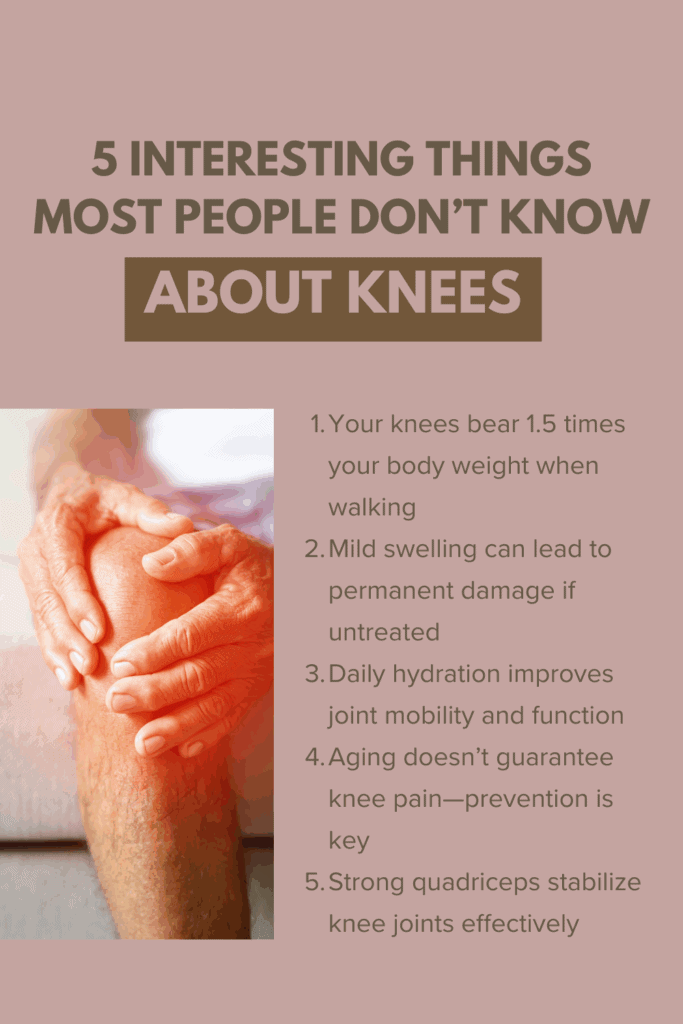
Your knees do more than just help you walk—they’re one of the most fascinating and hardworking joints in your body. Yet, most of us don’t really think about how they function until pain or discomfort shows up. The truth is, knees have unique characteristics that make them both powerful and vulnerable. In this post, we’ll uncover little-known facts about knee functionality and share tips that can help you take better care of them.
1. Running Impacts Knees 3x Your Weight
Every time you run, the force on your knees is nearly three times your body weight. That means if you weigh 150 pounds, your knees take on about 450 pounds of impact with each stride. No wonder runners are often reminded to stretch, strengthen, and choose cushioned shoes. To reduce strain, alternate running days with low-impact activities like swimming or cycling.
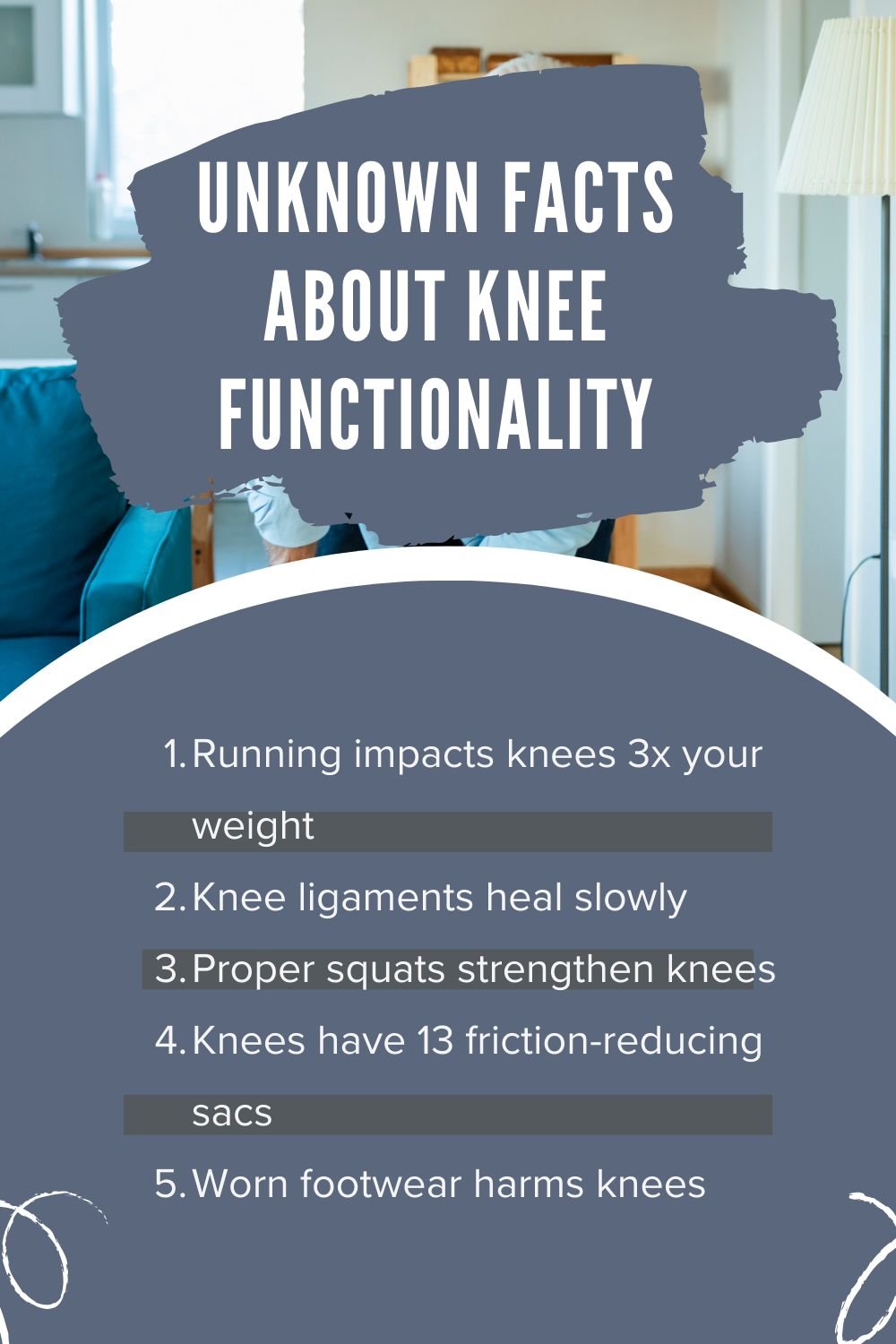
2. Knee Ligaments Heal Slowly
Ligaments in your knee don’t receive as much blood flow as muscles, which is why they take longer to heal after injury. This is why sprains or ACL tears often require extended recovery time and sometimes even surgery. Supporting your knees with proper rest, physical therapy, and patience is essential for full recovery.
3. Proper Squats Strengthen Knees
Contrary to popular belief, squats aren’t bad for your knees—when done properly, they actually strengthen the muscles that support them. The key is keeping your knees aligned with your toes and avoiding letting them cave inward. Adding squats to your fitness routine helps stabilize your knees, reduce pain risk, and improve mobility.
4. Knees Have 13 Friction-Reducing Sacs
Your knees are equipped with small fluid-filled sacs called bursae—13 of them to be exact. These sacs act like natural cushions, reducing friction between bones, muscles, and tendons. When inflamed, this condition is known as bursitis, which can cause swelling and tenderness. Protecting your knees with proper movement and avoiding repetitive overuse helps keep these bursae healthy.
5. Worn Footwear Harms Knees
Your shoes play a bigger role in knee health than you may think. Worn-out soles or improper footwear shift your body’s alignment, putting extra stress on your knees with every step. If your shoes are uneven at the bottom or lack support, it’s time for a replacement. Investing in high-quality, activity-appropriate shoes can help protect your knees long term.
Conclusion
Knees may seem simple, but they’re actually highly complex and uniquely designed for movement, balance, and support. From the way they absorb impact to the way they heal, every fact reminds us just how important it is to care for them daily. By strengthening the right muscles, wearing supportive footwear, and respecting your knees’ limits, you can keep them healthy for years to come. Save this post for later and give your knees the attention they deserve.