
If your knees ache more often than they should — especially without any major injury — the real cause might surprise you. It’s not always age or overuse. Vitamin D deficiency can play a major role in joint discomfort and stiffness, particularly around the knees.
In this post, you’ll learn how vitamin D affects your bones, why a lack of it can trigger knee pain, and what simple steps can help restore healthy levels naturally.
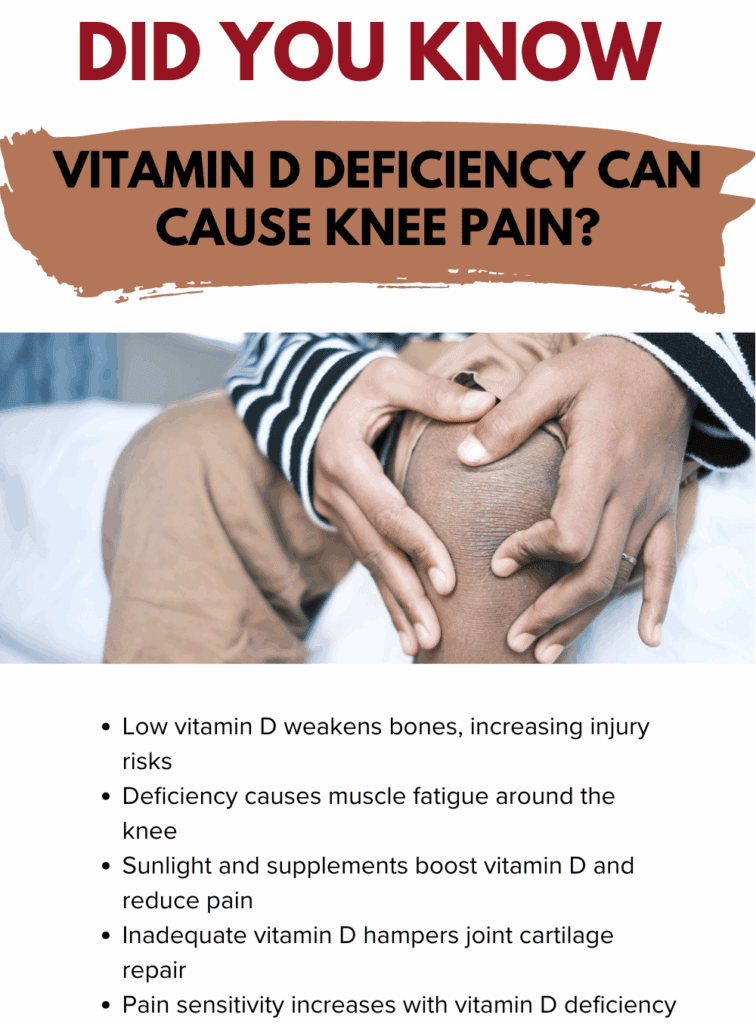
☀️ Why Vitamin D Matters for Knee Health
Vitamin D isn’t just the “sunshine vitamin” — it’s a key nutrient that helps your body absorb calcium and maintain strong bones. Without enough of it, bones weaken, muscles fatigue, and joints lose support.
Since your knees bear most of your body’s weight, they’re often the first to show symptoms of deficiency, such as:
-
Dull or persistent knee pain
-
Muscle weakness around the joint
-
Stiffness or difficulty bending the knee
Over time, this imbalance can make the knees more vulnerable to strain and injury.
⚡ How Vitamin D Deficiency Leads to Knee Pain
Low levels of vitamin D can cause a chain reaction that affects your entire musculoskeletal system:
- Weakened Bones: Lack of vitamin D lowers bone mineral density, making them more fragile.
- Muscle Fatigue: The muscles that support your knees lose strength, leading to extra pressure on the joint.
- Inflammation Increase: Vitamin D helps control inflammation — when levels drop, inflammation rises.
- Joint Cartilage Damage: Deficiency may slow the repair of cartilage, worsening stiffness and soreness.
- Heightened Pain Sensitivity: Research shows low vitamin D can make nerves more sensitive, amplifying pain signals.
In short — your knees might hurt not just because of movement, but because your body lacks the nutrients to support them properly.
🌞 Signs You Might Be Low in Vitamin D
Many people are deficient without even knowing it. Here are common warning signs:
-
Frequent fatigue or body aches
-
Bone or joint pain, especially in the knees or hips
-
Low mood or depression
-
Muscle weakness
-
Slow recovery after exercise or injury
If you notice these symptoms, a simple blood test can confirm your vitamin D levels.
🥗 5 Natural Ways to Boost Vitamin D
The good news? You can raise your vitamin D levels naturally with just a few daily habits.
1. Get Sunlight Exposure
Spend 15–20 minutes outdoors a few times a week. Early morning or late afternoon sun is ideal for safe vitamin D absorption.
2. Eat Vitamin D–Rich Foods
Add salmon, eggs, tuna, mushrooms, and fortified dairy products to your diet.
3. Take a Quality Supplement
If you live in a cloudy region or spend most of your time indoors, a daily vitamin D3 supplement may help maintain optimal levels.
4. Pair It with Magnesium and K2
These nutrients help your body absorb and use vitamin D more effectively — supporting bone and joint health.
5. Stay Active
Gentle exercises like walking or yoga keep joints flexible and boost overall bone density.
💪 How Long It Takes to Feel Better
Once vitamin D levels improve, many people report reduced knee pain within a few weeks. However, for lasting relief, consistency is key. Keep up with sunlight exposure, nutrient-rich foods, and balanced activity levels.
✅ Final Thoughts
Knee pain isn’t always a sign of wear and tear — sometimes it’s your body asking for more of what it needs. A vitamin D deficiency can silently weaken your bones and joints, but it’s also one of the easiest problems to fix.
Start today: step into the sunlight, eat well, and keep your body moving. Small changes can bring big relief to your knees — naturally.
👉 Save this post for later or share it with someone who’s struggling with unexplained knee pain!