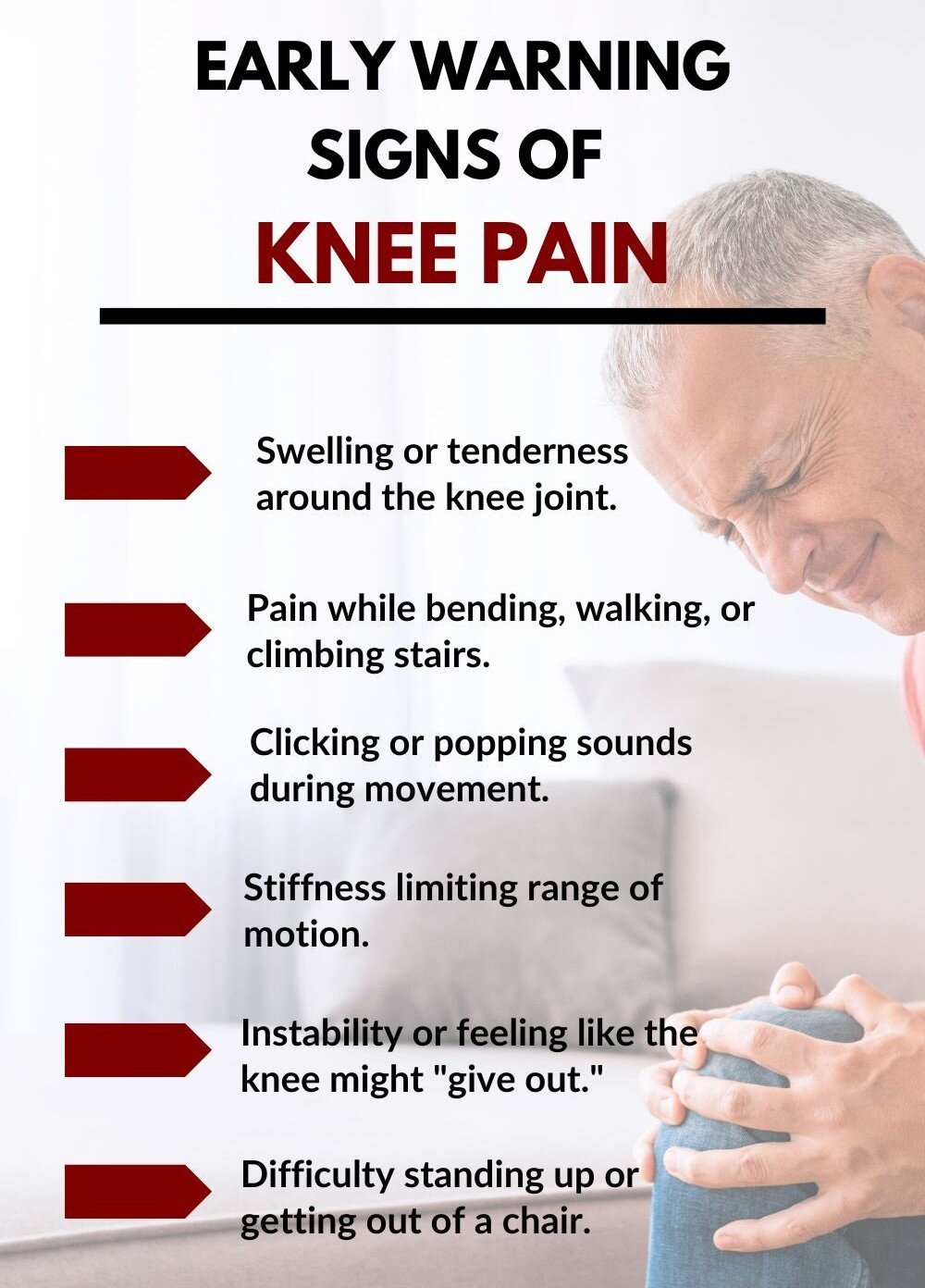
Knee pain can sneak up on you slowly or show up suddenly after a long day. But here’s the truth: ignoring the early signs often makes things worse. Your knees carry so much of your body’s weight that even small issues can impact your daily life.
In this post, we’ll cover the most common warning signs of knee pain, what they mean for your health, and simple steps to take if you notice them.
1. Swelling or Tenderness Around the Knee
If your knee feels puffy, warm, or unusually sensitive, it could be inflammation. Swelling is often your body’s way of signaling injury or strain.
👉 Ice packs and rest can help in the short term, but if swelling continues, it’s worth checking with a healthcare professional.
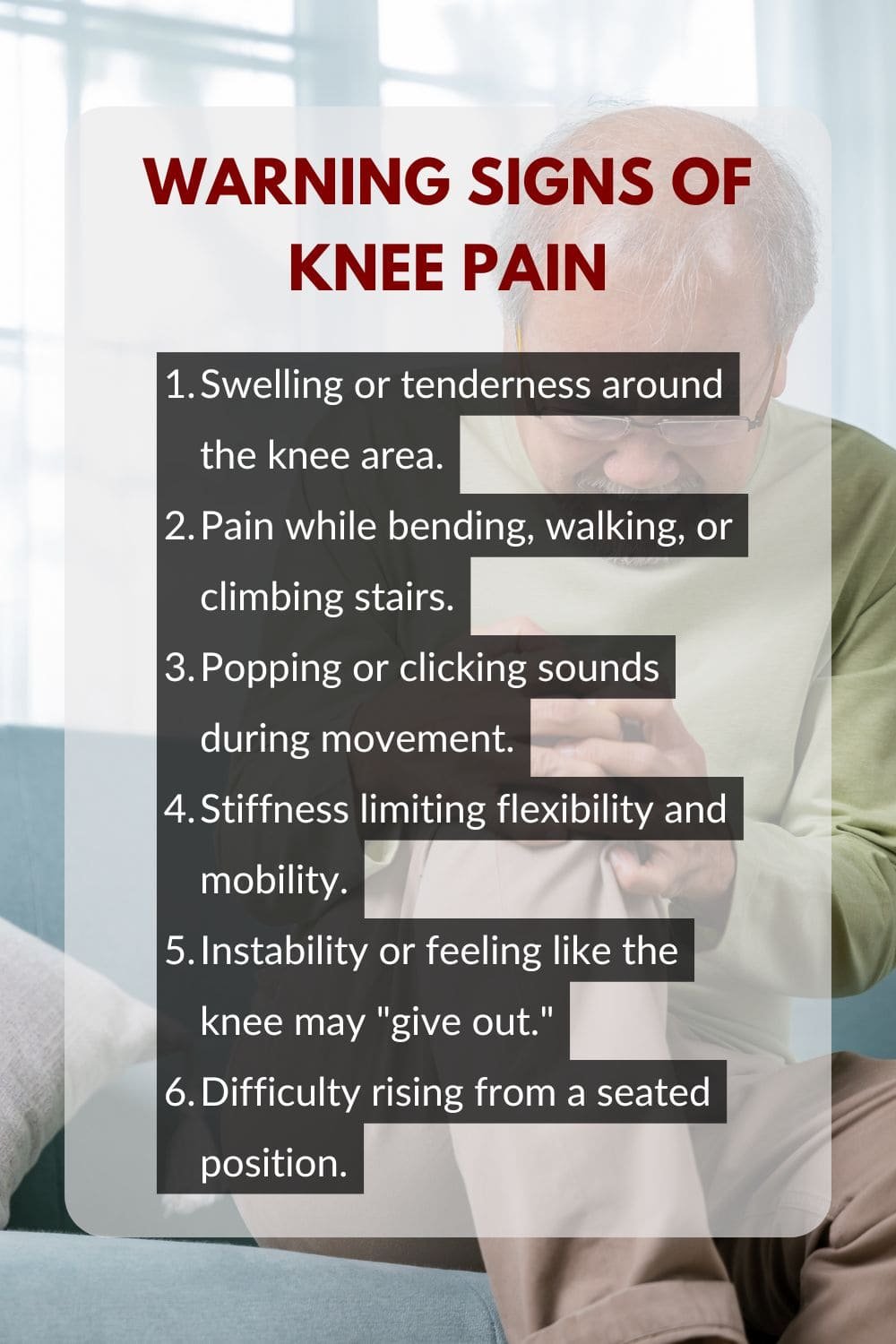
2. Pain During Movement
Pain while bending, walking, or climbing stairs is one of the clearest red flags. This kind of pain can indicate cartilage wear, tendon irritation, or overuse.
👉 Pay attention to when the pain occurs — does it get worse after workouts, or even with light daily activity? Tracking patterns can help you spot underlying issues.
3. Clicking or Popping Sounds
Hearing clicks or pops in your knee isn’t always dangerous, but if it comes with pain, stiffness, or swelling, it may signal joint damage or a meniscus issue.
👉 Gentle stretching and strengthening exercises can sometimes help, but consistent sounds paired with pain shouldn’t be ignored.
4. Stiffness and Limited Mobility
If you wake up feeling like your knees are “locked” or can’t bend as easily as before, stiffness is at play. This can result from arthritis, joint fluid buildup, or even poor recovery after activity.
👉 Staying active with low-impact exercises like swimming or cycling often helps improve flexibility.
5. Knee Instability
That sudden feeling like your knee might “give out” can be alarming. Instability often points to ligament weakness or imbalance in supporting muscles.
👉 Strength training for the thighs and hips is key, but a professional assessment is important if instability persists.
6. Difficulty Rising from a Seated Position
Struggling to stand up from a chair or couch may indicate weak support muscles, cartilage wear, or early arthritis signs.
👉 Focus on functional movements like squats and chair stands to rebuild strength — but avoid pushing through sharp pain.
Final Thoughts
Your knees give you early warning signs when something’s off — swelling, stiffness, pain, or instability are not to be brushed aside. By noticing these symptoms early and making small changes, you can protect your mobility and prevent long-term damage.
👉 Save this post to your Joint Health board so you can revisit these warning signs anytime. And if you notice persistent issues, consult a healthcare provider for guidance.