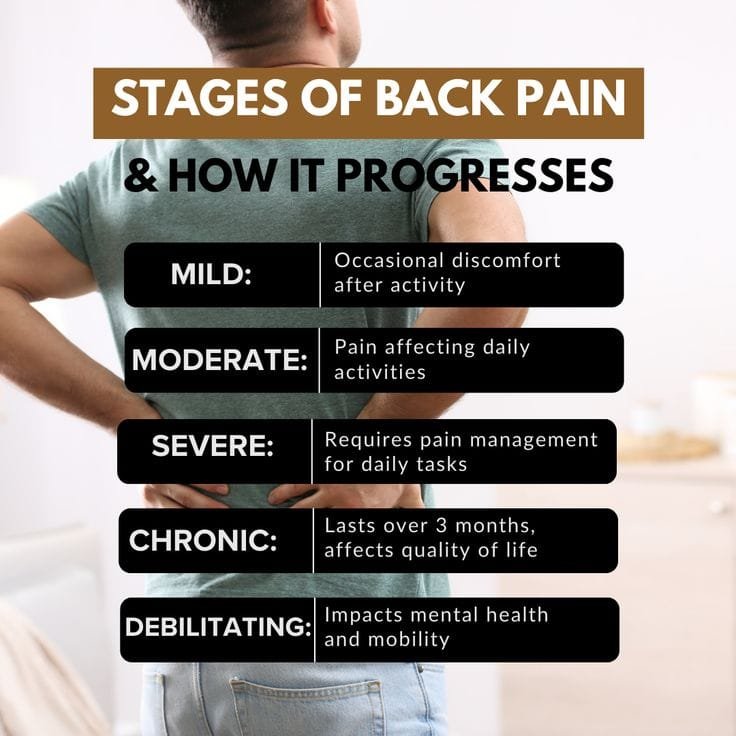
Back pain is one of those nagging issues that seems to get worse the older we get. What starts as an occasional ache can slowly turn into a daily struggle — especially after long periods of sitting, bending, or even sleeping the wrong way. The truth is, aging naturally changes our spine, muscles, and bones — but understanding why it happens can help you stay ahead of it.
Here’s a closer look at the main reasons back pain worsens with age — and some helpful ways to keep your spine strong and flexible.
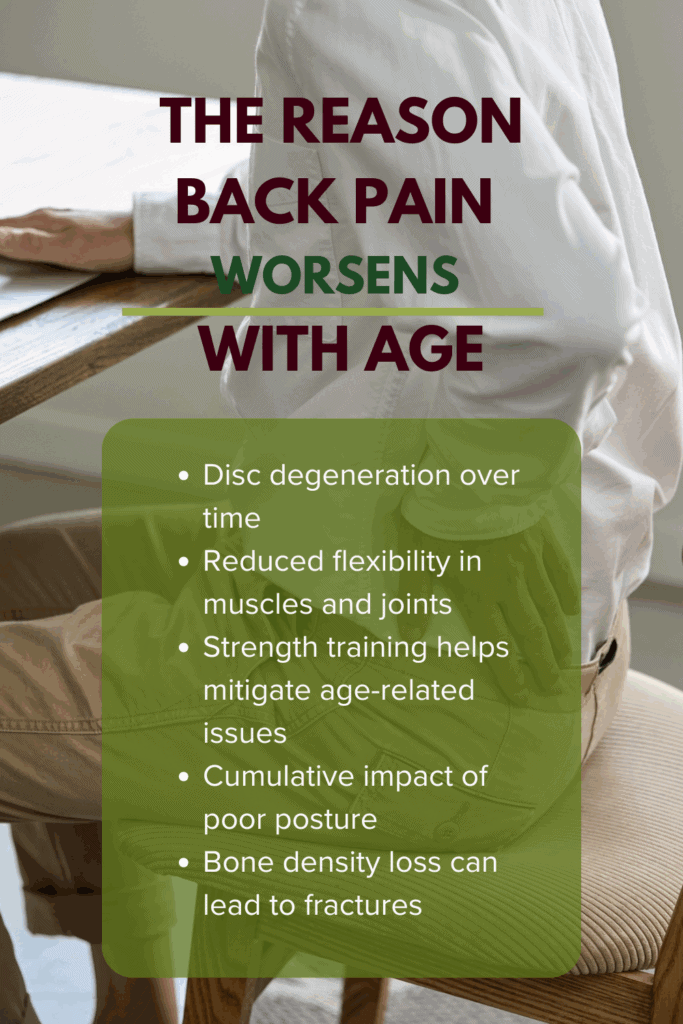
🦴 1. Disc Degeneration Over Time
Your spine’s discs act like soft cushions between the bones (vertebrae). Over time, these discs naturally lose water content, making them thinner and less flexible. This process, called degenerative disc disease, reduces shock absorption and can lead to stiffness or pain during movement.
💡 Tip: Gentle yoga, stretching, and staying hydrated can help maintain spinal flexibility.
🤸 2. Reduced Flexibility in Muscles and Joints
As we age, the muscles and ligaments supporting the spine lose elasticity. The result? Tightness, limited range of motion, and increased strain on the lower back. When muscles weaken or shorten, even simple movements can cause discomfort.
💡 Try this: Include daily mobility exercises like cat-cow stretches, pelvic tilts, or short walks to keep your back supple.
🏋️ 3. Muscle Weakness and Lack of Strength Training
One of the most overlooked causes of back pain is muscle imbalance. Weak core and back muscles can’t support your spine properly, leading to poor posture and recurring pain. Strength training — even light resistance workouts — helps stabilize your spine and reduce stress on the discs.
💡 Start small: Use bodyweight exercises like planks, bridges, or resistance bands to build back strength safely.
🪑 4. The Cumulative Impact of Poor Posture
Years of slouching, sitting hunched over a computer, or lifting objects incorrectly can gradually misalign your spine. Poor posture compresses the lower back, leading to chronic discomfort and fatigue.
💡 Posture fix: Adjust your workspace ergonomics, use lumbar support when sitting, and take breaks every 30–45 minutes to stretch.
⚖️ 5. Bone Density Loss and Fracture Risk
As bone density decreases with age (especially after 50), the spine becomes more vulnerable to small fractures — known as compression fractures. These can cause sudden or chronic back pain and even change your posture over time.
💡 Support your bones: Eat calcium-rich foods, get enough vitamin D, and consider gentle weight-bearing exercises like walking or dancing.
🧘 6. How to Keep Your Back Healthy as You Age
The good news? You can absolutely protect your back with a few consistent habits:
-
Stay active — movement nourishes your spine.
-
Strengthen your core — it supports your posture.
-
Mind your alignment — keep your head, shoulders, and hips in line.
-
Sleep smart — use a firm mattress and avoid sleeping on your stomach.
-
Listen to your body — early aches are signals, not nuisances.
🌿 Final Thoughts
Back pain might be common with age, but it’s not something you have to live with. By strengthening your muscles, improving posture, and maintaining flexibility, you can move freely and comfortably for years to come.
✨ Save this post as a gentle reminder to take care of your spine — one stretch at a time!